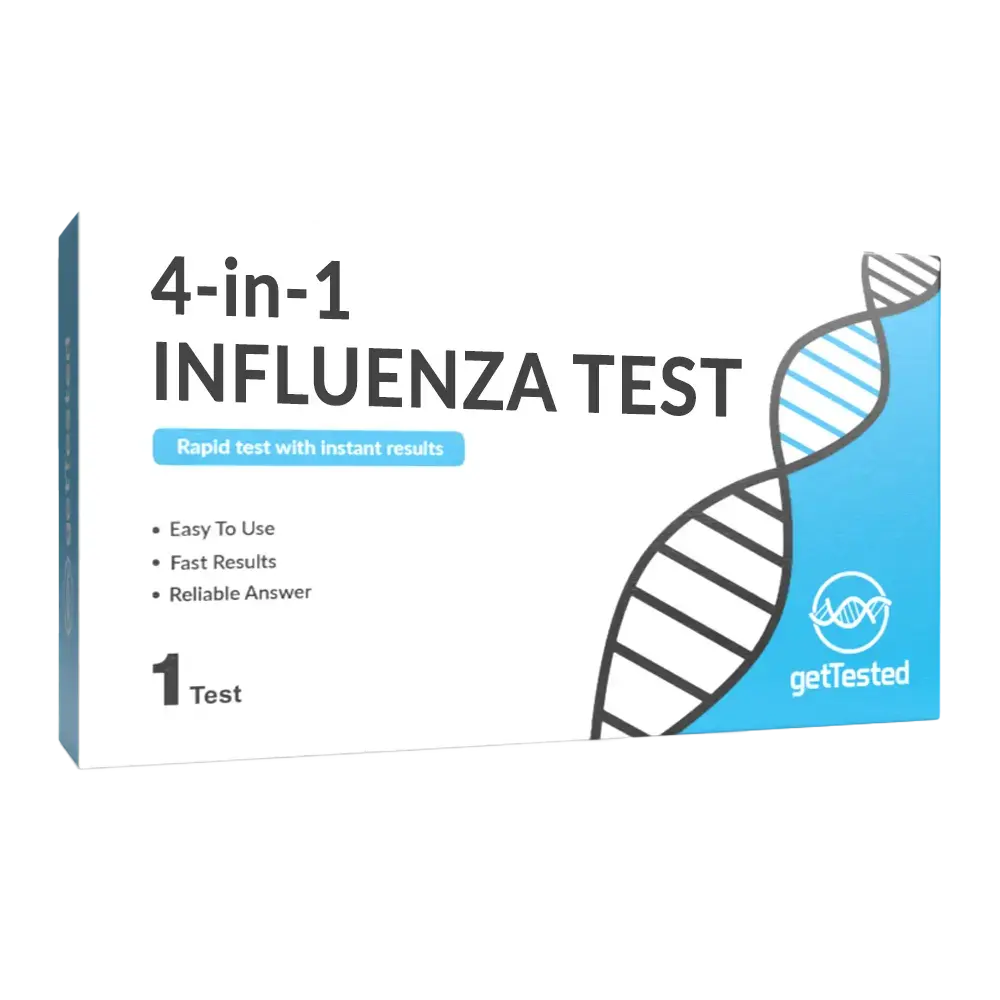
4-in-1 Influenza Test
GetTested’s 4-in-1 Influenza Test is a rapid at-home nasal swab test for people who want to check whether symptoms such as fever, cough, sore throat, tiredness, runny nose, blocked nose or body aches may be linked to a common respiratory infection. Cold and flu symptoms can feel very similar, even when the cause is different. This test checks for COVID-19, Influenza A/B, RSV and Adenovirus, providing a quick first indication from home. The test screens for antigens from these respiratory viruses and gives results within 10 minutes, with no laboratory sample return required.
€9.99
About 4-in-1 Influenza Test
When a Cold Might Not Just Be a Cold
A cough, sore throat, fever or runny nose can seem like a simple cold at first. But several respiratory infections can start in almost the same way, including COVID-19, flu, RSV and adenovirus.
The difference matters because these infections can vary in how they spread, how intense they become and who may be more vulnerable. A 4-in-1 test gives broader insight than testing for only one virus, especially during cold and flu season or when several people around you are ill.
Testing can be useful when symptoms appear suddenly, before meeting someone vulnerable, when illness is spreading at home, or when you want a quick indication before deciding what to do next.
What This Test Measures
Biomarkers
5 biomarkers
Sample
Swab
Results in
10 minutes
Format
Rapid Test
How It Works
- 1
Collect Your Sample
- 2
Prepare the Test
- 3
Add the Sample
- 4
Wait for the Result
- 5
Read Your Result
Sample Collection
The test uses a nasal swab sample. The swab is inserted into the nose and rotated according to the instructions provided with the kit. The same swab is used for both nostrils.
The swab is then mixed with the buffer solution, and drops are added to the test cassette.
Results are read visually after approximately 10 minutes.
The test was previously called the 4-in-1 Respiratory Test. The product and test content remain the same, only the name has been updated to 4-in-1 Influenza Test.
Have Questions?
Chat with our AI assistant for instant answers about this product, usage, or recommendations.
Over 500,000 Customers
4.4 out of 5 based on 12 reviews on this product
€9.99
4-in-1 Influenza Test
GetTested’s 4-in-1 Influenza Test is a rapid at-home nasal swab test for people who want to check whether symptoms such as fever, cough, sore throat, tiredness, runny nose, blocked nose or body aches may be linked to a common respiratory infection. Cold and flu symptoms can feel very similar, even when the cause is different. This test checks for COVID-19, Influenza A/B, RSV and Adenovirus, providing a quick first indication from home. The test screens for antigens from these respiratory viruses and gives results within 10 minutes, with no laboratory sample return required.
€9.99
When a Cold Might Not Just Be a Cold
A cough, sore throat, fever or runny nose can seem like a simple cold at first. But several respiratory infections can start in almost the same way, including COVID-19, flu, RSV and adenovirus.
The difference matters because these infections can vary in how they spread, how intense they become and who may be more vulnerable. A 4-in-1 test gives broader insight than testing for only one virus, especially during cold and flu season or when several people around you are ill.
Testing can be useful when symptoms appear suddenly, before meeting someone vulnerable, when illness is spreading at home, or when you want a quick indication before deciding what to do next.
What This Test Measures
Biomarkers
5 biomarkers
Sample
Swab
Results in
10 minutes
Format
Rapid Test
How It Works
- 1
Collect Your Sample
- 2
Prepare the Test
- 3
Add the Sample
- 4
Wait for the Result
- 5
Read Your Result
Sample Collection
The test uses a nasal swab sample. The swab is inserted into the nose and rotated according to the instructions provided with the kit. The same swab is used for both nostrils.
The swab is then mixed with the buffer solution, and drops are added to the test cassette.
Results are read visually after approximately 10 minutes.
The test was previously called the 4-in-1 Respiratory Test. The product and test content remain the same, only the name has been updated to 4-in-1 Influenza Test.
Why test for several respiratory infections at once?
What does a negative result mean?
When can the 4-in-1 Influenza Test be useful?
Does the test include both Influenza A and Influenza B?
Why can it be difficult to tell these infections apart from symptoms alone?
Who can be more vulnerable to RSV?
Can adenovirus cause symptoms outside the respiratory system?
Does the sample need to be sent to a laboratory?
4-in-1 Influenza Test price and what’s included
Price history
Current price
€9.99
Starting price
€9.99
Total change
€0.00
No. of changes
0
Stable Pricing
No hidden fees. The price you see is the price you pay.
Price Lock Guarantee
Your price won't change after purchase.
Have Questions About This Product?
Chat with our AI assistant for instant answers about this product, usage guidelines, or personalized recommendations.
Over 500,000 Customers
4.4 out of 5 based on 12 reviews on this product