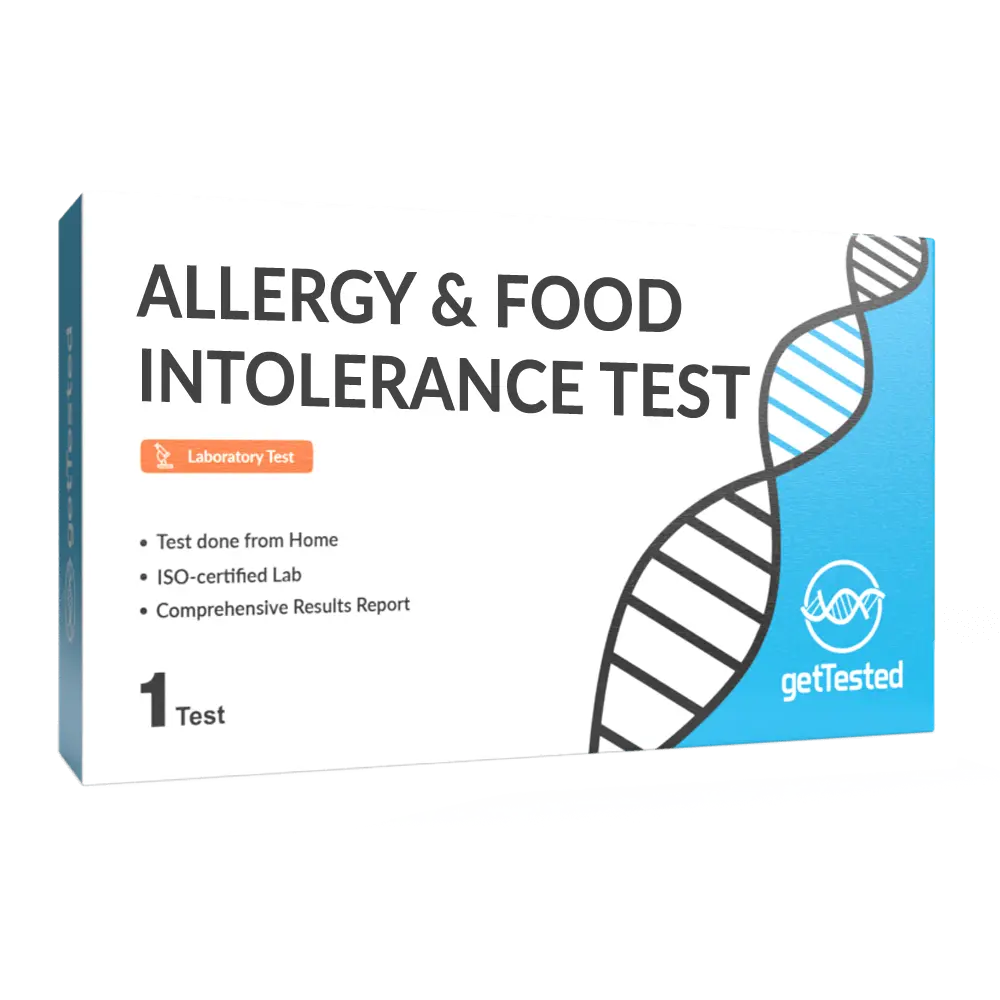
Allergy & Food Intolerance Test
Identify food allergies and intolerances with one comprehensive home test. Pinpoint triggers and take back control.
Product details: EUR 149 — InStock — SKU B2 — GetTested
About this test
Key Benefits
Allergy and Food Intolerance in One Test: Measures both IgE and IgG antibodies.
Broad Coverage: Includes 78 items across foods, pollen, animal dander, dust mite, mold and other common triggers.
Relevant for Unclear Symptoms: May be useful when digestive, skin, respiratory or fatigue related symptoms are difficult to explain.
Digital Results in 10 to 15 Business Days: Access your laboratory results online.
Allergy vs Food Intolerance
Allergy IgE reactions are often faster and may be linked to symptoms such as sneezing, congestion, itching, watery eyes, swelling, skin reactions or breathing related discomfort. These reactions can occur after exposure to foods or environmental triggers such as pollen, dust mites, mold or animal dander.
Food intolerance IgG reactions are usually more delayed and can be harder to spot. They may be relevant when symptoms such as bloating, digestive discomfort, fatigue, skin issues or general wellbeing changes appear hours or days after eating certain foods.
How It Works
1. Order Your Kit
Purchase your test online.
2. Collect Your Sample
Collect a finger prick blood sample at home using the included test kit.
3. Send It Back
Mail your sample to the laboratory using the prepaid return materials.
4. Receive Your Results
Access your digital laboratory results online in 10 to 15 business days.
Blood Sample Collection
The sample is collected using a finger prick dried blood spot sample at home. A few drops of blood are placed onto the collection card according to the included instructions and sent to the laboratory for analysis.
ISO Certified Lab and Analysis
Your sample is analyzed in an ISO certified laboratory using ELISA (Enzyme Linked Immunosorbent Assay), a laboratory method used to measure antibody responses in blood. The analysis measures IgE antibodies linked to allergy type reactions and IgG antibodies that can provide insight into food intolerance related immune responses.
Biomarkers included
- Buckwheat: Buckwheat intolerance is a condition in which the body has difficulty digesting buckwheat, leading to digestive symptoms. Unlike a buckwheat allergy, which triggers an immune response and can cause severe reactions, intolerance is generally limited to gastrointestinal discomfort.
- Celery: Celery intolerance and allergy refer to different reactions some individuals may have to celery, a common ingredient in soups, salads, and snacks. A celery allergy is an immune system response to the proteins in celery, which can cause serious symptoms. In contrast, celery intolerance primarily affects the digestive system, leading to discomfort without involving the immune response.
- Mustard: Mustard intolerance is a condition that reflects difficulty in digesting mustard and mustard-based products. Unlike a mustard allergy, which triggers an immune system response and more severe symptoms, mustard intolerance primarily causes digestive discomfort and gastrointestinal symptoms after consumption.
- Peach: Stone fruit that can cause allergies ranging from oral allergy syndrome to severe reactions like anaphylaxis.
- Rye pollen: Pollen from rye grass, a significant cause of hay fever and respiratory allergies during its pollen season.
- Banana: Banana intolerance refers to a non-allergic reaction to bananas, a widely consumed and nutritious fruit. Unlike banana allergies, which trigger an immune response to specific banana proteins, intolerance usually stems from difficulties digesting certain components of the fruit.
- Crayfish: Crayfish allergy is an allergic reaction to proteins found in crayfish, a type of shellfish. It can range from mild to severe and, in some cases, be potentially life-threatening. People with a crayfish allergy may react not only from eating crayfish but also from inhaling steam released during cooking.
- Cucumber: Cucumber intolerance is a condition in which the body has difficulty digesting cucumber, often resulting in gastrointestinal discomfort. Unlike a cucumber allergy, which triggers an immune response and can cause more severe reactions, cucumber intolerance typically leads to digestive symptoms after consumption.
- Strawberry: Strawberry allergy is a sensitivity to specific proteins present in strawberries. While less common than many other food allergies, it can trigger symptoms ranging from mild oral irritation to more serious systemic reactions. These responses may include itching, swelling, hives, or, in rare cases, severe allergic reactions.
- Ash pollen: Pollen from ash trees, which is a common allergen during springtime. Can induce respiratory symptoms in allergic individuals.
- Rice: Rice allergy is an uncommon food allergy in which the body’s immune system reacts to proteins found in rice. Although less common than many other food allergies, it can cause a range of symptoms in sensitive individuals. It can affect both children and adults and may be triggered by either white or brown rice.
- Kale: Kale intolerance is a condition that reflects difficulty digesting kale, a nutrient-rich leafy green vegetable known for its health benefits. Unlike a kale allergy, which involves the immune system and can cause severe reactions, kale intolerance mainly leads to digestive discomfort. People with this intolerance often experience gastrointestinal symptoms after eating kale or foods containing it.
- Sheep's milk: Sheep's milk intolerance is a condition in which the body has difficulty digesting sheep's milk, leading to gastrointestinal symptoms. This intolerance differs from a sheep's milk allergy, which involves an immune response and can cause more severe reactions. Individuals with sheep's milk intolerance usually experience digestive discomfort after consuming sheep's milk or related products.
- Hazelnut: Hazelnut allergy is a type of tree nut allergy that reflects an immune response to proteins found in hazelnuts. It is a common food allergy that can cause reactions ranging from mild symptoms to severe anaphylaxis. Both raw and cooked hazelnuts can trigger this allergic reaction.
- Pork: Pork intolerance is a digestive condition characterized by difficulty processing pork, which can lead to gastrointestinal discomfort. Unlike a pork allergy, which involves an immune response and more severe symptoms, pork intolerance primarily causes digestive issues after consuming pork.
- Cypress pollen: Pollen from cypress trees, prevalent in the spring and fall. Known to cause hay fever and asthma symptom.
- Cat dander: Allergenic protein found in the skin, saliva, and urine of cats, which can cause respiratory issues and asthma.
- Potato: Potato allergy is a condition where the immune system reacts to proteins found in potatoes. It can affect people of all ages and cause a range of symptoms, including skin irritation, digestive issues, and respiratory problems. This allergy can be triggered by exposure to both raw and cooked potatoes.
- Green peas: Green peas intolerance is a condition that reflects the body’s reduced ability to digest green peas efficiently. Unlike a green peas allergy, which triggers an immune system reaction and can cause severe responses, intolerance primarily leads to gastrointestinal discomfort. Common symptoms include bloating, gas, and abdominal pain after consuming green peas.
- Cladosporium herbarum mold: Mold that can cause respiratory problems and exacerbate asthma, prevalent in damp environments.
- Cod: Fish commonly consumed and used in various culinary dishes. Cod allergies can provoke digestive symptoms and anaphylaxis.
- Dog dander: Allergenic protein found in the skin, saliva, and urine of dogs, leading to respiratory issues and skin reactions.
- Horse dander: Allergenic animal dander that can cause respiratory symptoms and skin reactions
- Bermuda grass pollen: Bermuda grass pollen allergy is a type of allergic reaction to the pollen released by Bermuda grass, a common grass species in warmer regions often used in lawns, parks, and golf courses. This allergy is a form of seasonal allergic rhinitis, typically occurring during the grass-pollinating seasons in late spring and summer.
- Egg white: Egg white allergy is a common food allergy, particularly in children, caused by the immune system’s overreaction to proteins found in egg whites. Reactions can vary from mild symptoms to severe, including anaphylaxis. While many children outgrow this allergy, some may continue to experience it into adulthood.
- Carrot: Carrot allergy is an allergic reaction triggered by specific proteins in carrots. Though uncommon, it can affect individuals with sensitivities to certain plant-based foods. It is often linked to Oral Allergy Syndrome (OAS), particularly in people allergic to birch or mugwort pollen, due to cross-reactive proteins.
- Mussels: Mussels intolerance is a condition in which the body has difficulty digesting mussels, often resulting in gastrointestinal discomfort. It differs from a mussels allergy, which involves an immune system reaction and can cause more severe symptoms. Individuals with mussels intolerance typically experience digestive issues after consuming this type of shellfish.
- Corn: Corn intolerance is a digestive condition that reflects the body’s difficulty in processing corn. Unlike a corn allergy, which is an immune system response causing more immediate and severe reactions, corn intolerance primarily leads to gastrointestinal symptoms and discomfort.
- Almond: Almond allergy is a condition that reflects the immune system’s reaction to proteins found in almonds, a type of tree nut. It is one of the more common tree nut allergies and can cause symptoms ranging from mild irritation to severe, potentially life-threatening reactions.
- Dust Mite: Dust mite allergen, which is a common indoor allergen causing respiratory issues and skin reactions.
- Tomato: Tomato allergy is an immune response triggered by proteins found in tomatoes. Although less common than other food allergies, it can cause a variety of symptoms, primarily affecting the skin but potentially involving other body systems as well.
- Amaranth: Amaranth intolerance is a condition that refers to a non-allergic adverse reaction to amaranth, a nutrient-rich, gluten-free pseudocereal packed with vitamins and minerals. Unlike an amaranth allergy, which triggers an immune response to specific proteins, amaranth intolerance usually stems from difficulty digesting certain components of the grain.
- Cockroach: Insect allergen from cockroaches, which can contribute to respiratory issues and trigger asthma.
- Chicken: Chicken intolerance is a condition in which the body has difficulty digesting chicken, resulting in digestive discomfort. Unlike a chicken allergy, which triggers an immune response and can cause more immediate and severe reactions, chicken intolerance typically leads to gastrointestinal symptoms after consumption.
- Green beans: Green beans intolerance is a condition in which the body has difficulty digesting green beans, resulting in gastrointestinal discomfort. Unlike a green beans allergy, which triggers an immune response and can cause more severe reactions, intolerance typically leads to digestive symptoms that appear after consuming green beans.
- Apple: Apple allergy is an allergic reaction to proteins found in apples, often linked to Oral Allergy Syndrome (OAS). It commonly occurs in people allergic to birch pollen, as similar proteins in apples can trigger cross-reactivity. Symptoms can range from mild oral discomfort to more pronounced reactions, though severe cases are uncommon.
- Soy: Soy allergy is a common food allergy that occurs when the immune system reacts to proteins found in soy. It is especially prevalent in children and can cause symptoms ranging from mild to severe, including anaphylaxis. Soy is present in many foods and products, and while this allergy often appears in early childhood, some children may outgrow it over time.
- Kiwi: Kiwi intolerance is a digestive condition characterized by difficulty in processing kiwi fruit. Unlike a kiwi allergy, which triggers an immune system response and can cause severe and immediate reactions, kiwi intolerance mainly results in digestive discomfort and symptoms after eating the fruit.
- Oats: Oats intolerance is a condition characterized by difficulty digesting oats, causing gastrointestinal discomfort. Unlike an oats allergy, which triggers an immune system response and can lead to more severe symptoms, oats intolerance primarily results in digestive issues after consuming oats or oat-based products.
- Olive pollen: Pollen from olive trees, typically causing hay fever and other respiratory allergies during blooming periods.
- Bahia grass pollen: Grass pollen that is a significant cause of seasonal allergies, especially in late spring and early summer.
- Meat (pork, beef, chicken, lamb): Meat allergy is a condition in which the immune system mistakenly targets certain proteins in meat as harmful. This triggers an allergic reaction that can range from mild to severe. Unlike food intolerances that mainly affect digestion, meat allergies may cause symptoms affecting the skin, respiratory system, and overall health.
- Timothy grass pollen: Grass pollen that triggers many seasonal allergies, causing hay fever and asthma symptoms during its season.
- Egg yolk: Yolk intolerance is a condition that reflects difficulty in digesting egg yolks. Unlike an egg allergy, which triggers an immune system response and can cause severe reactions, yolk intolerance primarily leads to digestive discomfort. Individuals with this intolerance often experience gastrointestinal symptoms after consuming egg yolks.
- Onion: Onion intolerance is a condition in which the body has difficulty digesting onions, leading to gastrointestinal discomfort. Unlike an onion allergy, which triggers an immune response, onion intolerance primarily causes digestive symptoms after onion consumption.
- Mugwort pollen: Pollen from mugwort plants, often causing respiratory symptoms in sensitive individuals during its peak season.
- Cow’s milk: Cow’s milk reactions refer to different conditions that occur in response to consuming cow’s milk, including cow’s milk intolerance, cow’s milk allergy, and lactose intolerance. Cow’s milk intolerance involves difficulty digesting milk proteins, often causing digestive discomfort. Cow’s milk allergy is an immune reaction that can lead to more severe symptoms. Lactose intolerance results from the i
- Walnut: Walnut intolerance is a condition that reflects difficulty in digesting walnuts, causing gastrointestinal discomfort. Unlike a walnut allergy, which triggers an immune system reaction and can lead to severe, immediate symptoms, walnut intolerance usually results in digestive issues after walnut consumption.
- Ribwort plantain pollen: Ribwort plantain pollen comes from Plantago lanceolata, a common weed found in grasslands, roadsides, lawns and open fields. It can act as an airborne pollen allergen and may trigger hay fever symptoms in sensitised individuals, such as sneezing, runny nose, nasal congestion and itchy or watery eyes. Exposure is usually seasonal and may overlap with grass pollen season, which can make symptoms har
- Hazelnut pollen: Pollen from hazelnut trees, known to cause respiratory allergies during its pollination period.
- Birch pollen: Pollen from birch trees, a common trigger of hay fever, asthma, and other respiratory allergies in the spring.
- Garlic: Garlic intolerance is a condition that occurs when the body has difficulty digesting garlic. It is different from a garlic allergy, which triggers an immune response and can cause more severe reactions. Garlic intolerance mainly leads to gastrointestinal symptoms such as bloating, gas, or stomach discomfort after consuming garlic.
- Beef: Beef intolerance is a condition in which the digestive system reacts adversely to the consumption of beef. Unlike a beef allergy, which triggers an immune response and can be more severe, beef intolerance is related to difficulties in digesting or processing certain components of beef.
- Goat’s milk: Goat’s milk intolerance is a condition characterized by difficulty digesting goat’s milk and its products, leading to digestive discomfort and gastrointestinal symptoms. Unlike a goat’s milk allergy, which involves an immune system response and can trigger more severe and immediate reactions, intolerance primarily affects digestion.
- Salmon: Salmon allergy is a type of fish allergy caused by an immune reaction to specific proteins found in salmon. It is more commonly seen in adults than in children and can be triggered by eating either raw or cooked salmon. Symptoms can vary in severity and may affect the skin, digestive system, or respiratory tract.
- Orange: Orange allergy is a condition that reflects the body’s immune reaction to specific proteins found in oranges. While relatively uncommon, it can trigger symptoms ranging from mild oral discomfort to more serious systemic responses. Reactions may occur after consuming oranges or coming into contact with their peel or juice.
- Wheat: Wheat allergy is a condition that involves an allergic reaction to proteins found in wheat. It is one of the most common food allergies, especially in children. Wheat allergy differs from celiac disease and gluten sensitivity, which are separate conditions. Symptoms can range from mild to severe, including the potential for life-threatening anaphylaxis.
- Shrimp: Shrimp allergy is a common type of shellfish allergy, involving an immune reaction to proteins found in shrimp. It is one of the most common food allergies in adults and can cause a range of symptoms from mild to severe, including the risk of anaphylaxis. Shrimp allergy is typically lifelong and can be triggered by eating shrimp or even by inhaling steam from cooking shrimp.
- Herring: Herring intolerance is a condition in which the body has difficulty digesting herring, often leading to gastrointestinal discomfort. Unlike a herring allergy, which involves an immune response and can cause severe reactions, herring intolerance is typically limited to digestive symptoms after eating this type of fish.
- Wormwood ambrosia pollen: Wormwood ambrosia pollen refers to allergenic proteins found in the pollen of Ambrosia species, commonly known as ragweed. Exposure to these proteins can trigger an immune response in sensitive individuals, leading to allergic rhinitis (hay fever) and other allergic symptoms. It's important for diagnosing and managing ragweed allergies.
- Rye: Rye intolerance is a condition in which the body has difficulty digesting rye, leading to gastrointestinal discomfort. Unlike rye allergy, which triggers an immune system reaction and can cause more severe symptoms, rye intolerance typically results in digestive issues after consuming rye or rye-based products.
- Peanut: Peanut allergy is a common food allergy that occurs when the immune system overreacts to proteins found in peanuts, which are legumes rather than true nuts. It often begins in childhood and can cause a range of symptoms, from mild irritation to severe, life-threatening reactions such as anaphylaxis.
How to prepare
The sample should be collected in the **morning on an empty stomach**. Submit the sample for analysis on a Monday or Tuesday, according to the included instructions. **2 to 4 weeks before testing** Eat or be in contact with the items you want to test for regularly during the weeks before testing. This helps make the result more representative of your current exposure pattern. **24 hours before testing** Avoid **alcohol, caffeine, intense exercise and smoking.** Follow the included instructions carefully before collecting your sample.
Frequently asked questions
Which analysis method is used?
The sample is analysed at an ISO-certified laboratory using the ELISA (Enzyme-Linked Immunosorbent Assay) method.
What is the difference between IgE and IgG?
IgE is linked to allergy type reactions that often appear more quickly after exposure. IgG is linked to delayed food related immune responses that may be harder to connect to a specific food.
Do I need to eat the foods before testing?
For food related markers, regular exposure before testing may help make the result more representative. Follow the included instructions and avoid removing foods too far in advance unless you have been advised to avoid them.
Can this test help with bloating or skin symptoms?
It may provide useful insight when symptoms such as bloating, digestive discomfort, skin rashes, itching or fatigue are difficult to explain and may be related to food or environmental triggers.
Customer reviews
4.6/5 (5)
- 5/5 — Clear instructions and fast shipping.
- 5/5 — The finger prick was easy enough and the 78 markers covered everything I was worried about.
- 5/5 — Actually shocked to see my reaction to eggs, I've felt much better since cutting them out!
- 4/5 — Wait time for results was a bit long, but the data is very detailed.
- 4/5 — Took about two weeks for results but the breakdown of IgG vs IgE was very helpful for my bloating. Very nice to have it separate :)