Coeliac Test
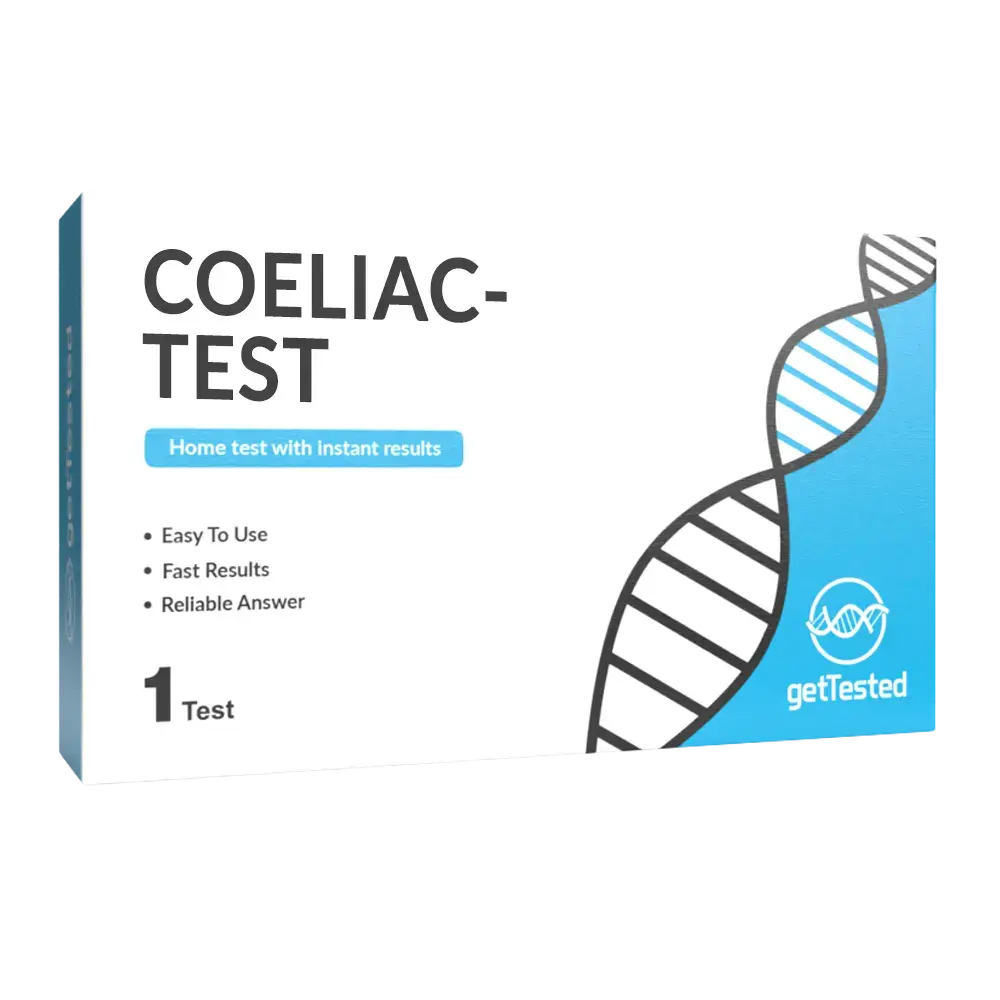
GetTested’s Coeliac Disease Test is an at home test for people who want a fast first indication of whether gluten related symptoms may be linked to coeliac disease. If you experience bloating, diarrhoea, abdominal discomfort, fatigue, weight changes, nutrient deficiency signs or skin irritation after eating gluten containing foods, this test can help you take the first step toward clearer answers. The test detects antibodies associated with coeliac disease and gives a result in 10 minutes, with no laboratory sample return required.
€13.99
€19.99
About Coeliac Test
Understand Coeliac Disease and Gluten Related Symptoms
Coeliac disease and gluten intolerance are not the same thing. Coeliac disease is an autoimmune condition triggered by gluten, while gluten intolerance or gluten sensitivity is a broader term for symptoms after eating gluten.
This test detects anti DGP antibodies associated with coeliac disease related immune activity. It is intended as an initial screening tool and does not confirm a medical diagnosis.
For the most reliable result, you should be eating gluten regularly before testing, as a gluten free diet may lower antibody levels and affect the result.
What This Test Measures
Biomarkers
1 biomarkers
Sample
Blood
Results in
10 minutes
Format
Rapid Test
What the Result Can Tell You
The test gives a positive or negative result.
Positive result
A positive result means antibodies associated with coeliac disease related immune activity were detected. This should be discussed with a healthcare professional for further evaluation.
Negative result
A negative result means no detectable antibodies were found at the test level. If symptoms continue, further guidance may still be needed, especially if you have already reduced or removed gluten from your diet.
How It Works
- 1
Collect Your Sample
- 2
Prepare the Test
- 3
Wait for the Result
- 4
Read Your Result
Sample Collection
The sample is collected using a finger prick blood sample at home. A small amount of blood is collected using the included lancet and pipette, mixed with the provided dilution solution and applied to the test cassette.
Have Questions?
Chat with our AI assistant for instant answers about this product, usage, or recommendations.
Over 500,000 Customers
4.8 out of 5 based on 5 reviews on this product
€13.99
€19.99
Coeliac Test
GetTested’s Coeliac Disease Test is an at home test for people who want a fast first indication of whether gluten related symptoms may be linked to coeliac disease. If you experience bloating, diarrhoea, abdominal discomfort, fatigue, weight changes, nutrient deficiency signs or skin irritation after eating gluten containing foods, this test can help you take the first step toward clearer answers. The test detects antibodies associated with coeliac disease and gives a result in 10 minutes, with no laboratory sample return required.
€13.99
€19.99
Understand Coeliac Disease and Gluten Related Symptoms
Coeliac disease and gluten intolerance are not the same thing. Coeliac disease is an autoimmune condition triggered by gluten, while gluten intolerance or gluten sensitivity is a broader term for symptoms after eating gluten.
This test detects anti DGP antibodies associated with coeliac disease related immune activity. It is intended as an initial screening tool and does not confirm a medical diagnosis.
For the most reliable result, you should be eating gluten regularly before testing, as a gluten free diet may lower antibody levels and affect the result.
What This Test Measures
Biomarkers
1 biomarkers
Sample
Blood
Results in
10 minutes
Format
Rapid Test
What the Result Can Tell You
The test gives a positive or negative result.
Positive result
A positive result means antibodies associated with coeliac disease related immune activity were detected. This should be discussed with a healthcare professional for further evaluation.
Negative result
A negative result means no detectable antibodies were found at the test level. If symptoms continue, further guidance may still be needed, especially if you have already reduced or removed gluten from your diet.
How It Works
- 1
Collect Your Sample
- 2
Prepare the Test
- 3
Wait for the Result
- 4
Read Your Result
Sample Collection
The sample is collected using a finger prick blood sample at home. A small amount of blood is collected using the included lancet and pipette, mixed with the provided dilution solution and applied to the test cassette.
Do I need to eat gluten before taking the test?
What is the difference between coeliac disease and gluten intolerance?
Does this test check for gluten intolerance?
Coeliac Test price and what’s included
Price history
Current price
€13.99
Starting price
€13.99
Total change
€0.00
No. of changes
0
Stable Pricing
No hidden fees. The price you see is the price you pay.
Price Lock Guarantee
Your price won't change after purchase.
Have Questions About This Product?
Chat with our AI assistant for instant answers about this product, usage guidelines, or personalized recommendations.
Over 500,000 Customers
4.8 out of 5 based on 5 reviews on this product