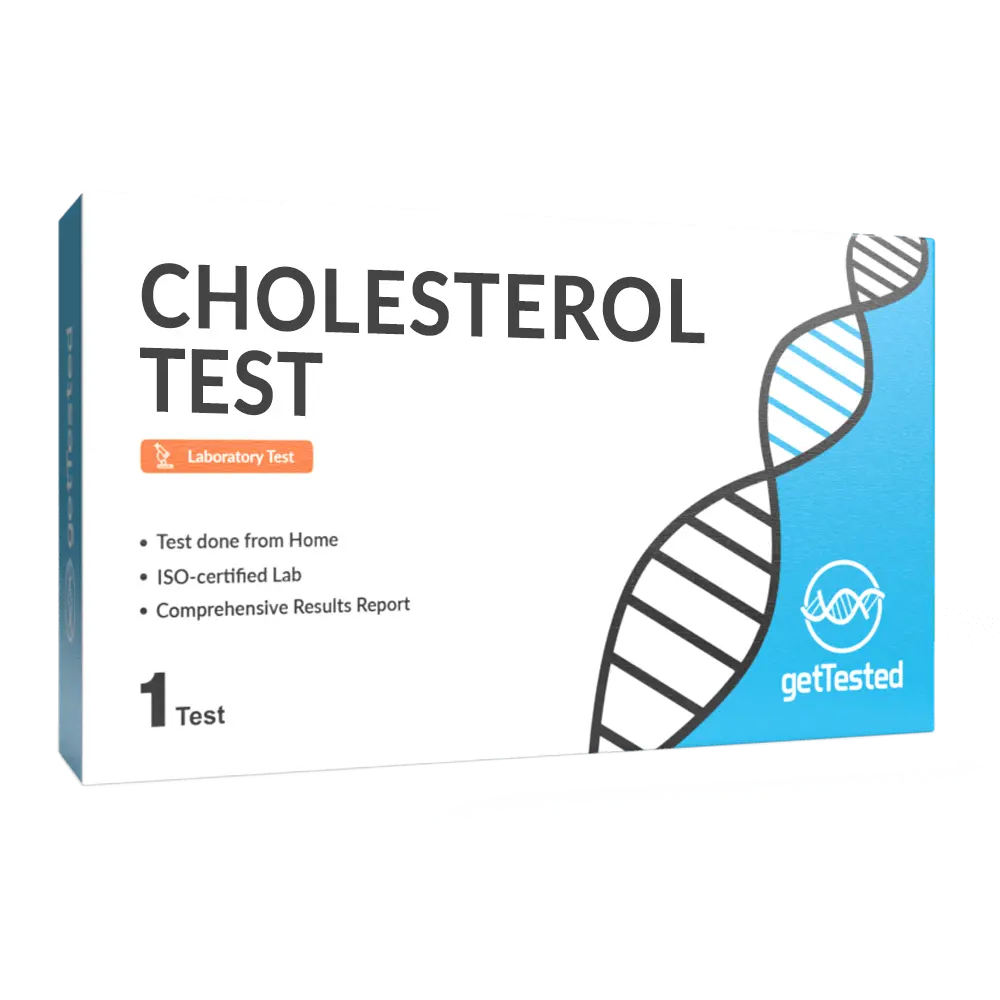
Cholesterol Test
GetTested’s Cholesterol Test is an at home blood test for people who want to understand their cholesterol levels and get clearer insight into markers linked to heart health, blood fat balance and long term cardiovascular wellbeing.
Cholesterol can be elevated without obvious symptoms, which means many people do not know their levels until they test. This test measures total cholesterol, LDL cholesterol, HDL cholesterol, triglycerides and the LDL to HDL ratio.
It is a practical option if you want to monitor your lipid profile, understand your cardiovascular risk related markers or follow changes over time after lifestyle adjustments.
€39.99
About Cholesterol Test
Understand Your Cholesterol Balance
Cholesterol is important for the body, but the balance between different blood fats matters. Looking only at total cholesterol may not show the full picture, since LDL, HDL and triglycerides each provide different information.
By measuring several lipid markers together, this test gives a clearer overview of cholesterol transport, lipid balance and cardiovascular risk related patterns.
What This Test Measures
Biomarkers
5 biomarkers
Sample
Blood
Results in
10-15 business days
Format
Lab Test
How It Works
- 1
Order Your Kit
- 2
Collect Your Sample
- 3
Send It Back
- 4
Receive Your Results
Blood Sample Collection
The sample is collected using a finger prick blood sample at home. Blood is collected into the provided collection tubeaccording to the included instructions and sent to the laboratory for analysis.
Have Questions?
Chat with our AI assistant for instant answers about this product, usage, or recommendations.
Over 500,000 Customers
4.6 out of 5 based on 5 reviews on this product
€39.99
Cholesterol Test
GetTested’s Cholesterol Test is an at home blood test for people who want to understand their cholesterol levels and get clearer insight into markers linked to heart health, blood fat balance and long term cardiovascular wellbeing.
Cholesterol can be elevated without obvious symptoms, which means many people do not know their levels until they test. This test measures total cholesterol, LDL cholesterol, HDL cholesterol, triglycerides and the LDL to HDL ratio.
It is a practical option if you want to monitor your lipid profile, understand your cardiovascular risk related markers or follow changes over time after lifestyle adjustments.
€39.99
Understand Your Cholesterol Balance
Cholesterol is important for the body, but the balance between different blood fats matters. Looking only at total cholesterol may not show the full picture, since LDL, HDL and triglycerides each provide different information.
By measuring several lipid markers together, this test gives a clearer overview of cholesterol transport, lipid balance and cardiovascular risk related patterns.
What This Test Measures
Biomarkers
5 biomarkers
Sample
Blood
Results in
10-15 business days
Format
Lab Test
How It Works
- 1
Order Your Kit
- 2
Collect Your Sample
- 3
Send It Back
- 4
Receive Your Results
Blood Sample Collection
The sample is collected using a finger prick blood sample at home. Blood is collected into the provided collection tubeaccording to the included instructions and sent to the laboratory for analysis.
Why test cholesterol if I have no symptoms?
Do I need to fast before taking the cholesterol test?
Is total cholesterol enough to understand heart health?
Cholesterol Test price and what’s included
Price history
Current price
€39.99
Starting price
€39.99
Total change
€0.00
No. of changes
0
Stable Pricing
No hidden fees. The price you see is the price you pay.
Price Lock Guarantee
Your price won't change after purchase.
Have Questions About This Product?
Chat with our AI assistant for instant answers about this product, usage guidelines, or personalized recommendations.
Over 500,000 Customers
4.6 out of 5 based on 5 reviews on this product