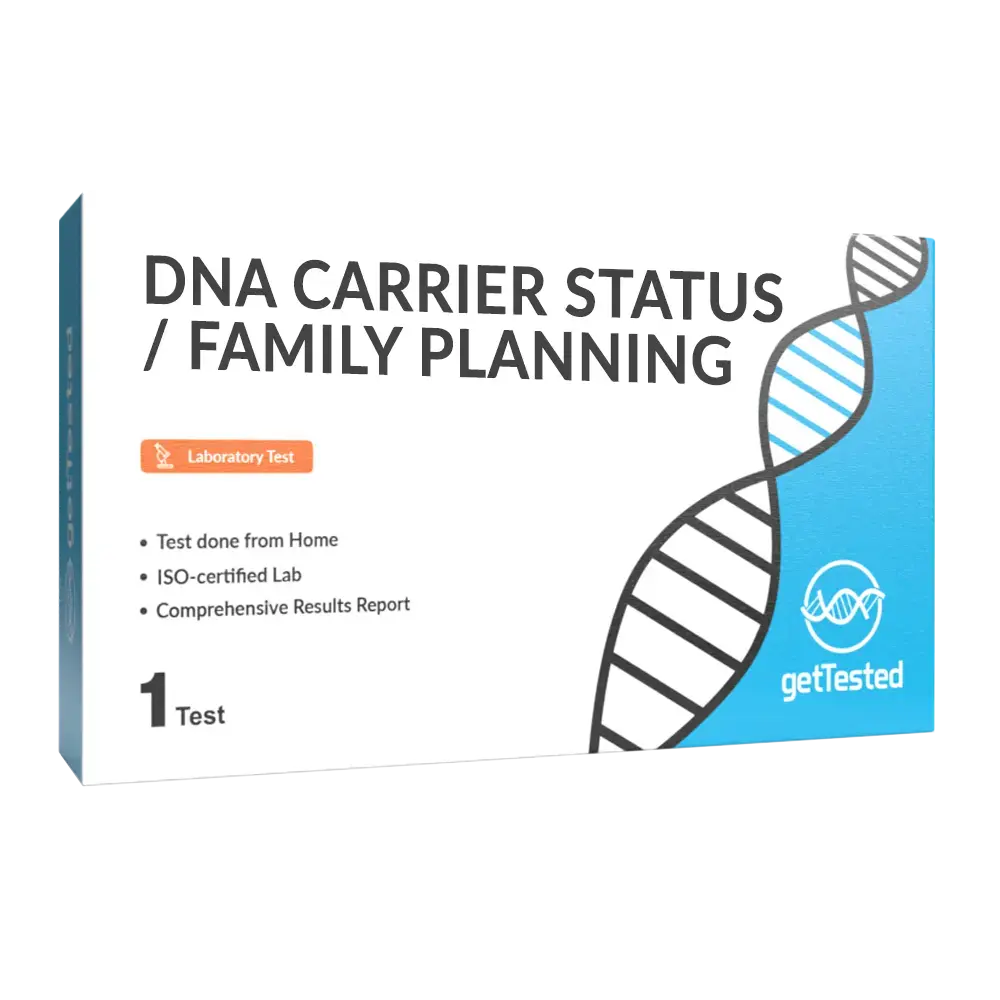
DNA Carrier Status/Family Planning
GetTested’s DNA Carrier Status and Family Planning Test is an at-home DNA test designed to identify inherited genetic variants that may be associated with certain hereditary conditions that can be passed on to future children.
The test analyzes 20 autosomal recessive and X-linked genetic traits related to areas such as metabolism, neurological function, muscle function, and enzyme activity.
Many carriers have no symptoms themselves, making carrier screening especially relevant for individuals or couples planning a pregnancy, undergoing fertility treatment, or seeking deeper insight into inherited genetic traits and potential reproductive risks.
€249.99
About DNA Carrier Status/Family Planning
Genetics and Family Planning
This test analyzes selected genes associated with inherited genetic conditions that may be passed on to future children. By understanding your carrier status, you can gain insight into potential inherited risks and support informed decisions related to pregnancy and family planning.
What This Test Measures
Conditions Inherited Through Recessive Genetics
Biomarkers
20 biomarkers
Sample
Saliva
Results in
3-5 weeks
Format
Lab Test
How It Works
Order Your Kit: Purchase your test online.
Collect Your Sample: Use the saliva collection kit at home.
Send It Back: Mail your sample to the laboratory using the prepaid return envelope.
Receive Results: Access your detailed digital laboratory results within approximately 3–5 weeks after the laboratory receives your sample.
Sample Collection
The sample is collected using a simple saliva test at home. You provide a saliva sample in the collection tube and return it to the laboratory for analysis using the prepaid return packaging included in the kit.
Have Questions?
Chat with our AI assistant for instant answers about this product, usage, or recommendations.
Over 500,000 Customers
4.8 out of 5 based on 5 reviews on this product
€249.99
DNA Carrier Status/Family Planning
GetTested’s DNA Carrier Status and Family Planning Test is an at-home DNA test designed to identify inherited genetic variants that may be associated with certain hereditary conditions that can be passed on to future children.
The test analyzes 20 autosomal recessive and X-linked genetic traits related to areas such as metabolism, neurological function, muscle function, and enzyme activity.
Many carriers have no symptoms themselves, making carrier screening especially relevant for individuals or couples planning a pregnancy, undergoing fertility treatment, or seeking deeper insight into inherited genetic traits and potential reproductive risks.
€249.99
Genetics and Family Planning
This test analyzes selected genes associated with inherited genetic conditions that may be passed on to future children. By understanding your carrier status, you can gain insight into potential inherited risks and support informed decisions related to pregnancy and family planning.
What This Test Measures
Conditions Inherited Through Recessive Genetics
Biomarkers
20 biomarkers
Sample
Saliva
Results in
3-5 weeks
Format
Lab Test
How It Works
Order Your Kit: Purchase your test online.
Collect Your Sample: Use the saliva collection kit at home.
Send It Back: Mail your sample to the laboratory using the prepaid return envelope.
Receive Results: Access your detailed digital laboratory results within approximately 3–5 weeks after the laboratory receives your sample.
Sample Collection
The sample is collected using a simple saliva test at home. You provide a saliva sample in the collection tube and return it to the laboratory for analysis using the prepaid return packaging included in the kit.
How does it work? / When do I get my results?
2. Perform the test.
3. Send a sample at the beginning of the week (to avoid delays).
4. Results digitally in 10–15 business days.
What does it mean to be a "carrier" of a genetic condition?
What happens if both partners are carriers?
Does this test provide ancestry or ethnicity results?
Can I receive the raw data from my test?
DNA Carrier Status/Family Planning price and what’s included
Price history
Current price
€249.99
Starting price
€249.99
Total change
€0.00
No. of changes
0
Stable Pricing
No hidden fees. The price you see is the price you pay.
Price Lock Guarantee
Your price won't change after purchase.
Have Questions About This Product?
Chat with our AI assistant for instant answers about this product, usage guidelines, or personalized recommendations.
Over 500,000 Customers
4.8 out of 5 based on 5 reviews on this product