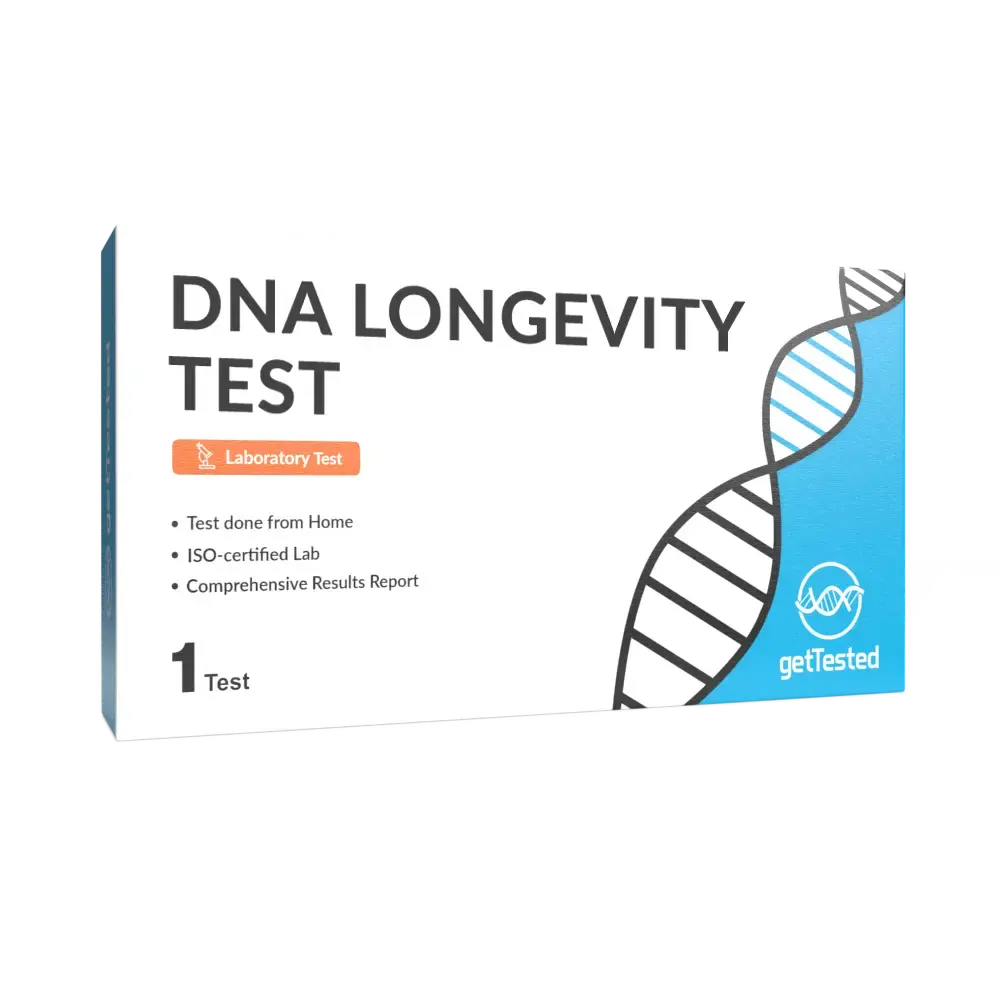
DNA Longevity Test
Analyse genetic markers linked to lifespan and age-related risk for healthier living. Simple home DNA test.
Product details: EUR 179 — InStock — SKU DNAL — GetTested
About this test
Key Benefits
Longevity Related Genetic Insights: Analyzes 15 biomarkers linked to aging, cellular protection and long term health.
Focus on Healthy Aging Pathways: Provides insight into genetic tendencies related to inflammation, oxidative stress, metabolism and cellular repair.
Personalized Recommendations: Receive lifestyle, nutrition and supplement guidance based on your genetic profile.
Digital Results in 3 to 5 Weeks: Access your DNA report online when the analysis is complete.
What This Test Measures
Cellular Protection and Repair
This group includes genetic markers involved in how the body supports cellular maintenance, DNA repair, oxidative stress protection and long term cellular resilience. These pathways are important for understanding how the body may protect and repair itself over time.
Inflammation and Stress Response
This group focuses on genetic markers related to inflammation, antioxidant activity and how the body responds to biological stress. Balanced inflammatory and stress response pathways are important for long term wellbeing and healthy aging.
Metabolism, Energy and Healthy Aging
This group includes genetic markers connected to metabolic regulation, energy related function and biological processes that may influence aging over time. These pathways can provide insight into how the body may maintain energy, metabolic balance and overall function as you age.
How It Works
1. Order Your Kit
Purchase your DNA Longevity Test online.
2. Collect Your Sample
Collect a saliva sample at home using the included collection kit.
3. Send It Back
Mail your sample to the laboratory using the included return materials.
4. Receive Your Results
Access your digital DNA report online in 3 to 5 weeks.
Saliva Sample Collection
The sample is collected using a simple saliva test at home. You provide a saliva sample in the collection tube and send it to the laboratory for analysis according to the included instructions.
The tube contains a stabilizing agent that helps preserve the sample during transport.
ISO Certified Lab and Analysis
Your sample is analyzed in an ISO certified laboratory using the Illumina GSA Microarray, a SNP genotyping method used to analyze selected genetic variations.
Biomarkers included
- FGF13: FGF13 (Fibroblast Growth Factor 13): FGF13 is a member of the fibroblast growth factor (FGF) family that plays a central role in cellular growth and differentiation. This protein acts as a key regulator in various cellular processes, especially influencing cell development and specialization. In neuroscience, FGF13 is well-recognized for its role in supporting neuron function. Researchers are acti
- STEAP2: STEAP2 (Six-Transmembrane Epithelial Antigen of the Prostate 2): STEAP2 is a transmembrane protein that plays a role in cellular iron homeostasis. It helps regulate the transport of iron across cell membranes, affecting iron availability for various cellular functions. STEAP2’s role in iron regulation and its potential link to iron-related disorders make it an important focus in studies of iron me
- FAAP24: FAAP24 (Fanconi Anemia-Associated Protein 24) is a key protein linked to Fanconi anemia, a rare genetic disorder marked by bone marrow failure and increased cancer risk. FAAP24 plays an essential role in the DNA repair process, helping to maintain genomic stability. It contributes to the complex mechanisms that protect the integrity of our genetic material by coordinating DNA repair activities.
- TP53: TP53 (Tumor Protein P53): TP53 is a gene that encodes the p53 protein, a key tumor suppressor involved in preventing cancer development. The p53 protein plays a central role in regulating cell cycle arrest, DNA repair, and apoptosis in response to DNA damage. Mutations in TP53 are linked to many types of cancer, highlighting its importance in cancer research and treatment.
- SOD3: SOD3 (Superoxide Dismutase 3): SOD3 is an enzyme that acts as a defender against oxidative stress by dismutating superoxide radicals. It plays a crucial role in protecting tissues and cells from damage caused by reactive oxygen species. SOD3’s activity supports cardiovascular health and tissue protection, making it an important component of the body’s defense mechanisms.
- PON1: PON1 (Paraoxonase 1): PON1 is a gene that encodes a member of the Y-family DNA polymerases involved in translesion DNA synthesis. This process allows DNA replication to continue past damaged sites, such as UV-induced lesions or bulky chemical adducts. POLK helps maintain genome stability by preventing replication fork stalling but can also introduce mutations due to its error-prone nature, making
- SDHAF3: SDHAF3 (Succinate Dehydrogenase Complex Assembly Factor 3): SDHAF3 is a gene involved in assembling the succinate dehydrogenase complex, a key component of the mitochondrial electron transport chain. This protein helps maintain the proper function of the complex, supporting efficient energy production. Mutations in SDHAF3 can impair mitochondrial activity and contribute to mitochondrial disorders,
- IL6: IL6 (Interleukin 6): IL6 is a cytokine that reflects the activity of the immune system and inflammation. It plays a key role in coordinating the body’s defense mechanisms during infection and injury. IL6 helps regulate inflammatory responses and directs the deployment of immune cells to target threats. Researchers study IL6 to understand its complex interactions and its impact on both normal immun
- SIRT1: SIRT1 (Sirtuin 1): SIRT1 is a protein that belongs to the sirtuin family, which regulates key cellular processes through protein deacetylation. SIRT1 is especially important for its roles in promoting longevity and managing aging. It influences gene expression, supports DNA repair, and helps cells respond to stress, making it a vital factor in aging and age-related health conditions.
- FOXO3: FOXO3 (Forkhead Box O3): FOXO3 is a transcription factor that plays a key role in regulating genes involved in cell cycle arrest, DNA repair, and apoptosis. It is an important player in the study of longevity and age-related diseases, influencing pathways that affect the aging process. In aging research, FOXO3 stands out as a central factor, with scientists working to understand its role in the co
- SIVA1: SIVA1 (SIVA1 Apoptosis-Inducing Factor) is a protein involved in regulating programmed cell death, or apoptosis. It plays a role in controlling cell survival and death pathways, helping maintain the balance between healthy cell function and elimination of damaged cells. Research on SIVA1 focuses on understanding its impact on cellular fate and its potential links to various diseases.
- SLC12A1: SLC12A1 (Solute Carrier Family 12 Member 1): SLC12A1 is a transporter protein belonging to the solute carrier (SLC) family. It plays a key role in the kidney by facilitating the reabsorption of sodium and chloride ions. This function is essential for maintaining electrolyte balance and regulating blood pressure. In the complex filtration process of the renal system, SLC12A1 ensures precise ion rea
- POGZ: POGZ (Pogo Transposable Element Derived with ZNF Domain): POGZ is a protein featuring zinc finger domains that plays a key role in chromatin remodeling and gene regulation. It is essential for shaping chromatin structure and controlling gene expression. Mutations in POGZ are associated with neurodevelopmental disorders, highlighting its importance in brain development and function.
- GBE1: GBE1 (Glycogen Branching Enzyme 1): GBE1 is an enzyme essential for glycogen synthesis, a critical process in energy metabolism. It facilitates the formation of glycogen’s branched structure. Mutations in GBE1 can cause glycogen storage disease type IV, leading to abnormal glycogen accumulation in cells and affecting liver and muscle function.
- PRDM16: PRDM16 (PR Domain Containing 16): PRDM16 is a transcription factor that plays a key role in regulating the differentiation of brown adipocytes and activating thermogenesis. It is essential for controlling energy expenditure and metabolic health. As a central player in managing the body’s energy balance, PRDM16 holds significant potential in advancing our understanding of metabolism and addressing
How to prepare
**24 hours before sample collection** Avoid **alcohol, caffeine, nicotine and intense exercise.** **30 minutes before sample collection** Do not **brush your teeth, drink, eat, smoke or chew gum.** Follow the included instructions carefully before collecting your saliva sample.
Frequently asked questions
Can this test tell me how long I will live?
No. This test does not predict lifespan. It provides insight into genetic tendencies related to healthy aging and long term wellbeing.
Does my DNA determine how I age?
No. Genetics is only one part of the picture. Lifestyle, nutrition, sleep, stress, exercise, environment and health history also play important roles.
Are the reports available in different languages?
The DNA reports are available in English only.
Can I receive the raw data from my test?
No. We provide your results in a comprehensive report with the relevant values and interpretations. We do not provide the raw laboratory data.
Customer reviews
4.8/5 (4)
- 5/5 — Highly recommended for anyone curious about their long-term health.
- 5/5 — Very easy to use at home!
- 4/5 — Really interesting insights into my genetic aging markers. Shipping was fast but after sending my sample results took about 6 weeks... now that I have them the wait feels worth it though :)
- 5/5 — The instructions were clear and the saliva collection took less than five minutes.