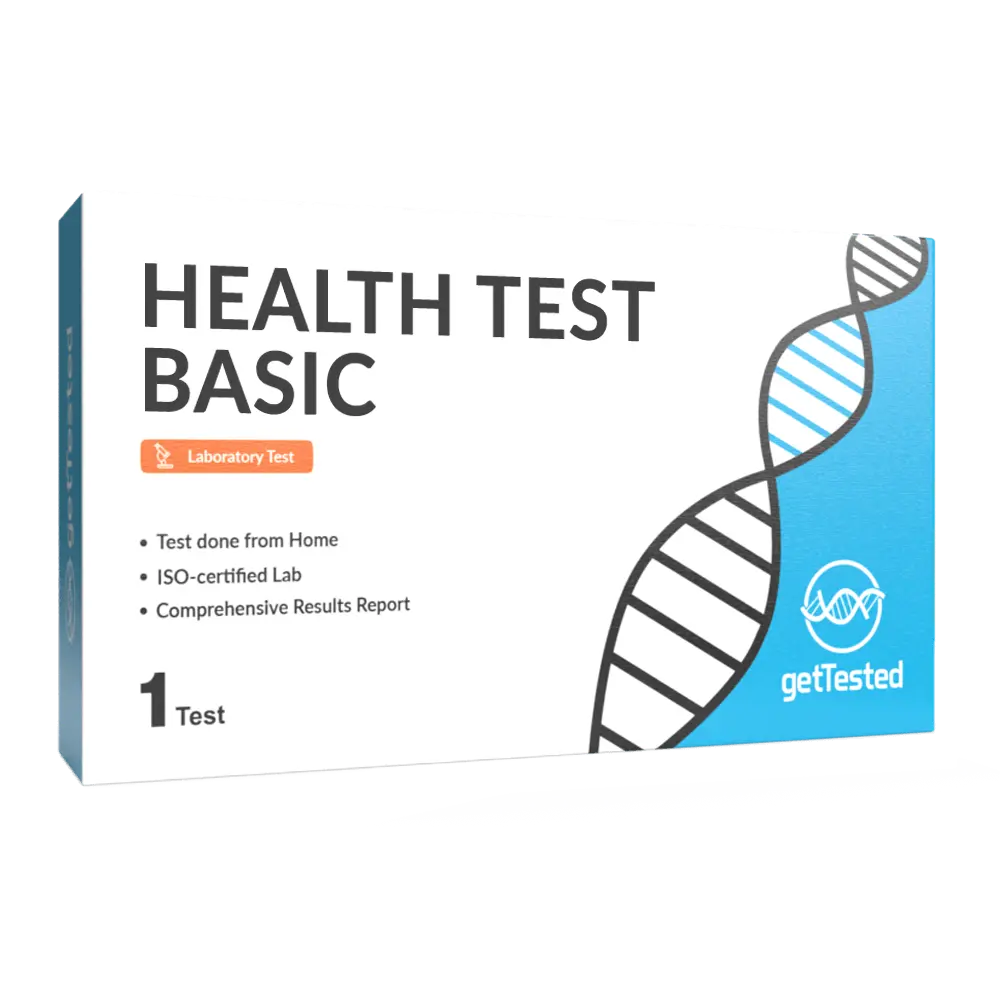
Health Test Basic
Check the essentials of your health from home with key screenings in one basic panel. Understand your status.
Product details: EUR 244.99 — InStock — SKU E670D — GetTested
About this test
Key Benefits
Support understanding of factors that may be associated with common symptoms such as fatigue and low energy
Early Awareness: Identify variations in key health markers
Comprehensive Insight: Covers organs, metabolism, inflammation, and nutrient status
Simple At-Home Testing: Easy finger-prick sample, no clinic visit needed
Informative Results: Clear overview to support awareness of your health and well-being
What This Test Measures
This test evaluates key systems in the body that play an important role in overall health:
Kidney Function
Measures creatinine and urea, which reflect how efficiently the body filters waste and maintains internal balance.
Pancreatic Health
Analyzes amylase, an enzyme involved in digestion and nutrient breakdown.
Liver Function
Includes markers such as Gamma-glutamyltransferas (GGT), Aspartataminotransferas (GOT/AST), GPT (ALT), and ALP (AP), which are associated with metabolism and liver-related processes.
Cholesterol Profile
Measures total cholesterol, LDL, HDL, and triglycerides, which are commonly used to assess cardiovascular and metabolic health.
Inflammation
Assesses hs-CRP, a marker associated with low-grade inflammation in the body.
Thyroid Function
Measures TSH, a hormone involved in regulating metabolism and energy balance.
Vitamins and Minerals
Includes nutrients such as vitamin B12, folate, vitamin D, ferritin, selenium, and copper, which play important roles in energy production, immune function, and overall health.
About Your Symptoms and Health
Many health-related changes can develop gradually and may not always be clearly reflected in routine testing. You may experience feelings such as fatigue, reduced focus, or general imbalance without a clear explanation.
These experiences may be associated with factors such as:
Low iron or vitamin levels
Variations in thyroid function
Low-grade inflammation
Changes in metabolic or liver-related processes
By analyzing a wide range of biomarkers, this test provides insight into these areas and offers a broader understanding of your overall health status.
How It Works
Order Your Kit: Purchase your test online
Collect Your Sample: Take the test at home using a finger-prick sample, preferably fasting in the morning
Send It Back: Mail your sample to the laboratory
Receive Results: Access your digital results within 10–15 days once the laboratory analysis is complete
Sample Collection
The sample is collected using a simple finger-prick blood test at home. You collect a small amount of blood and place it into a sample tube, which is then sent to the laboratory. This method is quick, minimally invasive, and easy to perform.
Accredited Lab and Analysis
Your sample is analyzed in an accredited laboratory, ensuring high standards of accuracy, reliability, and quality control.
Biomarkers included
- TSH: Thyroid-Stimulating Hormone (TSH), also known as thyrotropin, is a hormone produced by the pituitary gland. It plays a crucial role in regulating thyroid function by stimulating the thyroid gland to produce and release thyroid hormones (T3 and T4), which are vital for metabolism, growth, and development. Measuring TSH levels is a primary way to assess thyroid gland activity and diagnose thyroid di
- ALP (Alkaline phosphatase): Alkaline phosphatase (ALP) is an enzyme present in several tissues throughout the body, especially in the liver, bones, kidneys, and digestive system. ALP plays an important role in breaking down proteins and in dephosphorylation processes. In the liver, it’s associated with bile ducts and is commonly used to help diagnose liver and bone conditions. Elevated ALP levels may indicate bile duct obstr
- GOT: GOT, or Gamma-Glutamyl Transferase (GGT), is an enzyme found in various tissues of the body, with the highest levels in the liver. It plays a key role in glutathione metabolism, a vital antioxidant, and is involved in the transport of amino acids across cell membranes. GOT is commonly measured in blood tests and serves as an important marker of liver and biliary tract function.
- Vitamin B12: Vitamin B12 (cobalamin) is a water-soluble vitamin essential for DNA synthesis, red blood cell formation, and neurological function. It's primarily found in animal products, making vegetarians and vegans at higher risk of deficiency. B12 deficiency can lead to pernicious anemia, fatigue, neurological problems (including numbness, tingling, and memory issues), and elevated homocysteine levels, incr
- Amylase: Amylase is an enzyme produced mainly by the pancreas and salivary glands that helps break down carbohydrates into smaller sugars during digestion. Measuring amylase in blood or urine can provide information about pancreatic and salivary gland activity. Elevated levels may be seen when these tissues are inflamed or injured—most notably in pancreatic conditions—while results are typically interprete
- Alanine Aminotransferase (ALT): Alanine aminotransferase (ALT) is an enzyme found mainly in liver cells. When liver cells are stressed or damaged, ALT can leak into the bloodstream, which is why it’s commonly used as a marker of liver health. Elevated ALT levels may indicate liver inflammation or injury and are seen in a range of conditions affecting the liver. ALT is typically interpreted together with other liver-related marke
- Vitamin E: Vitamin E is a fat-soluble vitamin and a powerful antioxidant that protects cells from damage caused by free radicals. It is crucial for immune function, skin health, and red blood cell formation. Measuring Vitamin E levels helps assess nutritional status and antioxidant capacity.
- hs-CRP (high-sensitivity C-reactive protein): High-sensitivity C-reactive protein (hs-CRP) is a specific type of C-reactive protein test that can detect very low levels of inflammation in the body. While CRP is a general marker of inflammation, hs-CRP is particularly important for assessing the risk of cardiovascular disease, even in apparently healthy individuals. Elevated hs-CRP levels suggest chronic low-grade inflammation, which is a sign
- Creatinine: Creatinine is a waste product formed in muscles from the normal breakdown of creatine. It is released into the bloodstream and filtered by the kidneys, then excreted in urine. Because creatinine levels are influenced by how efficiently the kidneys filter blood, it is commonly used to assess kidney function. Elevated creatinine may indicate reduced kidney filtration or kidney disease, while low lev
- Copper: Copper is an essential trace mineral involved in many biological functions, including iron metabolism and red blood cell formation, connective tissue and bone development, and immune function. It serves as a cofactor for numerous enzymes and supports energy production as well as antioxidant defense systems. Both low and high copper levels can affect health, with potential impacts on neurological f
- Folate: Folate (vitamin B9) is a water-soluble vitamin essential for DNA synthesis, cell division, and normal red blood cell formation. It is especially important during pregnancy because adequate folate status supports early fetal development and helps reduce the risk of neural tube defects. Folate also participates in methylation pathways and homocysteine metabolism, where low folate can contribute to e
- Triglycerides: Triglycerides are a type of fat (lipid) found in your blood. Your body uses triglycerides for energy, but high levels can increase your risk of heart disease and other health problems. They are primarily measured to assess cardiovascular health and metabolic risk.
- Total Cholesterol: Total cholesterol is a measure of the total amount of cholesterol in your blood, including LDL (bad), HDL (good), and other lipid components. While it provides a general overview of cholesterol levels, it's important to consider the individual levels of LDL and HDL for a more complete assessment of cardiovascular risk. High total cholesterol can increase the risk of heart disease and stroke.
- HDL (High-Density Lipoprotein): HDL (High-Density Lipoprotein) is a type of cholesterol often referred to as “good” cholesterol. It helps protect heart health by carrying excess cholesterol from the bloodstream to the liver, where it can be removed from the body. Higher HDL levels are associated with a lower risk of heart disease and stroke.
- LDL (Low-Density Lipoprotein): LDL (Low-Density Lipoprotein) is a type of cholesterol often referred to as “bad” cholesterol. It carries cholesterol particles through the bloodstream, and high levels can contribute to plaque buildup in the arteries. This buildup, known as atherosclerosis, can narrow and stiffen arteries, increasing the risk of heart disease and stroke.
- Selenium: Selenium is an essential trace mineral that plays a crucial role in antioxidant defense, thyroid hormone metabolism, and immune function. It acts as a cofactor for selenoproteins, enzymes that protect cells from oxidative damage and are vital for DNA synthesis and reproduction. Measuring selenium levels can indicate nutritional status and potential risks for various health conditions related to de
- Coenzyme Q10: CoQ10 (Coenzyme Q10) is a vital compound that plays a key role in energy production within every cell of the body. It also functions as a powerful antioxidant, helping to protect cells from oxidative damage. CoQ10 is essential for supporting overall health and proper cellular function.
- Urea: Urea is a waste product formed in the liver through the breakdown of proteins. After formation, it is transported to the kidneys and eventually excreted in the urine. Measuring urea levels in the blood, often called blood urea nitrogen (BUN), is a common test used to evaluate kidney function. Elevated blood urea levels can indicate impaired kidney function or other issues affecting waste processin
- GGT: Gamma-glutamyl transferase (GGT) is an enzyme found throughout the body, with the highest levels in the liver. GGT plays an important role in glutathione metabolism, which is vital for antioxidant defense. It helps transfer amino acids and peptides across cell membranes. Elevated GGT levels are often used as a marker to detect liver damage, especially bile duct obstructions and liver conditions re
- Ferritin: Ferritin is a protein that stores iron inside cells and serves as a key indicator of the body’s iron reserves. Measuring ferritin helps assess iron status: low ferritin is commonly associated with depleted iron stores and iron deficiency. Elevated ferritin can occur with iron overload, but it may also rise in response to inflammation, infection, liver disease, or other chronic conditions because f
- Vitamin D: Vitamin D is a fat-soluble vitamin crucial for calcium absorption and bone health, playing a key role in phosphorus metabolism and immune system function. Its importance extends to muscle function, nerve signaling, and reducing inflammation. Maintaining adequate vitamin D levels is vital for overall well-being and disease prevention.
How to prepare
We recommend taking the test in the morning on an empty stomach for the most consistent results.
Frequently asked questions
Can this test explain why I feel the way I do?
This test does not diagnose medical conditions, but it may provide additional insight into biological factors that can be associated with how you feel and help you better understand patterns in your health.
Can I track changes in my health over time with this test?
Yes, this test can be used repeatedly over time to monitor changes in your biomarker levels and gain a better understanding of how your health develops.
Can I take this test if I feel healthy?
Yes, the test is also suitable for individuals who want to gain a better understanding of their health and monitor key biomarkers over time.
Customer reviews
4.6/5 (5)
- 4/5 — Great product, but it took a bit longer than expected to get the kit in the mail. Everything else was perfect.
- 4/5 — Very convenient way to check my vitamin levels without the doctor's office hassle.
- 5/5 — Setup was simple and results were easy to understand.
- 5/5 — Highly recommend for anyone needing a quick health baseline. Easy to use.
- 5/5 — Fast delivery and easy to follow instructions.