Heavy Metals Test
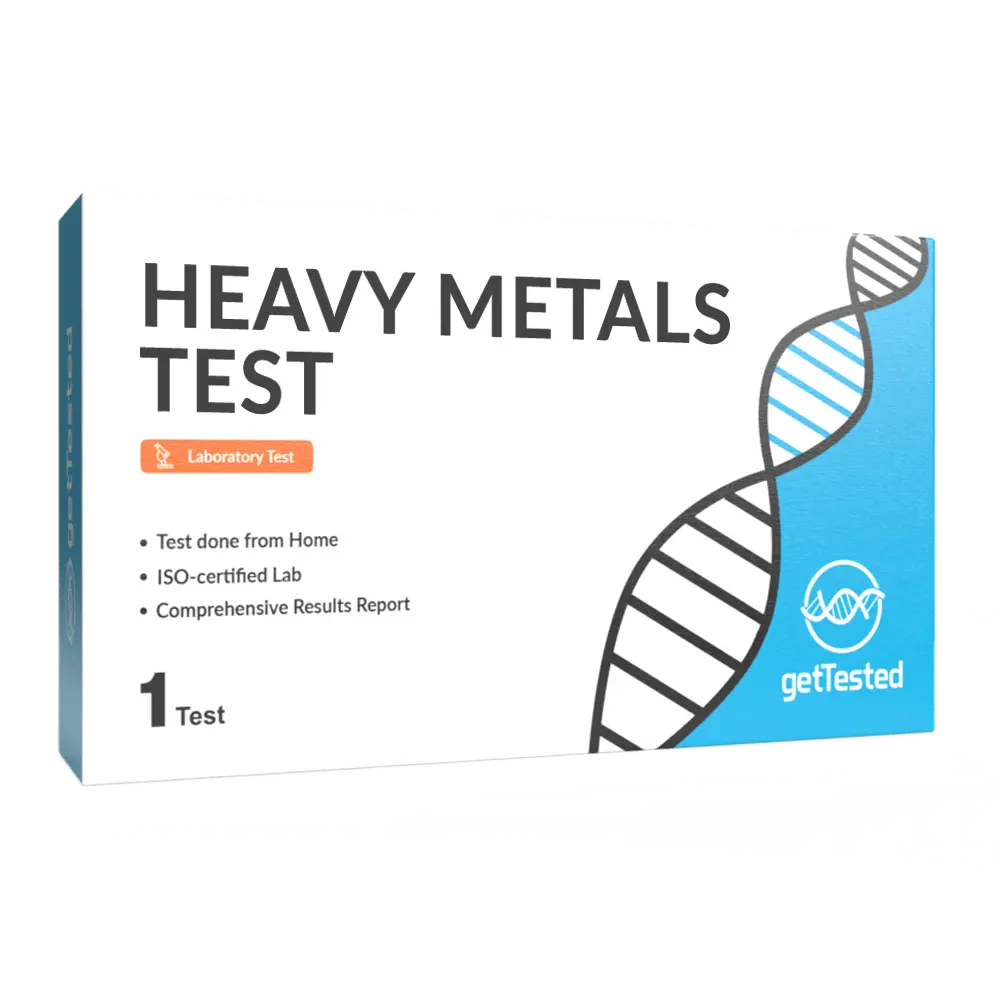
GetTested’s Heavy Metals Test is an at home urine test for people who want to understand whether selected metals may be part of the picture behind fatigue, brain fog, headaches, digestive discomfort, concentration issues, mood changes, sleep problems or skin changes.
Heavy metal exposure is not always obvious. It can come from everyday sources such as food, water, seafood, smoking, supplements, cosmetics, old materials, workplace exposure or the surrounding environment.
€149.99
About Heavy Metals Test
Heavy Metals and Environmental Exposure
Heavy metals are elements that may enter the body through food, water, air or direct contact with products and materials. Some, such as lead, cadmium, arsenic and mercury, are mainly relevant because higher or repeated exposure may affect normal biological processes.
Over time, certain metals may accumulate or place pressure on systems involved in energy production, nervous system function, digestion, immune response and the body’s natural clearance pathways.
The test also includes selected trace elements such as zinc, copper, chromium and cobalt, which have important roles in the body in small amounts but can still be relevant to evaluate as part of a broader metal profile.
What This Test Measures
Toxic and Environmental Metals
Trace Elements and Metal Balance
Biomarkers
10 biomarkers
Sample
Urine
Results in
10-15 business days
Format
Lab Test
How It Works
- 1
Order Your Kit
- 2
Collect Your Sample
- 3
Send It Back
- 4
Receive Your Results
Sample Collection
The sample is collected using first morning urine. Collect the sample according to the included instructions and send it to the laboratory for analysis.
Do not collect the sample during menstruation.
Have Questions?
Chat with our AI assistant for instant answers about this product, usage, or recommendations.
Over 500,000 Customers
4.6 out of 5 based on 5 reviews on this product
€149.99
Heavy Metals Test
GetTested’s Heavy Metals Test is an at home urine test for people who want to understand whether selected metals may be part of the picture behind fatigue, brain fog, headaches, digestive discomfort, concentration issues, mood changes, sleep problems or skin changes.
Heavy metal exposure is not always obvious. It can come from everyday sources such as food, water, seafood, smoking, supplements, cosmetics, old materials, workplace exposure or the surrounding environment.
€149.99
Heavy Metals and Environmental Exposure
Heavy metals are elements that may enter the body through food, water, air or direct contact with products and materials. Some, such as lead, cadmium, arsenic and mercury, are mainly relevant because higher or repeated exposure may affect normal biological processes.
Over time, certain metals may accumulate or place pressure on systems involved in energy production, nervous system function, digestion, immune response and the body’s natural clearance pathways.
The test also includes selected trace elements such as zinc, copper, chromium and cobalt, which have important roles in the body in small amounts but can still be relevant to evaluate as part of a broader metal profile.
What This Test Measures
Toxic and Environmental Metals
Trace Elements and Metal Balance
Biomarkers
10 biomarkers
Sample
Urine
Results in
10-15 business days
Format
Lab Test
How It Works
- 1
Order Your Kit
- 2
Collect Your Sample
- 3
Send It Back
- 4
Receive Your Results
Sample Collection
The sample is collected using first morning urine. Collect the sample according to the included instructions and send it to the laboratory for analysis.
Do not collect the sample during menstruation.
Where can heavy metal exposure come from?
Should I stop taking supplements before the test?
Why should I avoid seafood before testing?
Heavy Metals Test price and what’s included
Price history
Current price
€149.99
Starting price
€149.99
Total change
€0.00
No. of changes
0
Stable Pricing
No hidden fees. The price you see is the price you pay.
Price Lock Guarantee
Your price won't change after purchase.
Have Questions About This Product?
Chat with our AI assistant for instant answers about this product, usage guidelines, or personalized recommendations.
Over 500,000 Customers
4.6 out of 5 based on 5 reviews on this product