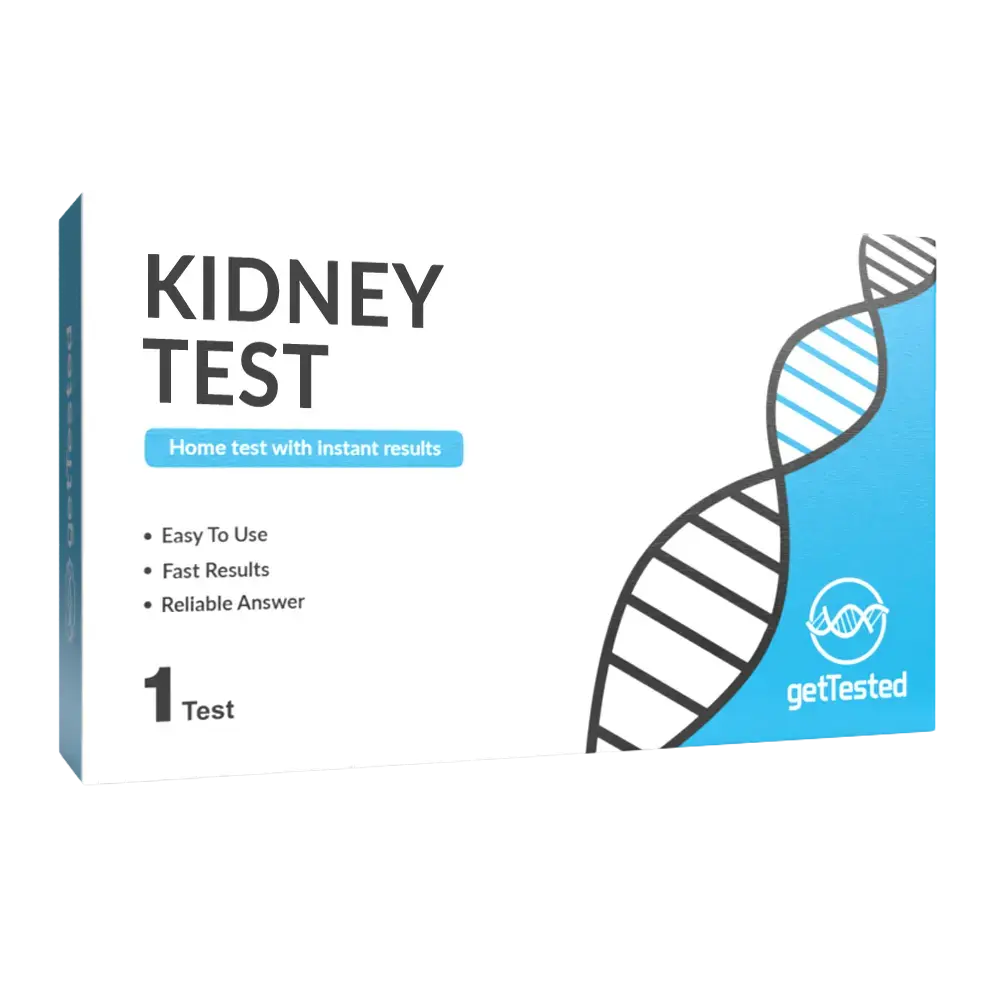
Kidney Test
GetTested’s Kidney Test is a rapid at home urine test for people who want a quick first check of markers linked to kidney health, urine concentration and possible signs of protein leakage.
Kidney related changes do not always cause clear symptoms early on. This test can be a practical option if you want to keep an eye on your kidney health, especially if you have risk factors such as high blood pressure, diabetes or a family history of kidney disease.
By measuring urine density, creatinine and protein from a urine sample, the test gives a quick first indication of selected urine markers linked to kidney health, with results available within minutes.
€14.99
About Kidney Test
Understand Kidney Health and Urine Markers
The kidneys help filter waste products, regulate fluid balance and maintain important internal processes in the body. When kidney function is affected, changes may sometimes appear in urine before symptoms become obvious.
This rapid test checks urine based markers that can provide a first indication of whether further follow up may be worth considering. It does not replace medical diagnosis or laboratory kidney function testing, but it can support early awareness from home.
For the most useful result, the test should be performed using first morning urine, as this sample is usually more concentrated.
What This Test Measures
Biomarkers
3 biomarkers
Sample
Urine
Results in
1 minute
Format
Rapid Test
What the Result Can Tell You
The test gives an indication of urine density, creatinine and protein levels.
Urine density
Helps show how concentrated the urine is, which can provide context around hydration and kidney concentrating ability.
Creatinine
Creatinine is a waste related compound used in kidney health assessment. In this urine test, it helps provide context for the sample and kidney related markers.
Protein in urine
Protein in urine may be a sign that the kidneys are allowing protein to pass into the urine, which can be relevant for kidney health follow up.
This test is intended as an initial screening tool and does not replace medical diagnosis or laboratory kidney function testing.
How It Works
- 1
Collect Your Sample
- 2
Dip the Test Strip
- 3
Wait for the Reaction
- 4
Read Your Result
Sample Collection
The sample is collected using a urine sample at home. For best results, use first morning urine, as it is usually more concentrated.
Follow the included instructions carefully and compare the test strip results with the colour chart within the correct reading time.
Have Questions?
Chat with our AI assistant for instant answers about this product, usage, or recommendations.
Over 500,000 Customers
4.8 out of 5 based on 5 reviews on this product
€14.99
Kidney Test
GetTested’s Kidney Test is a rapid at home urine test for people who want a quick first check of markers linked to kidney health, urine concentration and possible signs of protein leakage.
Kidney related changes do not always cause clear symptoms early on. This test can be a practical option if you want to keep an eye on your kidney health, especially if you have risk factors such as high blood pressure, diabetes or a family history of kidney disease.
By measuring urine density, creatinine and protein from a urine sample, the test gives a quick first indication of selected urine markers linked to kidney health, with results available within minutes.
€14.99
Understand Kidney Health and Urine Markers
The kidneys help filter waste products, regulate fluid balance and maintain important internal processes in the body. When kidney function is affected, changes may sometimes appear in urine before symptoms become obvious.
This rapid test checks urine based markers that can provide a first indication of whether further follow up may be worth considering. It does not replace medical diagnosis or laboratory kidney function testing, but it can support early awareness from home.
For the most useful result, the test should be performed using first morning urine, as this sample is usually more concentrated.
What This Test Measures
Biomarkers
3 biomarkers
Sample
Urine
Results in
1 minute
Format
Rapid Test
What the Result Can Tell You
The test gives an indication of urine density, creatinine and protein levels.
Urine density
Helps show how concentrated the urine is, which can provide context around hydration and kidney concentrating ability.
Creatinine
Creatinine is a waste related compound used in kidney health assessment. In this urine test, it helps provide context for the sample and kidney related markers.
Protein in urine
Protein in urine may be a sign that the kidneys are allowing protein to pass into the urine, which can be relevant for kidney health follow up.
This test is intended as an initial screening tool and does not replace medical diagnosis or laboratory kidney function testing.
How It Works
- 1
Collect Your Sample
- 2
Dip the Test Strip
- 3
Wait for the Reaction
- 4
Read Your Result
Sample Collection
The sample is collected using a urine sample at home. For best results, use first morning urine, as it is usually more concentrated.
Follow the included instructions carefully and compare the test strip results with the colour chart within the correct reading time.
How do I read the results of the kidney test?
Why is protein in urine important?
What should I do if the result is abnormal?
Kidney Test price and what’s included
Price history
Current price
€14.99
Starting price
€14.99
Total change
€0.00
No. of changes
0
Stable Pricing
No hidden fees. The price you see is the price you pay.
Price Lock Guarantee
Your price won't change after purchase.
Have Questions About This Product?
Chat with our AI assistant for instant answers about this product, usage guidelines, or personalized recommendations.
Over 500,000 Customers
4.8 out of 5 based on 5 reviews on this product