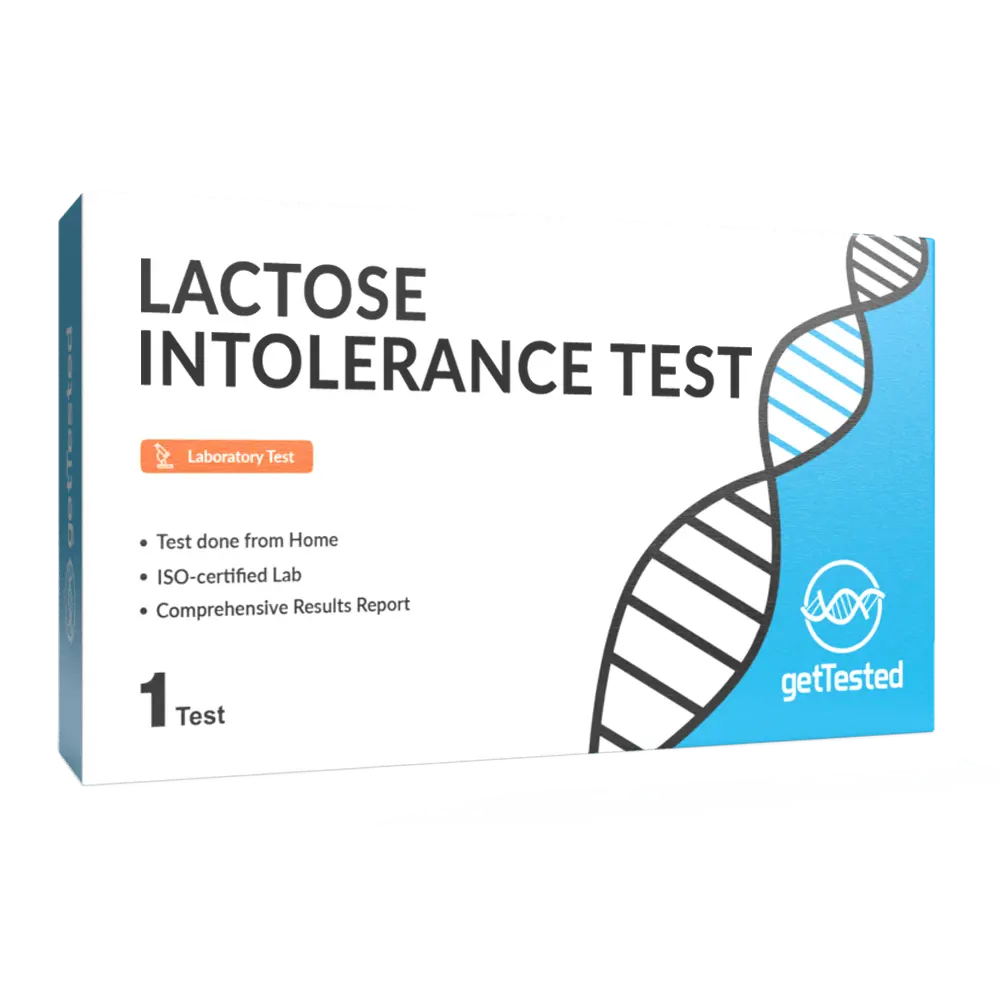
Lactose Intolerance Test
GetTested’s Lactose Intolerance Test is an at home breath test for people who experience bloating, gas, abdominal discomfort, rumbling, diarrhoea or digestive upset after consuming milk, cream, yoghurt, ice cream, cheese or other lactose containing foods.
If your stomach often reacts after dairy, or you feel unsure whether milk products are causing your symptoms, this test can help you understand whether poor lactose digestion may be part of the picture.
€79.99
About Lactose Intolerance Test
Lactose Malabsorption and Digestive Symptoms
Lactose is the natural sugar found in milk and dairy products. To digest lactose properly, the body needs lactase, an enzyme produced in the small intestine.
When lactase activity is low, lactose may not be fully broken down and absorbed. Instead, it can reach the large intestine, where gut bacteria ferment it and produce gases. This can lead to symptoms such as bloating, gas, abdominal pain, rumbling, diarrhoea or digestive discomfort after dairy products.
This test measures hydrogen and methane in breath samples after lactose intake to assess how your body digests lactose.
What This Test Measures
Biomarkers
2 biomarkers
Sample
Breath
Results in
10-15 business days
Format
Lab Test
How It Works
- 1
Order Your Kit
- 2
Prepare Before Testing
- 3
Collect Your Samples
- 4
Send It Back
- 5
Receive Your Results
Sample Collection
The sample is collected using a breath test at home. You collect breath samples at specific time points before and after drinking the lactose solution, according to the included instructions.
Correct preparation and sample timing are important, as diet, medication, supplements and gut activity can affect breath gas results.
Have Questions?
Chat with our AI assistant for instant answers about this product, usage, or recommendations.
Over 500,000 Customers
4.6 out of 5 based on 5 reviews on this product
€79.99
Lactose Intolerance Test
GetTested’s Lactose Intolerance Test is an at home breath test for people who experience bloating, gas, abdominal discomfort, rumbling, diarrhoea or digestive upset after consuming milk, cream, yoghurt, ice cream, cheese or other lactose containing foods.
If your stomach often reacts after dairy, or you feel unsure whether milk products are causing your symptoms, this test can help you understand whether poor lactose digestion may be part of the picture.
€79.99
Lactose Malabsorption and Digestive Symptoms
Lactose is the natural sugar found in milk and dairy products. To digest lactose properly, the body needs lactase, an enzyme produced in the small intestine.
When lactase activity is low, lactose may not be fully broken down and absorbed. Instead, it can reach the large intestine, where gut bacteria ferment it and produce gases. This can lead to symptoms such as bloating, gas, abdominal pain, rumbling, diarrhoea or digestive discomfort after dairy products.
This test measures hydrogen and methane in breath samples after lactose intake to assess how your body digests lactose.
What This Test Measures
Biomarkers
2 biomarkers
Sample
Breath
Results in
10-15 business days
Format
Lab Test
How It Works
- 1
Order Your Kit
- 2
Prepare Before Testing
- 3
Collect Your Samples
- 4
Send It Back
- 5
Receive Your Results
Sample Collection
The sample is collected using a breath test at home. You collect breath samples at specific time points before and after drinking the lactose solution, according to the included instructions.
Correct preparation and sample timing are important, as diet, medication, supplements and gut activity can affect breath gas results.
Why do I need to prepare before the test?
Which foods contain lactose?
How long does it take to perform the test?
Do I need to be fasting to take the test?
Why is there a small hole in the breath collection bag?
Lactose Intolerance Test price and what’s included
Price history
Current price
€79.99
Starting price
€79.99
Total change
€0.00
No. of changes
0
Stable Pricing
No hidden fees. The price you see is the price you pay.
Price Lock Guarantee
Your price won't change after purchase.
Have Questions About This Product?
Chat with our AI assistant for instant answers about this product, usage guidelines, or personalized recommendations.
Over 500,000 Customers
4.6 out of 5 based on 5 reviews on this product