Microplastics Test
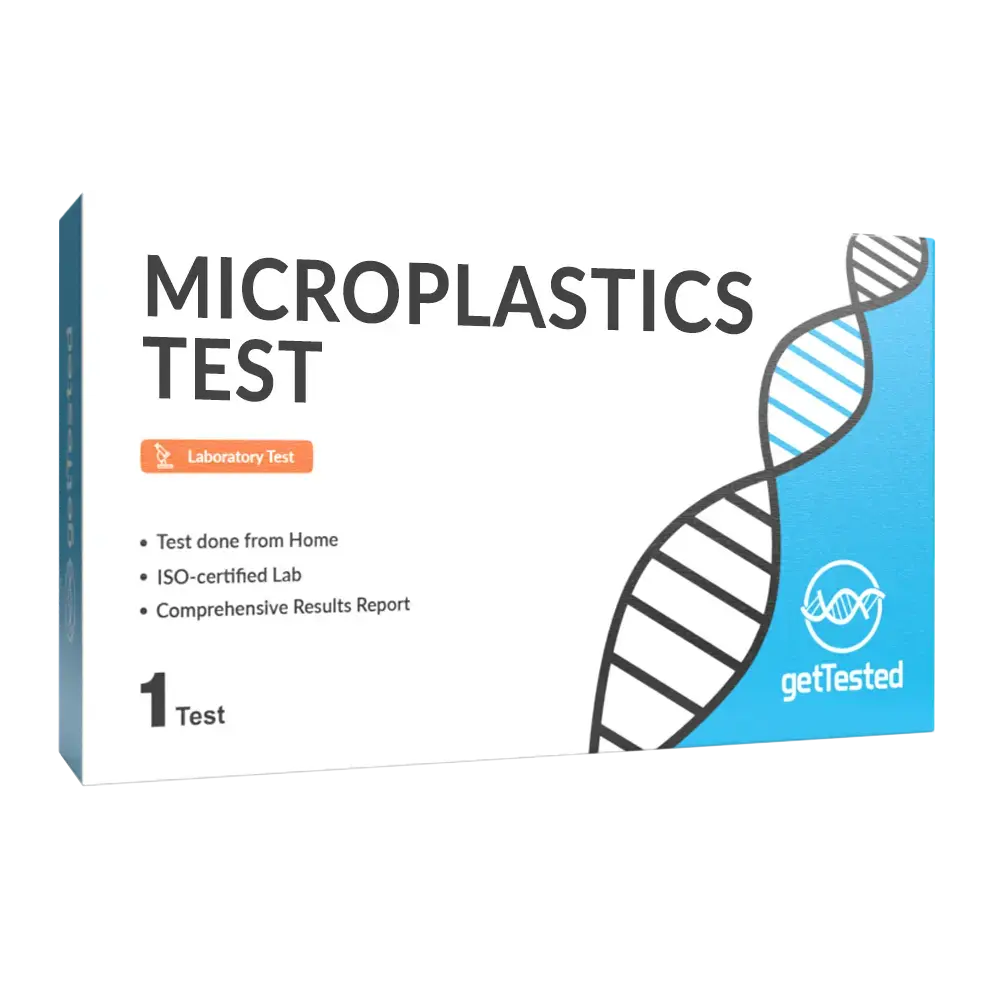
GetTested’s Microplastics Test is an at-home lab test designed to measure microplastic particles in the blood. The test analyzes particles smaller than 30 micrometers, which may enter the body through food, drinking water, air, household dust, and everyday environmental exposure.
Your results show the total number of detected microplastic particles along with their distribution across different size categories. The test also includes a comparison to a reference population of more than 1,000 tested individuals, providing additional context for interpretation.
You collect your sample easily at home using a simple finger-prick blood test and receive your results digitally after laboratory analysis.
€159.99
About Microplastics Test
Microplastic Exposure
This test measures microplastic particles in the blood to provide insight into your internal exposure to microscopic plastic particles from the environment.
By understanding your level of exposure, you can gain a broader perspective on how everyday environmental factors may contribute to your overall health and well-being.
What This Test Measures
Biomarkers
1 biomarkers
Sample
Blood
Results in
10-15 business days
Format
Lab Test
How It Works
Order Your Kit: Purchase your test online.
Collect Your Sample: Use the finger-prick blood collection kit at home.
Send It Back: Mail your sample to the laboratory using the prepaid return envelope.
Receive Results: Access your digital laboratory results within approximately 10–15 business days after the lab receives your sample.
Sample Collection
The sample is collected using a simple finger-prick blood test at home. The kit includes both a metal lancet and standard lancets. For the most accurate results, the metal lancet is recommended as it minimizes the risk of plastic contamination during sample collection.
For best results, we recommend taking the test on an empty stomach in the morning.
Have Questions?
Chat with our AI assistant for instant answers about this product, usage, or recommendations.
Over 500,000 Customers
4.6 out of 5 based on 5 reviews on this product
€159.99
Microplastics Test
GetTested’s Microplastics Test is an at-home lab test designed to measure microplastic particles in the blood. The test analyzes particles smaller than 30 micrometers, which may enter the body through food, drinking water, air, household dust, and everyday environmental exposure.
Your results show the total number of detected microplastic particles along with their distribution across different size categories. The test also includes a comparison to a reference population of more than 1,000 tested individuals, providing additional context for interpretation.
You collect your sample easily at home using a simple finger-prick blood test and receive your results digitally after laboratory analysis.
€159.99
Microplastic Exposure
This test measures microplastic particles in the blood to provide insight into your internal exposure to microscopic plastic particles from the environment.
By understanding your level of exposure, you can gain a broader perspective on how everyday environmental factors may contribute to your overall health and well-being.
What This Test Measures
Biomarkers
1 biomarkers
Sample
Blood
Results in
10-15 business days
Format
Lab Test
How It Works
Order Your Kit: Purchase your test online.
Collect Your Sample: Use the finger-prick blood collection kit at home.
Send It Back: Mail your sample to the laboratory using the prepaid return envelope.
Receive Results: Access your digital laboratory results within approximately 10–15 business days after the lab receives your sample.
Sample Collection
The sample is collected using a simple finger-prick blood test at home. The kit includes both a metal lancet and standard lancets. For the most accurate results, the metal lancet is recommended as it minimizes the risk of plastic contamination during sample collection.
For best results, we recommend taking the test on an empty stomach in the morning.
How does it work? / When do I get my results?
2. Perform the test.
3. Send a sample at the beginning of the week (to avoid delays).
4. Results digitally in 10–15 business days.
What exactly does the microplastics test measure?
How do microplastics get into my blood?
Will the plastic in the test kit affect my results?
How do I know if my microplastic levels are too high?
Microplastics Test price and what’s included
Price history
Current price
€159.99
Starting price
€159.99
Total change
€0.00
No. of changes
0
Stable Pricing
No hidden fees. The price you see is the price you pay.
Price Lock Guarantee
Your price won't change after purchase.
Have Questions About This Product?
Chat with our AI assistant for instant answers about this product, usage guidelines, or personalized recommendations.
Over 500,000 Customers
4.6 out of 5 based on 5 reviews on this product