Mycoplasma test
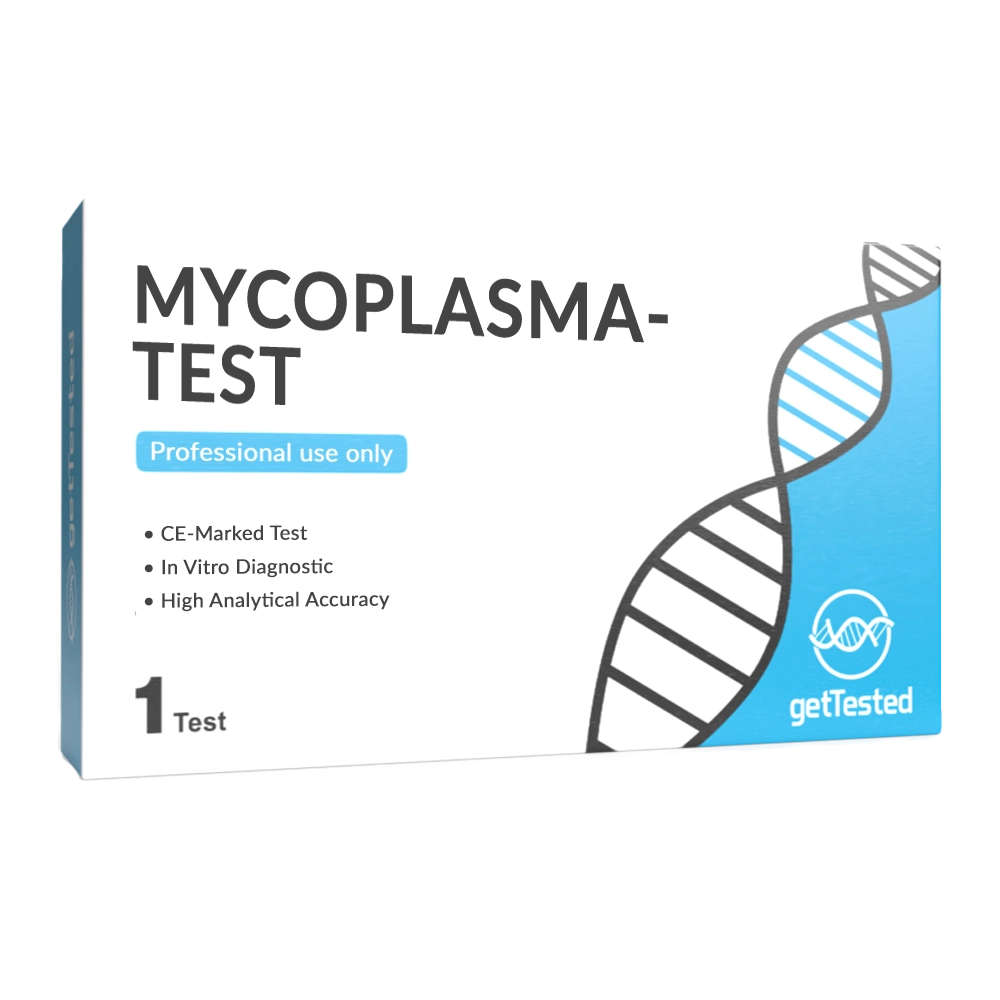
GetTested’s Mycoplasma Test is a professional rapid blood test intended for use in healthcare settings to support screening for antibodies against Mycoplasma pneumoniae.
The test detects IgG and IgM antibodies in a blood sample and provides a qualitative visual result after 10 minutes. These antibody markers can support professional interpretation when respiratory symptoms or patient history suggest possible Mycoplasma pneumoniae infection.
€19.99
About Mycoplasma test
About the Mycoplasma Test
Mycoplasma pneumoniae is a bacterium associated with respiratory tract infections and is often linked to atypical pneumonia, sometimes referred to as “walking pneumonia”.
The GetTested Mycoplasma Test is designed for qualitative detection of IgG and IgM antibodies against Mycoplasma pneumoniae in whole blood, serum or plasma. These antibody patterns may support professional assessment of immune response, but should not be interpreted alone.
The test is CE-marked and intended for professional use in healthcare settings.
What This Test Measures
Biomarkers
2 biomarkers
Sample
Blood
Results in
10 minutes
Format
Rapid Test
How It Works
- 1
Order the Kit
- 2
Collect the Sample
- 3
Run the Test
- 4
Read the Result
Sample Collection
The test uses a finger prick blood sample. The sample is collected from the fingertip and applied to the test cassette together with the included buffer, according to the test procedure.
Sample collection, handling and result interpretation should be performed according to the included instructions and applicable professional procedures.
Have Questions?
Chat with our AI assistant for instant answers about this product, usage, or recommendations.
Over 500,000 Customers
4.7 out of 5 based on 6 reviews on this product
€19.99
Mycoplasma test
GetTested’s Mycoplasma Test is a professional rapid blood test intended for use in healthcare settings to support screening for antibodies against Mycoplasma pneumoniae.
The test detects IgG and IgM antibodies in a blood sample and provides a qualitative visual result after 10 minutes. These antibody markers can support professional interpretation when respiratory symptoms or patient history suggest possible Mycoplasma pneumoniae infection.
€19.99
About the Mycoplasma Test
Mycoplasma pneumoniae is a bacterium associated with respiratory tract infections and is often linked to atypical pneumonia, sometimes referred to as “walking pneumonia”.
The GetTested Mycoplasma Test is designed for qualitative detection of IgG and IgM antibodies against Mycoplasma pneumoniae in whole blood, serum or plasma. These antibody patterns may support professional assessment of immune response, but should not be interpreted alone.
The test is CE-marked and intended for professional use in healthcare settings.
What This Test Measures
Biomarkers
2 biomarkers
Sample
Blood
Results in
10 minutes
Format
Rapid Test
How It Works
- 1
Order the Kit
- 2
Collect the Sample
- 3
Run the Test
- 4
Read the Result
Sample Collection
The test uses a finger prick blood sample. The sample is collected from the fingertip and applied to the test cassette together with the included buffer, according to the test procedure.
Sample collection, handling and result interpretation should be performed according to the included instructions and applicable professional procedures.
What is the difference between IgG and IgM antibodies?
Can a negative result exclude Mycoplasma pneumoniae infection?
Is this test intended for home use?
Mycoplasma test price and what’s included
Price history
Current price
€19.99
Starting price
€19.99
Total change
€0.00
No. of changes
0
Stable Pricing
No hidden fees. The price you see is the price you pay.
Price Lock Guarantee
Your price won't change after purchase.
Have Questions About This Product?
Chat with our AI assistant for instant answers about this product, usage guidelines, or personalized recommendations.
Over 500,000 Customers
4.7 out of 5 based on 6 reviews on this product