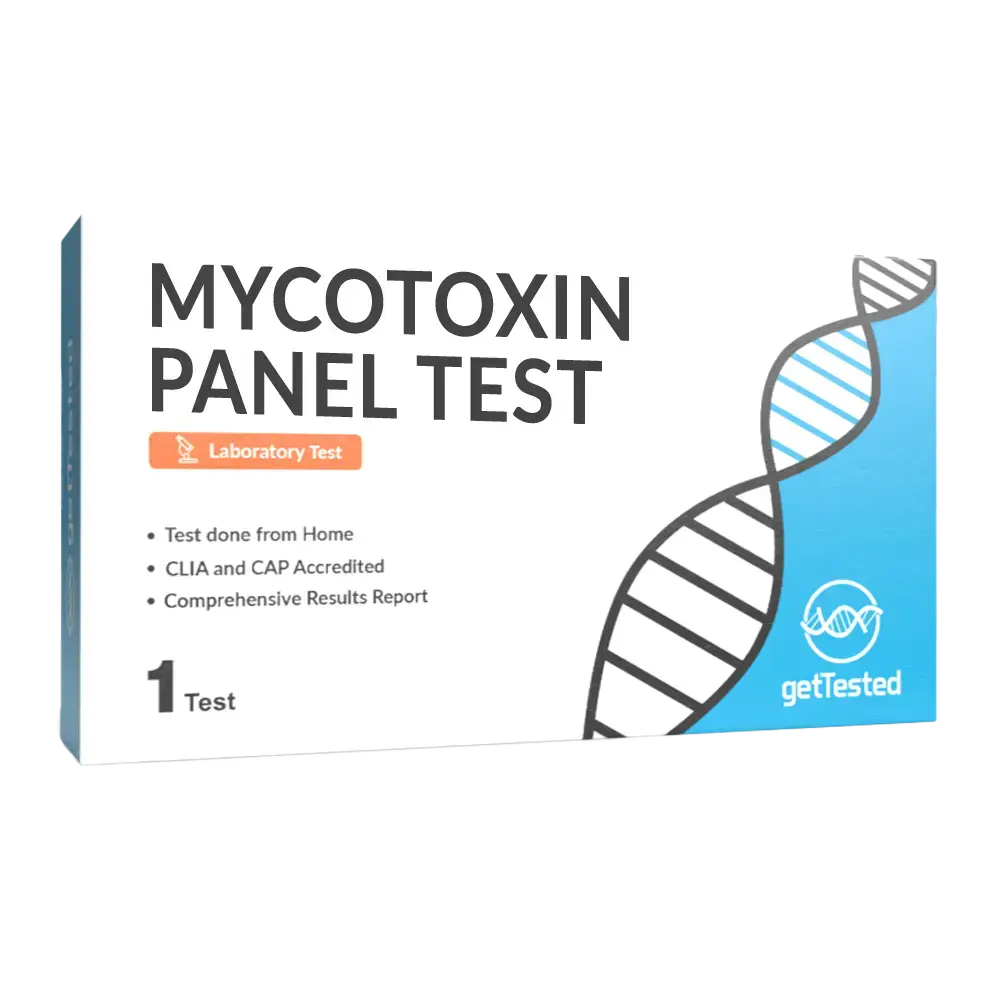
Mycotoxin Panel Test
Detect common mycotoxins with a quick, reliable home test. Easy, safe sample collection to protect your health.
Product details: EUR 409.99 — InStock — SKU UMT — GetTested
About this test
Key Benefits
Measure 16 Mycotoxins: Detect common mold-related toxins in urine.
Broad Mold Exposure Analysis: Covers toxins produced by more than 300 mold species.
Simple At-Home Testing: Collect your sample easily using a urine test at home.
Detailed Digital Results: Access your laboratory results online within 10-15 business days.
Environmental Exposure Insights: Gain a broader understanding of potential mold and toxin exposure.
What This Test Measures
This test measures 16 mycotoxins across several toxin families, including:
-
Aflatoxins
Toxic compounds linked to mold-contaminated food and water-damaged environments.
The Aflatoxin group includes:
Aflatoxin B1
Aflatoxin B2
Aflatoxin G1
Aflatoxin G2
Aflatoxins are reported as one combined group result, as these compounds belong to the same toxin family and are commonly found together in contaminated foods and environments.
-
Trichothecenes
A group of mycotoxins that may affect immune and cellular function.
Includes several Trichothecenes, such as:
Satratoxin G
Satratoxin H
Isosatratoxin F
Roridin A
Roridin E
Roridin H
Roridin L-2
Verrucarin J
Verrucarin A
Trichothecenes are reported as one combined group result because these toxins are closely related compounds that are often produced together by the same molds.
-
Other Mycotoxins
The test also measures the following mycotoxins individually:
Gliotoxin
Ochratoxin A (OTA)
Zearalenone (ZEA)
These are reported with separate individual results.
About Mycotoxins
Mycotoxins are toxic compounds produced by molds that can be found in water-damaged buildings, contaminated food, air, and damp indoor environments. Exposure levels may vary depending on environmental conditions, lifestyle, and individual sensitivity.
Research has shown that mold-related toxins may influence processes connected to oxidative stress, immune balance, and overall well-being.
Symptoms Associated With Mold Exposure
Exposure to mycotoxins and mold-contaminated environments may affect individuals differently depending on exposure levels, environment, and individual sensitivity.
Commonly reported symptoms associated with mold exposure may include:
Fatigue and low energy
Brain fog and concentration difficulties
Headaches
Sinus congestion and respiratory irritation
Coughing or shortness of breath
Skin irritation
Digestive discomfort
Muscle and joint discomfort
Increased sensitivity to damp indoor environments
These symptoms are non-specific and may have many possible causes. Laboratory testing can provide additional insight into potential environmental mold exposure.
How It Works
Order Your Kit: Purchase your test online.
Collect Your Sample: Use the urine collection kit at home with your first-morning urine sample.
Send It Back: Mail your sample to the laboratory using the prepaid return envelope.
Receive Results: Access your digital laboratory results within approximately 10 business days after the lab receives your sample.
Sample Collection
The sample is collected using a simple urine test at home. For best results, the sample should be collected using the first-morning urine after approximately 6–8 hours of rest. A mid-stream urine sample is recommended.
Avoid excessive fluid intake the evening before sample collection, as overly diluted samples may affect analysis quality. Avoid collecting the sample during menstruation or urinary tract infections.
CAP- and CLIA-Certified Lab and Analysis
Your sample is analyzed in a CAP- and CLIA-certified laboratory using established ELISA technology (Enzyme-Linked Immunosorbent Assay) to ensure accurate and reliable detection of mycotoxins.
Biomarkers included
- Zearalenone: Zearalenone is a mycotoxin produced by Fusarium molds that commonly contaminate grains and cereals. It is known for its estrogen-like activity and is often monitored in food safety testing.
- Roridin L-2: Roridin L-2 is a macrocyclic trichothecene mycotoxin associated with mould growth in damp indoor environments and moisture damaged materials. It is often discussed in relation to immune related strain, meaning it may be relevant when mould toxin exposure appears to affect normal resilience, recovery and inflammatory balance. Higher levels may suggest exposure to trichothecene producing moulds.
- Roridin E: Roridin E is a macrocyclic trichothecene mycotoxin that may be produced by moulds associated with damp or water damaged environments. It is especially discussed in relation to disrupted cell activity, including how cells produce and use important proteins. Higher levels may suggest exposure to trichothecene producing moulds and should be understood together with the wider mycotoxin profile.
- Satratoxin G: Satratoxin G is a macrocyclic trichothecene mycotoxin that may be produced by moulds associated with water damaged buildings and damp indoor environments, especially Stachybotrys species. It is especially discussed in relation to broad cell stress, including how cells copy information and produce important proteins. Higher levels may suggest exposure to trichothecene producing moulds and can be re
- Roridin A: Roridin A is a macrocyclic trichothecene mycotoxin associated with certain moulds, including Stachybotrys species. It is often linked to water damaged indoor environments, damp materials and mould contaminated surroundings. Roridin A is one of the central roridin markers and is discussed in relation to cell stress, immune related strain and general wellbeing.
- Satratoxin H: Satratoxin H is a macrocyclic trichothecene mycotoxin associated with indoor mould exposure and moisture damaged materials, including moulds such as Stachybotrys species. It is often discussed in relation to reduced protein production in cells, which matters because proteins are needed for tissue repair, immune function, gut barrier maintenance, muscle function and recovery. Higher levels may sugg
- Isosatratoxin F: Isosatratoxin F is a macrocyclic trichothecene mycotoxin linked to moulds found in damp and water damaged environments. It is often discussed in relation to immune related strain, meaning it may be relevant when mould toxin exposure appears to affect normal resilience, inflammatory balance and recovery. Higher levels may suggest exposure to trichothecene producing moulds, especially when other tri
- Aflatoxin B1 1: Aflatoxin B1 is a mycotoxin produced by certain moulds, especially Aspergillus species. It can contaminate foods such as grains, corn, nuts, peanuts and other stored crops, particularly when moisture and mould growth are present. Aflatoxin B1 is one of the most clinically relevant aflatoxins and is mainly discussed in relation to liver stress, oxidative stress and toxin processing. Higher levels m
- Ochratoxin A: Ochratoxin A is a mycotoxin produced by certain Aspergillus and Penicillium moulds. It may contaminate foods such as grains, coffee, dried fruit, wine and stored foods, with exposure most commonly occurring through diet. Ochratoxin A is often discussed in relation to kidney related stress, oxidative stress and toxin clearance. Higher levels may suggest increased exposure and should be understood t
- Aflatoxin G2: Aflatoxin G2 is a mycotoxin produced by certain Aspergillus moulds and may be found in food or crops affected by moisture and mould growth. It is usually assessed together with other aflatoxins, where it can act as a supporting marker of broader aflatoxin exposure. Higher levels may be relevant when several aflatoxin markers are present in the wider mycotoxin profile.
- Verrucarin A: Verrucarin A is a macrocyclic trichothecene mycotoxin that may be produced by moulds associated with damp or water damaged indoor environments, including Stachybotrys species. It is often discussed in relation to immune related effects and inflammatory balance. Higher levels may suggest exposure to trichothecene producing moulds and can be relevant when assessing mould related strain on resilience
- Aflatoxin B2: Aflatoxin B2 is a mycotoxin produced by certain Aspergillus moulds and is often found together with other aflatoxins in contaminated foods or stored crops. It may occur in grains, corn, nuts, peanuts or other ingredients affected by moisture and mould growth. Aflatoxin B2 is generally assessed as part of the wider aflatoxin pattern, helping show whether exposure involves more than one aflatoxin ty
- Aflatoxin G1: Aflatoxin G1 is a mycotoxin produced by certain Aspergillus moulds that can contaminate foods such as grains, corn, nuts and stored crops. It belongs to the G type aflatoxins and can help show whether the aflatoxin exposure pattern includes more than the commonly discussed B type markers. Higher levels may suggest broader exposure to mould contaminated food or ingredients.
- Verrucarin J: Verrucarin J is a macrocyclic trichothecene mycotoxin linked to mould exposure from water damaged buildings, damp materials or contaminated indoor environments. It is usually assessed as part of the wider trichothecene pattern rather than as an isolated marker. Higher levels may suggest broader exposure to verrucarin or trichothecene related mould toxins, especially when other trichothecene marker
- Gliotoxin: Gliotoxin is a toxic compound produced by certain Aspergillus molds and is commonly associated with environmental mold exposure and contaminated indoor environments.
- Roridin H: Roridin H is a macrocyclic trichothecene mycotoxin linked to mould exposure from damp or water damaged environments. It is especially discussed in relation to reduced protein production in cells. This matters because proteins are needed for normal tissue repair, immune function, gut barrier maintenance, muscle function and recovery.
How to prepare
Avoid testing during menstruation or urinary tract infections. Fill the tube to the 7 ml line and avoid excessive fluid intake before sample collection, as diluted samples may affect results. If using methylene blue, wait until the urine color returns to normal before testing.
Frequently asked questions
How does it work? / When do I get my results?
1. Order and receive your kit. 2. Perform the test. 3. Send a sample at the beginning of the week (to avoid delays). 4. Results digitally in 10–15 business days.
Why is ELISA technology used instead of mass spectrometry?
ELISA technology is highly sensitive and specifically designed to detect the unique protein structures of mycotoxins. It is particularly effective at identifying "masked" or modified mycotoxins that might be missed by other laboratory methods, providing a more reliable assessment of chronic mold exposure.
Customer reviews
4.6/5 (5)
- 4/5 — Got my results in about two weeks.
- 5/5 — Easy to follow instructions and the results came back exactly when promised.
- 4/5 — The prep requirements were a bit specific but the digital report was very detailed and easy to read.
- 5/5 — Fast shipping and high quality lab analysis.
- 5/5 — Testing process was straightforward. I finally have some clarity on why I've been feeling so tired lately.