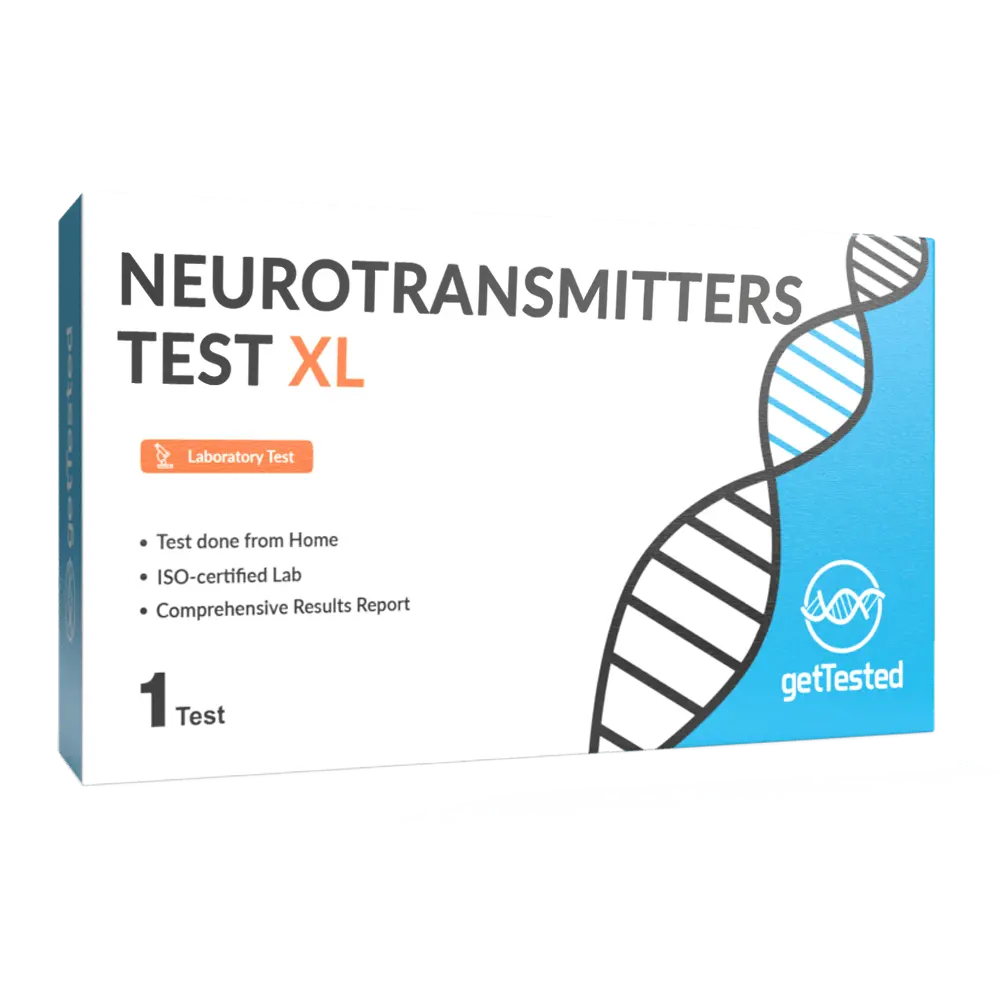
Neurotransmitters Test XL
Measure 34 neurotransmitters and related metabolites in a urine sample collected at home. Certified lab analysis, digital results.
Product details: EUR 449.99 — InStock — SKU F620 — GetTested
About this test
Key Benefits
Gain insight into your neurotransmitter balance and mental well-being.
Simple At-Home Testing: Collect your sample easily using a urine test, no clinic visit needed.
Advanced Neurochemical Analysis: Includes neurotransmitters, kynurenine pathway, and methylation markers.
Understand Stress & Energy: Explore markers linked to stress response and mitochondrial function.
Support Better Decisions: Helps guide lifestyle and health choices based on your biochemistry.
What This Test Measures
This test provides a comprehensive analysis of multiple systems, including:
Core Neurotransmitters:
Dopamine, noradrenaline, adrenaline, and serotonin – essential for mood, motivation, sleep, and stress regulation.
Additional Neurotransmitters:
GABA and glutamate – regulate calmness and nervous system activity.
Kynurenine Pathway:
Tryptophan, kynurenine, kynurenic acid, quinolinic acid, and NAD – linked to stress, inflammation, and neurological balance.
Enzyme Activities:
IDO and KMO – influence tryptophan metabolism and immune response.
Catecholamine Metabolism:
Phenylalanine and tyrosine – precursors to key neurotransmitters.
Important Cofactors:
Markers such as methylmalonic acid (B12), niacin, and NAD – essential for energy production and nervous system function.
Methylation & Detoxification:
SAM/SAH ratio, betaine, and choline – important for cellular function and detox processes.
Mitochondrial Function:
Lactate, pyruvate, carnitine, and suberic acid – reflect cellular energy production.
Stress & Inflammation Markers:
Citrulline, neopterin, and TMAO – linked to oxidative stress and immune activation.
Creatinine:
Used to normalize urine values for accurate interpretation.
About Neurotransmitters
Neurotransmitters are chemical messengers that regulate mood, focus, sleep, stress, and behavior. Imbalances can be associated with symptoms such as fatigue, low mood, anxiety, or difficulty concentrating.
This test is designed to provide a deeper understanding of how your brain chemistry and body systems interact, giving insight into both mental and physical processes.
How It Works
Order Your Kit: Purchase your test online.
Collect Your Sample: Provide a morning urine sample (second void) at home.
Send It Back: Mail your sample to the lab using the provided envelope.
Receive Results: Access your detailed digital results within 2–3 weeks.
Sample Collection
The sample is collected using a simple urine test at home. You collect urine from your second visit to the bathroom in the morning, not the first. This helps ensure more stable and accurate measurements. The sample is then sent to the laboratory for analysis.
Accredited Lab and Analysis
Your sample is analyzed in an accredited laboratory using LC-MS (mass spectrometry), calculated values, and enzymatic analysis, ensuring high precision, accuracy, and reliable results.
Biomarkers included
- GABA: GABA (gamma-aminobutyric acid) is the brain’s primary inhibitory neurotransmitter and helps regulate neuronal excitability by promoting calm signaling and preventing overstimulation. It counterbalances excitatory neurotransmitters such as glutamate and is involved in pathways related to stress regulation, sleep, mood, and muscle tone. Altered GABA signaling has been linked to conditions such as an
- IDO (enzyme): IDO (Indoleamine 2,3-dioxygenase) is an enzyme involved in metabolizing the amino acid tryptophan through the kynurenine pathway. By depleting tryptophan, it can modulate immune responses, a mechanism that some tumors may use to evade immune detection. IDO is also implicated in psychiatric and neurodegenerative disorders and is influenced by inflammation and stress.
- Choline: Choline is an essential nutrient involved in cell membrane structure, neurotransmitter production, and lipid metabolism. It is a precursor to acetylcholine, a neurotransmitter important for memory, attention, and muscle control. Choline also supports normal liver function by helping package and transport fats, and insufficient intake has been linked to impaired fat metabolism in the liver. In addi
- Dopamine: Dopamine is a key neurotransmitter that supports the brain’s reward and motivation systems. It plays essential roles in mood regulation, pleasure, focus, memory, and movement control. Imbalances in dopamine levels can affect mental well-being and are linked to conditions such as depression, anxiety, and Parkinson’s disease.
- Phenylalanine: Phenylalanine is an essential amino acid, meaning it must be obtained through diet. It serves as a building block for proteins and is crucial for the synthesis of neurotransmitters like dopamine and norepinephrine, playing a vital role in brain function and mood regulation. Elevated levels can indicate phenylketonuria (PKU), a genetic disorder requiring dietary management.
- Nicotinamide: Nicotinamide (Vitamin B3 / NAM) is a form of vitamin B3 and an important precursor in the NAD salvage pathway, which helps the body recycle and maintain NAD levels within cells. Nicotinamide supports energy metabolism, cellular repair, and mitochondrial function.
- Citrulline: Citrulline is a non-essential amino acid produced mainly by enterocytes (cells lining the small intestine) and is involved in nitrogen handling as part of the urea cycle. In the body, citrulline can also be converted into arginine, supporting pathways such as nitric oxide production. Because circulating citrulline largely reflects small-intestinal enterocyte function and mass, it is often used as
- Lactate: Lactate is a metabolic byproduct of anaerobic glucose metabolism, produced primarily in muscles during intense exercise or when oxygen supply is limited. It serves as both an energy source and a signaling molecule in various tissues. Elevated lactate levels can indicate tissue hypoxia, metabolic disorders, or severe illness such as sepsis or heart failure. In athletic contexts, lactate measurement
- Methylmalonic acid (MMA): Methylmalonic acid (MMA) is a substance produced in the body during the metabolism of certain fats and proteins. It is a byproduct of methionine breakdown and is influenced by vitamin B12 levels. Elevated MMA levels can serve as an indicator of vitamin B12 deficiency.
- S-Adenosylmethionine (SAMe): S-Adenosylmethionine (SAMe) is a naturally occurring compound found in all cells, formed from methionine and ATP. It plays a vital role in methylation processes, neurotransmitter production affecting mood, joint health, and liver function. SAMe is commonly used as a supplement to support conditions such as depression, osteoarthritis, and liver disorders.
- Noradrenaline/Norepinephrine: Noradrenaline, also called norepinephrine, is a chemical that functions as both a hormone and a neurotransmitter in the body. It plays a key role in the fight-or-flight response, enhancing alertness, arousal, and reaction speed. Noradrenaline also supports mood regulation and helps maintain blood pressure by constricting blood vessels.
- SAMe-SAH ratio: The SAMe/SAH ratio is a measure that reflects the balance between two important compounds in the body — S-Adenosylmethionine (SAMe) and S-Adenosylhomocysteine (SAH). SAMe serves as a key methyl donor in many biochemical processes, while SAH is produced after SAMe donates a methyl group. A higher SAMe/SAH ratio indicates strong methylation capacity, which supports healthy cellular function and over
- Adrenaline/Epinephrine: Adrenaline (epinephrine) is a hormone and neurotransmitter released by the adrenal glands. It plays a critical role in the body’s fight-or-flight response, preparing the body for rapid action during stress. Adrenaline elevates heart rate, widens airways, and enhances energy availability, supporting quick and effective survival responses.
- Cystathionine: Cystathionine is a non-protein amino acid that serves as an important intermediate in the metabolism of the essential amino acids methionine and cysteine. It plays a key role in the transsulfuration pathway, where homocysteine is converted into cystathionine by the enzyme cystathionine β-synthase (CBS), and cystathionine is then further broken down into cysteine by the enzyme cystathionine γ-lyase
- Creatinine: Creatinine is a waste product formed in muscles from the normal breakdown of creatine. It is released into the bloodstream and filtered by the kidneys, then excreted in urine. Because creatinine levels are influenced by how efficiently the kidneys filter blood, it is commonly used to assess kidney function. Elevated creatinine may indicate reduced kidney filtration or kidney disease, while low lev
- Kynurenic acid: Kynurenic acid is a metabolite formed in the kynurenine pathway during the breakdown of the amino acid tryptophan. It functions in the nervous system as a neuroprotective agent and is of interest in neurological and psychiatric research. Imbalances in kynurenic acid levels have been associated with conditions such as schizophrenia and depression.
- Neopterin: Neopterin is a molecule produced by immune cells, particularly macrophages, in response to stimulation by interferon-gamma. It is considered a marker of immune system activation and inflammation. Elevated levels of neopterin in urine or blood can indicate increased immune activity, often seen in infections, autoimmune disorders, or chronic inflammatory conditions. Because it reflects cellular immu
- Tyrosine: Tyrosine is a non-essential amino acid that serves as a building block for proteins and is crucial for synthesizing neurotransmitters like dopamine, norepinephrine, and epinephrine, as well as thyroid hormones. Its levels are important for proper brain function, mood regulation, and metabolic health. Imbalances can be indicative of metabolic disorders or nutritional deficiencies.
- Citrate: Citrate is a compound that plays a key role in the citric acid cycle, essential for energy production in aerobic organisms. It helps break down carbohydrates, fats, and proteins to produce ATP (energy). Citrate also supports the regulation of the body’s acid-base balance and contributes to kidney stone prevention by binding with calcium.
- Suberic acid: Suberic acid, also called octanedioic acid, is a dicarboxylic acid that serves as a metabolic marker in the body. In biological and physiological contexts, it is mainly associated with fatty acid metabolism. Elevated levels of suberic acid can signal metabolic disorders, particularly those affecting fatty acid oxidation, such as medium-chain acyl-coenzyme A dehydrogenase (MCAD) deficiency.
- Serotonin: Serotonin is a key neurotransmitter often called the “happiness chemical,” involved in regulating mood and emotional well-being. It also plays important roles in sleep, digestion, bone health, and blood clotting. Mainly produced in the gut, serotonin influences both the brain and body by affecting various physiological functions and emotional states. Imbalances in serotonin levels can have signifi
- Nicotinic acid: Nicotinic Acid (Niacin / Vitamin B3 / NA) is a form of vitamin B3 and an important precursor used by the body to produce NAD. Nicotinic acid supports cellular energy production, metabolism, and normal cellular function.
- Carnitine: Carnitine is a naturally occurring compound made from amino acids that helps transport long-chain fatty acids into mitochondria, where they can be broken down for energy (beta-oxidation). It supports fat-based energy production, especially in tissues with high energy demands such as skeletal muscle and the heart. Low carnitine availability can reduce the efficiency of fatty acid metabolism and may
- Tryptophan: Tryptophan is an essential amino acid, meaning the human body cannot produce it and must obtain it through diet. It serves as a precursor for crucial molecules like serotonin (a neurotransmitter regulating mood, sleep, and appetite) and melatonin (a hormone central to sleep-wake cycles). Optimal tryptophan levels are vital for neurological function, mental health, and sleep regulation.
- Nicotinamide adenine dinucleotide (NAD): Nicotinamide adenine dinucleotide (NAD) is a vital coenzyme present in all living cells. It plays a key role in cellular metabolism, especially in redox reactions, by cycling between its oxidized form (NAD⁺) and reduced form (NADH). Beyond energy production, NAD⁺ is essential for cell signaling, DNA repair, and regulating gene expression, making it critical for maintaining cellular health and func
- Trimethylamine N-oxide (TMAO): Trimethylamine N-oxide (TMAO) is a compound produced in the liver from trimethylamine (TMA), which is generated by gut bacteria during the digestion of nutrients like choline, L-carnitine, and phosphatidylcholine. Elevated levels of TMAO have been linked to an increased risk of cardiovascular disease, kidney dysfunction, and inflammation. TMAO serves as a valuable marker for assessing metabolic he
- 3-Hydroxykynurenine: 3-Hydroxykynurenine (3-OH-kynurenine) is a metabolite in the kynurenine pathway, which reflects the breakdown of the amino acid tryptophan. It serves as an intermediate compound during the conversion of tryptophan into important molecules, including the essential coenzyme NAD+ (nicotinamide adenine dinucleotide).
- KMO (enzyme): KMO (Kynurenine 3-monooxygenase) is an enzyme that plays a key role in the kynurenine pathway, responsible for metabolizing the amino acid tryptophan. It helps regulate the balance of metabolites within this pathway, influencing processes that can affect brain health. KMO activity has been linked to neurological conditions such as Alzheimer’s disease, Huntington’s disease, and schizophrenia.
- Pyruvate: Pyruvate is a key compound in cellular metabolism formed as the end product of glycolysis when glucose is broken down. It plays a central role in energy production by entering the citric acid cycle under oxygen-rich conditions. When oxygen is low, such as during intense exercise, pyruvate is converted into lactate to support continued ATP (energy) production. Additionally, pyruvate is involved in
- Kynurenine: Kynurenine is a key metabolite in the tryptophan degradation pathway, playing important roles in immune regulation, neuroprotection, and inflammation. The kynurenine pathway is activated during immune responses and chronic inflammation, with various metabolites exerting either neuroprotective or neurotoxic effects. Elevated kynurenine relative to tryptophan (kynurenine/tryptophan ratio) indicates
- Trimethylamine: Trimethylamine (TMA) is a volatile organic compound produced in the gut by bacterial fermentation of dietary nutrients such as choline, L-carnitine, and lecithin. Normally, TMA is rapidly converted in the liver to trimethylamine N-oxide (TMAO), which is less toxic. However, elevated TMA levels can indicate imbalances in the gut microbiome or impaired liver detoxification capacity. High TMA is also
- Glutamate: Glutamate is a key excitatory neurotransmitter in the brain that plays a vital role in cognitive processes such as learning and memory. It is essential for brain development and synaptic plasticity. However, excessive glutamate levels can cause neuronal overstimulation, leading to potential neurotoxicity. This balance makes glutamate critical for normal brain function while also linking it to vari
- Quinolinic acid: Quinolinic Acid is a metabolite involved in the kynurenine pathway and may be evaluated in relation to metabolic, inflammatory, and environmental processes.
- Betaine: Betaine, also called trimethylglycine, is a naturally occurring compound found in foods such as beets, spinach, and whole grains. It plays an important role in methylation—biochemical pathways involved in processes like DNA synthesis and cellular metabolism. Betaine acts as a methyl donor in the conversion of homocysteine to methionine, helping support normal homocysteine balance. Because elevated
How to prepare
48 hours before the test: Avoid fish/shellfish & omega-3 supplements. Evening before the test: Avoid bananas, cheese, almonds, nuts, green and black tea, vanilla, cocoa, chocolate, alcohol, coffee and caffeine, energy drinks, nicotine. Morning of sampling: Refrain from excercise.
Frequently asked questions
How does it work? / When do I get my results?
1. Order and receive your kit. 2. Perform the test. 3. Send a sample at the beginning of the week (to avoid delays). 4. Results digitally in 10–15 business days.
What are the signs that I should test my neurotransmitters?
Imbalances can lead to various symptoms including chronic fatigue, depression, anxiety, sleep disturbances, poor focus, and decreased stress tolerance. Identifying specific deficiencies or excesses allows for more targeted support.
Customer reviews
4.6/5 (10)
- 5/5 — The data on my GABA and Dopamine levels was incredibly helpful. Worth the wait for the results.
- 5/5 — Detailed biomarkers and easy shipping.
- 4/5 — The PDF report was very detailed and gave me a lot to discuss with my nutritionist. It took about two weeks to arrive.
- 4/5 — The report is very detailed, though I definitely needed my doctor's help to explain some of the metabolic pathways. It's a professional-grade test for sure.
- 4/5 — Glad I did this to check my dopamine levels. Easy urine collection.
- 5/5 — The collection process was very straightforward.
- 4/5 — Good test. Took about 3 weeks to get my results back.
- 5/5 — Really helpful for tracking my GABA and Serotonin levels.