Parasite Test
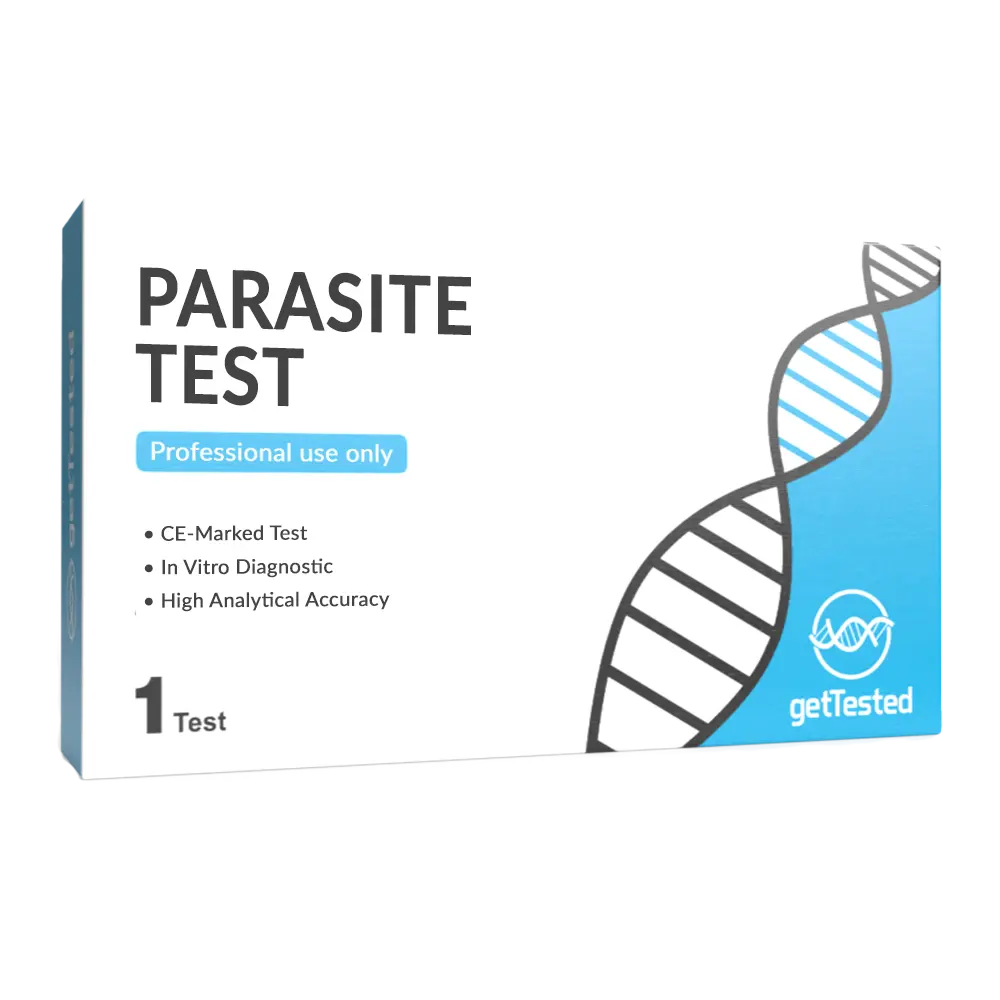
GetTested’s Parasite Test is a professional rapid stool test intended for use in healthcare settings to support screening for selected intestinal parasite antigens.
The test detects Entamoeba histolytica, Giardia lamblia and Cryptosporidium antigens in a stool sample. These parasites may be associated with gastrointestinal infection and symptoms such as diarrhoea, abdominal discomfort or digestive disturbance.
€34.99
About Parasite Test
About the Parasite Test
The GetTested Parasite Test is designed for qualitative detection of selected parasite antigens in human stool. The test targets Entamoeba histolytica, Giardia lamblia and Cryptosporidium, three intestinal parasites that may be relevant in gastrointestinal infection assessment.
The test provides separate visual result areas for the included parasite antigens and should be interpreted by healthcare professionals together with symptoms, patient history, exposure context and other relevant clinical findings.
The test is CE-marked and intended for professional use in healthcare settings.
What This Test Measures
Biomarkers
3 biomarkers
Sample
Stool
Results in
10 minutes
Format
Rapid Test
How It Works
- 1
Order the Kit
- 2
Collect the Sample
- 3
Prepare and Run the Test
- 4
Read the Result
Sample Collection
The test uses a stool sample. The sample should be collected in a clean, dry and waterproof container without detergents, preservatives or transport media.
Sample collection, preparation and result interpretation should be performed according to the included instructions and relevant professional procedures.
Have Questions?
Chat with our AI assistant for instant answers about this product, usage, or recommendations.
Over 500,000 Customers
4.6 out of 5 based on 8 reviews on this product
€34.99
Parasite Test
GetTested’s Parasite Test is a professional rapid stool test intended for use in healthcare settings to support screening for selected intestinal parasite antigens.
The test detects Entamoeba histolytica, Giardia lamblia and Cryptosporidium antigens in a stool sample. These parasites may be associated with gastrointestinal infection and symptoms such as diarrhoea, abdominal discomfort or digestive disturbance.
€34.99
About the Parasite Test
The GetTested Parasite Test is designed for qualitative detection of selected parasite antigens in human stool. The test targets Entamoeba histolytica, Giardia lamblia and Cryptosporidium, three intestinal parasites that may be relevant in gastrointestinal infection assessment.
The test provides separate visual result areas for the included parasite antigens and should be interpreted by healthcare professionals together with symptoms, patient history, exposure context and other relevant clinical findings.
The test is CE-marked and intended for professional use in healthcare settings.
What This Test Measures
Biomarkers
3 biomarkers
Sample
Stool
Results in
10 minutes
Format
Rapid Test
How It Works
- 1
Order the Kit
- 2
Collect the Sample
- 3
Prepare and Run the Test
- 4
Read the Result
Sample Collection
The test uses a stool sample. The sample should be collected in a clean, dry and waterproof container without detergents, preservatives or transport media.
Sample collection, preparation and result interpretation should be performed according to the included instructions and relevant professional procedures.
Can a negative result exclude intestinal parasite infection?
Is this test intended for home use?
Parasite Test price and what’s included
Price history
Current price
€34.99
Starting price
€34.99
Total change
€0.00
No. of changes
0
Stable Pricing
No hidden fees. The price you see is the price you pay.
Price Lock Guarantee
Your price won't change after purchase.
Have Questions About This Product?
Chat with our AI assistant for instant answers about this product, usage guidelines, or personalized recommendations.
Over 500,000 Customers
4.6 out of 5 based on 8 reviews on this product