Pollen Allergy Test
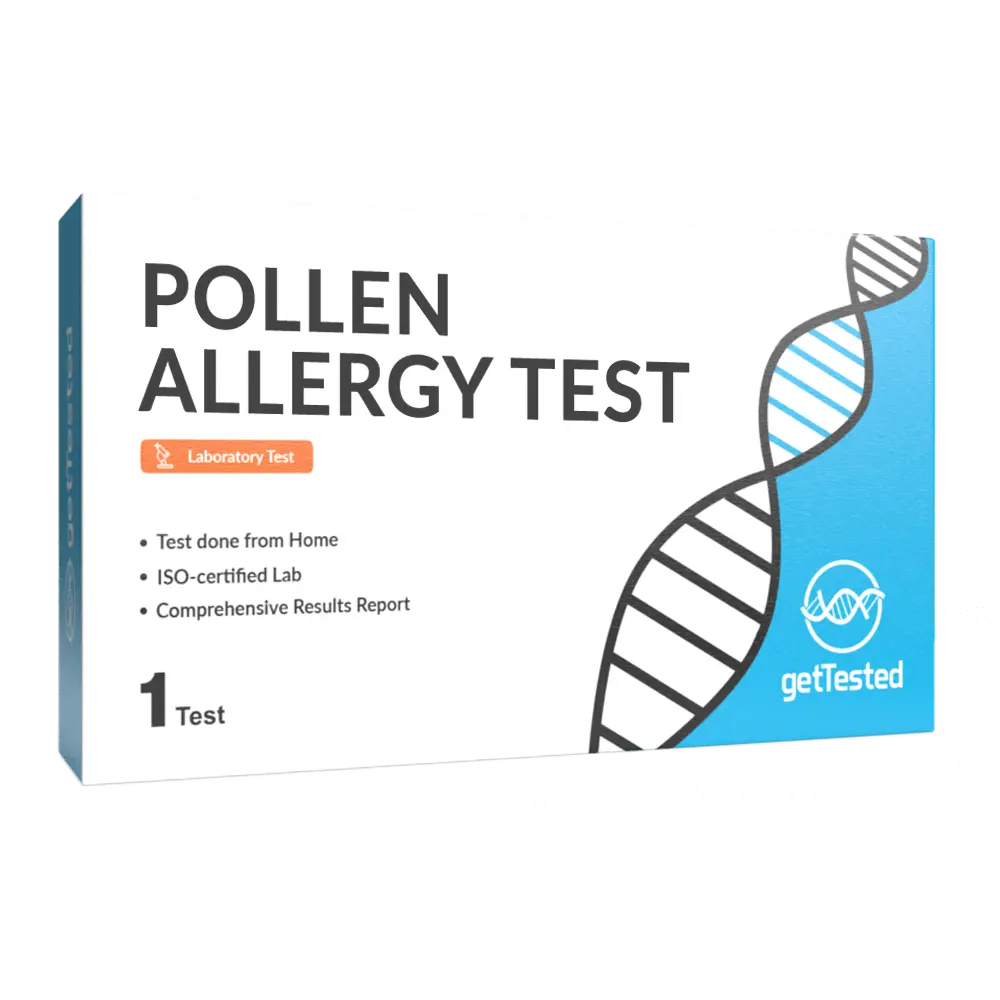
GetTested’s Pollen Allergy Test is an at home blood test for people who want to understand whether pollen may be part of the picture behind sneezing, runny nose, blocked nose, itchy or watery eyes, throat irritation or seasonal breathing discomfort.
Pollen allergy can be difficult to separate from a cold, irritation or general sensitivity, especially when symptoms return during certain seasons. This test measures IgE antibodies to 12 common pollen allergens, helping you identify which pollen types your body may react to.
€39.99
About Pollen Allergy Test
Pollen Allergy and Seasonal Symptoms
Pollen allergy occurs when the immune system reacts to pollen from sources such as trees, grasses or weeds. When exposure triggers an IgE related response, symptoms may affect the nose, eyes, throat and airways.
Symptoms can vary depending on season and pollen type. Some people react mainly in spring, while others notice symptoms during grass or weed pollen seasons. Identifying specific pollen sensitivities can help you better understand when and why symptoms appear.
This test measures IgE antibodies, which are linked to allergy type reactions, using a finger prick dried blood spot sample.
What This Test Measures
Tree Pollen
Grass Pollen
Biomarkers
13 biomarkers
Sample
Blood
Results in
10-15 business days
Format
Lab Test
How It Works
- 1
Order Your Kit
- 2
Collect Your Sample
- 3
Send It Back
- 4
Receive Your Results
Dried Blood Spot Sample Collection
The sample is collected using a finger prick dried blood spot sample at home. A few drops of blood are placed onto the collection card according to the included instructions and sent to the laboratory for analysis.
Have Questions?
Chat with our AI assistant for instant answers about this product, usage, or recommendations.
Over 500,000 Customers
5.0 out of 5 based on 4 reviews on this product
€39.99
Pollen Allergy Test
GetTested’s Pollen Allergy Test is an at home blood test for people who want to understand whether pollen may be part of the picture behind sneezing, runny nose, blocked nose, itchy or watery eyes, throat irritation or seasonal breathing discomfort.
Pollen allergy can be difficult to separate from a cold, irritation or general sensitivity, especially when symptoms return during certain seasons. This test measures IgE antibodies to 12 common pollen allergens, helping you identify which pollen types your body may react to.
€39.99
Pollen Allergy and Seasonal Symptoms
Pollen allergy occurs when the immune system reacts to pollen from sources such as trees, grasses or weeds. When exposure triggers an IgE related response, symptoms may affect the nose, eyes, throat and airways.
Symptoms can vary depending on season and pollen type. Some people react mainly in spring, while others notice symptoms during grass or weed pollen seasons. Identifying specific pollen sensitivities can help you better understand when and why symptoms appear.
This test measures IgE antibodies, which are linked to allergy type reactions, using a finger prick dried blood spot sample.
What This Test Measures
Tree Pollen
Grass Pollen
Biomarkers
13 biomarkers
Sample
Blood
Results in
10-15 business days
Format
Lab Test
How It Works
- 1
Order Your Kit
- 2
Collect Your Sample
- 3
Send It Back
- 4
Receive Your Results
Dried Blood Spot Sample Collection
The sample is collected using a finger prick dried blood spot sample at home. A few drops of blood are placed onto the collection card according to the included instructions and sent to the laboratory for analysis.
Can pollen allergy feel like a cold?
Does this test show which pollen types I react to?
Do I need to stop taking antihistamines before the test?
When is the best time to take the pollen test?
Pollen Allergy Test price and what’s included
Price history
Current price
€39.99
Starting price
€39.99
Total change
€0.00
No. of changes
0
Stable Pricing
No hidden fees. The price you see is the price you pay.
Price Lock Guarantee
Your price won't change after purchase.
Have Questions About This Product?
Chat with our AI assistant for instant answers about this product, usage guidelines, or personalized recommendations.
Over 500,000 Customers
5.0 out of 5 based on 4 reviews on this product