Progesterone Test (Blood)
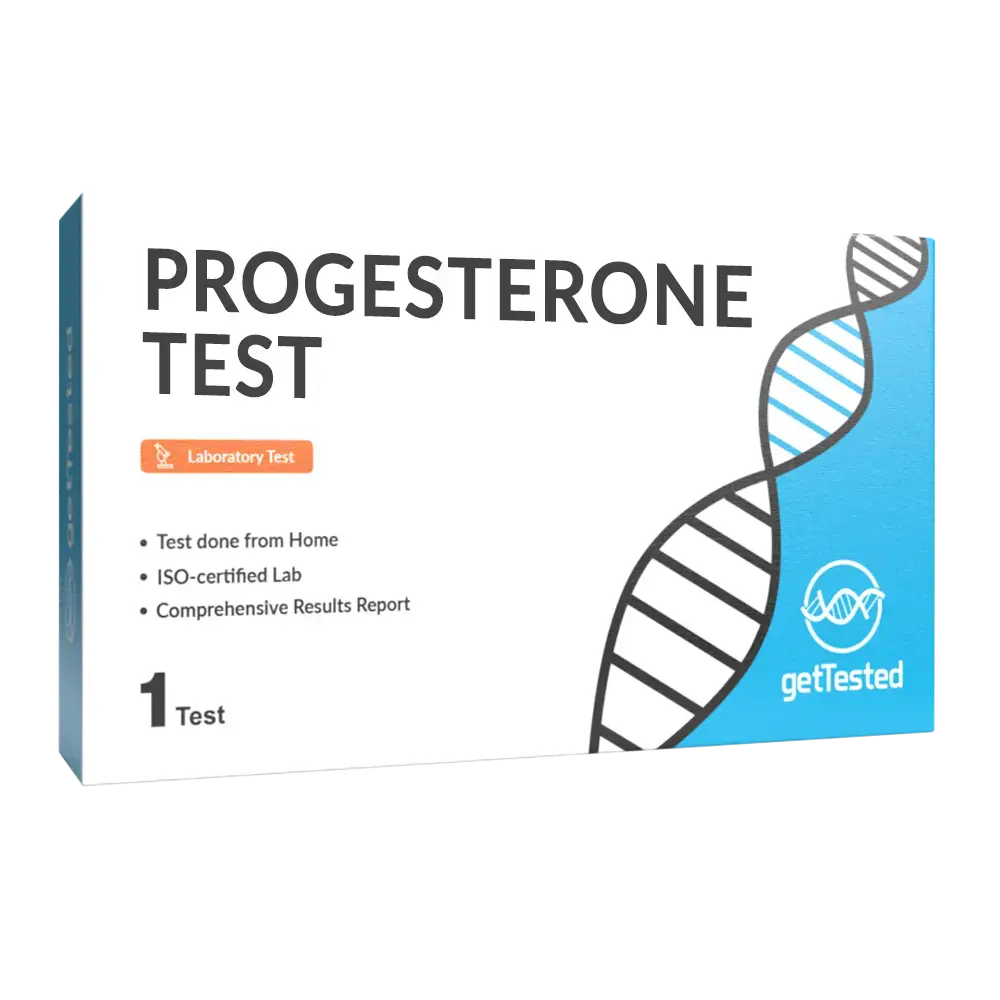
GetTested’s Progesterone Test is an at-home lab test designed to measure your progesterone levels using a simple finger-prick blood sample (DBS). Progesterone is a key hormone involved in menstrual cycle regulation, ovulation, fertility, and hormonal balance.
By measuring progesterone, the test provides insight into ovulation, luteal phase function, and potential hormonal imbalances, helping you better understand your reproductive health.
€79.99
About Progesterone Test (Blood)
Progesterone Levels
Progesterone plays a central role in ovulation, fertility, and cycle balance. This test helps you understand how your body produces progesterone and whether your levels align with your menstrual cycle and hormonal health.
It provides a clear overview of your reproductive hormone balance.
What This Test Measures
Biomarkers
1 biomarkers
Sample
Blood
Results in
10-15 business days
Format
Lab Test
How It Works
Order your test kit online and collect a finger-prick blood sample at home. The sample is then sent to the laboratory for analysis, and you receive your results digitally in a clear and easy-to-understand format.
Sample Collection
The sample is collected using a simple finger-prick blood test (DBS) at home.
You collect a few drops of blood and send the sample to the lab for analysis. The method is quick, minimally invasive, and easy to perform.
Have Questions?
Chat with our AI assistant for instant answers about this product, usage, or recommendations.
Over 500,000 Customers
4.6 out of 5 based on 5 reviews on this product
€79.99
Progesterone Test (Blood)
GetTested’s Progesterone Test is an at-home lab test designed to measure your progesterone levels using a simple finger-prick blood sample (DBS). Progesterone is a key hormone involved in menstrual cycle regulation, ovulation, fertility, and hormonal balance.
By measuring progesterone, the test provides insight into ovulation, luteal phase function, and potential hormonal imbalances, helping you better understand your reproductive health.
€79.99
Progesterone Levels
Progesterone plays a central role in ovulation, fertility, and cycle balance. This test helps you understand how your body produces progesterone and whether your levels align with your menstrual cycle and hormonal health.
It provides a clear overview of your reproductive hormone balance.
What This Test Measures
Biomarkers
1 biomarkers
Sample
Blood
Results in
10-15 business days
Format
Lab Test
How It Works
Order your test kit online and collect a finger-prick blood sample at home. The sample is then sent to the laboratory for analysis, and you receive your results digitally in a clear and easy-to-understand format.
Sample Collection
The sample is collected using a simple finger-prick blood test (DBS) at home.
You collect a few drops of blood and send the sample to the lab for analysis. The method is quick, minimally invasive, and easy to perform.
How does it work? / When do I get my results?
2. Perform the test.
3. Send a sample at the beginning of the week (to avoid delays).
4. Results digitally in 10–15 business days.
What do low progesterone levels mean?
Progesterone Test (Blood) price and what’s included
Price history
Current price
€79.99
Starting price
€79.99
Total change
€0.00
No. of changes
0
Stable Pricing
No hidden fees. The price you see is the price you pay.
Price Lock Guarantee
Your price won't change after purchase.
Have Questions About This Product?
Chat with our AI assistant for instant answers about this product, usage guidelines, or personalized recommendations.
Over 500,000 Customers
4.6 out of 5 based on 5 reviews on this product