PSA-Test
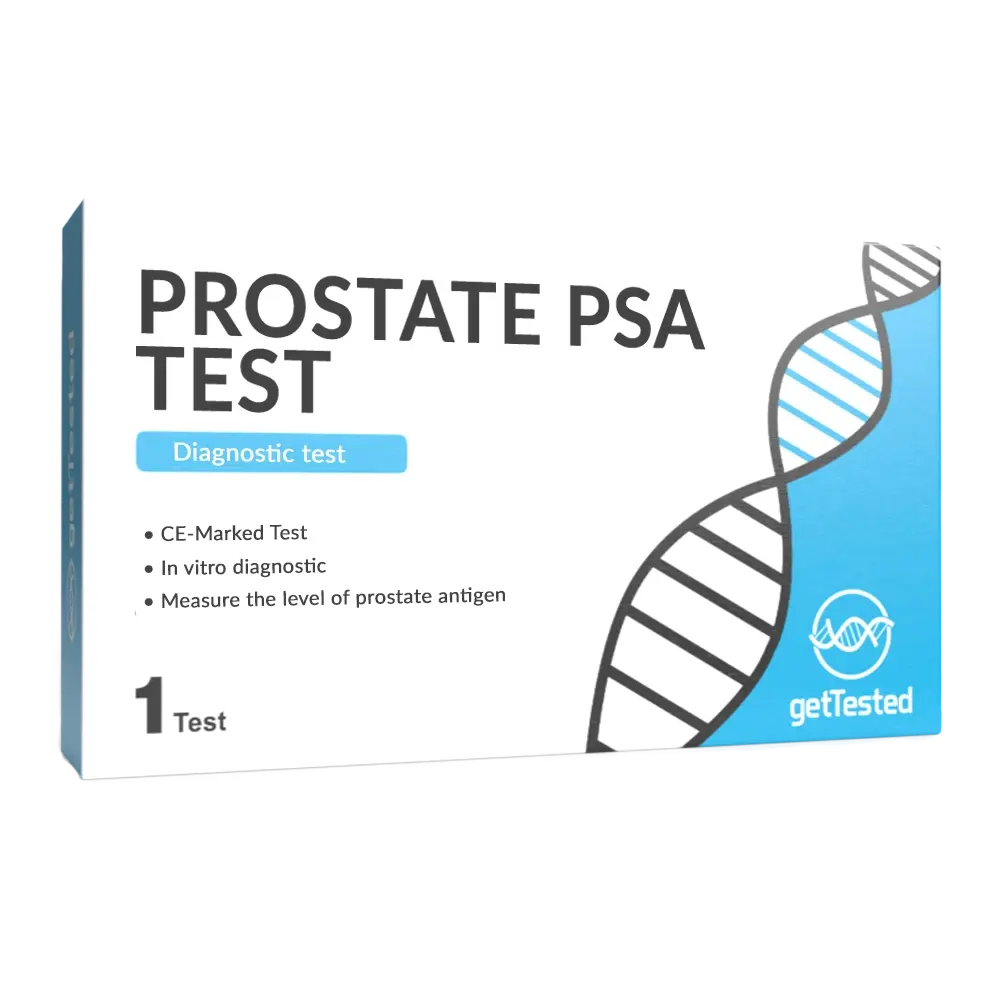
GetTested’s PSA Rapid Test is an at-home finger-prick blood test designed to help you measure your prostate-specific antigen (PSA) levels quickly and easily. This rapid test provides results within minutes, allowing you to gain immediate insight into your prostate health without sending your sample to a laboratory. PSA is a protein produced by the prostate gland, and elevated levels may be associated with prostate enlargement, inflammation, or prostate cancer. This test offers a convenient way to monitor your PSA levels and take a proactive approach to your health.
€19.99
About PSA-Test
Prostate Health & PSA Levels
This test measures the level of PSA in your blood, helping you understand potential changes in your prostate health. It is a fast and simple way to screen for elevated PSA levels at home.
What This Test Measures
Biomarkers
1 biomarkers
Sample
Blood
Results in
Result available within minutes of testing
Format
Rapid Test
How It Works and Important to Know
Collect Your Sample: Use the finger-prick lancet to obtain a small blood sample.
Run the Test: Apply the sample to the test cassette and add the solution.
Read Your Result: Get your result within minutes.
This test is quick, simple, and performed entirely at home.
For more accurate results, avoid intense cycling or ejaculation for at least 24 hours before testing.
Sample Collection
The sample is collected using a simple finger-prick blood test at home. You place a few drops of blood into the test cassette and add the provided solution.
The result is read directly on the device after a short waiting time.
Have Questions?
Chat with our AI assistant for instant answers about this product, usage, or recommendations.
Over 500,000 Customers
4.5 out of 5 based on 4 reviews on this product
€19.99
PSA-Test
GetTested’s PSA Rapid Test is an at-home finger-prick blood test designed to help you measure your prostate-specific antigen (PSA) levels quickly and easily. This rapid test provides results within minutes, allowing you to gain immediate insight into your prostate health without sending your sample to a laboratory. PSA is a protein produced by the prostate gland, and elevated levels may be associated with prostate enlargement, inflammation, or prostate cancer. This test offers a convenient way to monitor your PSA levels and take a proactive approach to your health.
€19.99
Prostate Health & PSA Levels
This test measures the level of PSA in your blood, helping you understand potential changes in your prostate health. It is a fast and simple way to screen for elevated PSA levels at home.
What This Test Measures
Biomarkers
1 biomarkers
Sample
Blood
Results in
Result available within minutes of testing
Format
Rapid Test
How It Works and Important to Know
Collect Your Sample: Use the finger-prick lancet to obtain a small blood sample.
Run the Test: Apply the sample to the test cassette and add the solution.
Read Your Result: Get your result within minutes.
This test is quick, simple, and performed entirely at home.
For more accurate results, avoid intense cycling or ejaculation for at least 24 hours before testing.
Sample Collection
The sample is collected using a simple finger-prick blood test at home. You place a few drops of blood into the test cassette and add the provided solution.
The result is read directly on the device after a short waiting time.
Does a high PSA level always indicate prostate cancer?
How often should PSA levels be monitored?
PSA-Test price and what’s included
Price history
Current price
€19.99
Starting price
€19.99
Total change
€0.00
No. of changes
0
Stable Pricing
No hidden fees. The price you see is the price you pay.
Price Lock Guarantee
Your price won't change after purchase.
Have Questions About This Product?
Chat with our AI assistant for instant answers about this product, usage guidelines, or personalized recommendations.
Over 500,000 Customers
4.5 out of 5 based on 4 reviews on this product