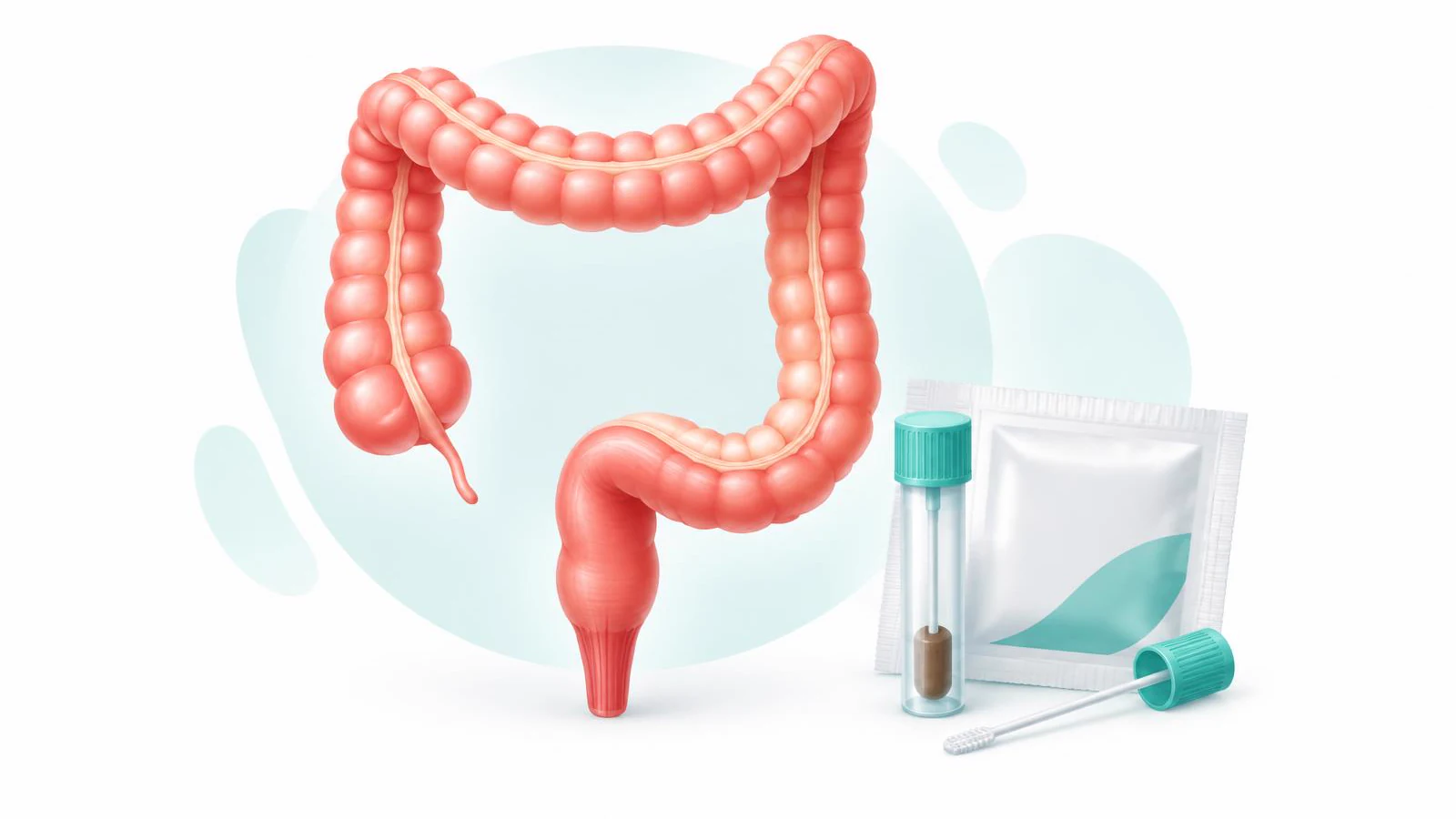

Short answer: In Ireland, you can check for hidden blood in stool through the free HSE BowelScreen programme if you are eligible (currently ages 57–71), or by using a private home stool blood test. Both options use a small stool sample, but BowelScreen includes laboratory analysis and organised follow-up, while rapid home tests provide results directly at home. Neither provides a diagnosis. If you have bowel-related symptoms, contact your GP rather than relying on a home test.
Eligible for free screening? See our guide to Ireland's HSE BowelScreen programme →
FIT vs FOBT: what is the difference?
Both FIT and FOBT are used to detect occult (hidden) blood in stool. FOBT is the broader term for faecal occult blood tests, while FIT (faecal immunochemical test) is a specific type that uses antibodies to detect human haemoglobin.
Ireland's HSE BowelScreen programme uses a laboratory-based FIT, where participants collect a stool sample at home and return it for analysis. Immunochemical rapid cassette tests can also detect hidden blood, but allow results to be read directly at home without sending the sample to a laboratory.
Evidence: Stool-based tests for hidden blood are an established first step in bowel screening. An abnormal result leads to further investigation, usually a colonoscopy.
Exceptions: Bowel changes do not always bleed, and they may not bleed on the day you collect the sample. A negative result cannot rule out every condition.
Sample type: A small stool sample taken with the sampling device in the kit.
Medical source: National Cancer Institute (NCI): Colorectal Cancer Screening.
What does "occult blood" mean?
Occult blood is blood in stool that is too small in amount to see. It can come from anywhere in the digestive tract. Possible causes include haemorrhoids, small tears, irritation, polyps and, less often, more serious bowel conditions. That is why a positive result means you need medical follow-up to find the cause. It is not a diagnosis.
BowelScreen vs a private home FOBT
OptionHSE BowelScreenPrivate home FOBTCostFree€18.99 at the time of writingEligibilityAges 57–71, living in IrelandAdults, as described in the kit instructionsSampleStoolStoolWhere it's takenAt homeAt homeHow it's testedLaboratory FITRapid test with a visual resultFollow-upIncluded through BowelScreenThrough your GP if neededReplaces medical assessment?NoNo
If you are eligible for BowelScreen, the free national programme provides an established screening pathway with organised follow-up. Private home stool blood tests offer an additional way to check for hidden blood but should not be used as a substitute for investigating bowel-related symptoms.
How does the GetTested home stool test work?
GetTested's Faecal Occult Blood Test is a convenient immunochemical rapid test designed to detect hidden blood in stool. The test is performed entirely at home, with results available in approximately 5 minutes. No laboratory visit or sample return is required.
Simply collect a small stool sample using the provided materials, mix it with the buffer solution and apply it to the test cassette according to the instructions. The result is displayed directly on the cassette.
What it detects: Hidden blood (human haemoglobin) in stool.
Limitations: Follow the supplied instructions regarding when not to test, such as during menstruation or active haemorrhoidal bleeding, which may affect the result.
Sample type: Stool.
Relevant test: Faecal Occult Blood Test.
A positive result indicates that blood has been detected but does not identify its cause. Further medical assessment is needed to investigate abnormal findings.
When is a home test useful, and when should you see a GP?
A home stool blood test can suit people without symptoms who want to check for hidden blood. If you have blood in your stool, a persistent change in bowel habit, unexplained weight changes, ongoing abdominal pain or unexplained tiredness, contact your GP instead of testing at home. A normal home result does not explain these symptoms.
Seek urgent care for heavy or continuous bleeding, black tar-like stool or severe abdominal pain. If you have heavy bleeding with faintness or collapse, call 112 or 999.
Source: Irish Cancer Society: bowel health information.
Understanding your result
Positive: Blood was detected above the test's threshold. Contact your GP, who may arrange further tests such as a colonoscopy. Do not repeat the test hoping for a different answer.
Negative: No blood was detected above the threshold in this sample. Keep taking part in BowelScreen when you are eligible, and see your GP if symptoms develop.
Invalid: The control line did not appear. Repeat the test with a new kit.
Bowel health in Ireland
Bowel conditions are a major health concern in Ireland. The National Cancer Registry Ireland publishes the latest figures in its Cancer in Ireland 1994–2023 annual statistical report (September 2026). Finding changes early through screening and prompt GP assessment remains the main way to improve outcomes.
Check for hidden blood in stool at home: see the Faecal Occult Blood Test. If you are 57–71, check your BowelScreen eligibility first.
This article is for general information and does not replace medical advice.