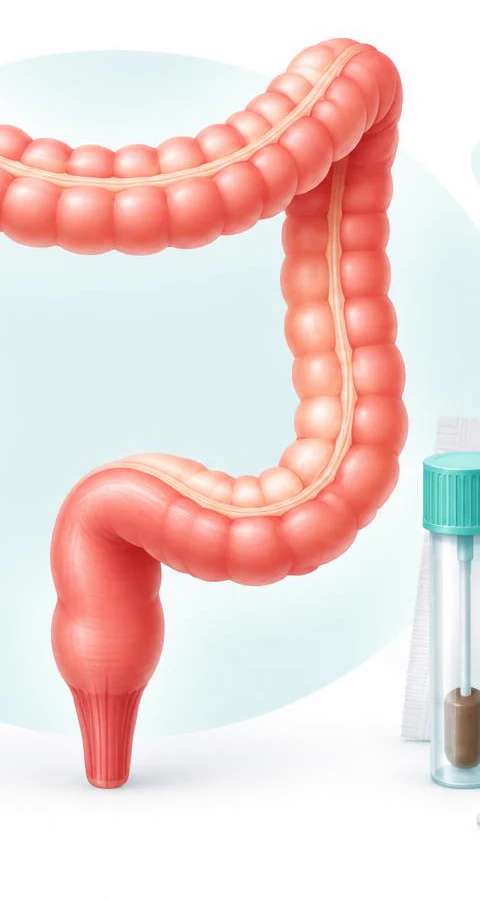

Short answer: As of October 2026, Ireland's HSE BowelScreen programme offers free bowel screening to people aged 57 to 71 who live in Ireland. Eligible people receive a FIT home stool test, normally every two years. See the HSE BowelScreen information.
Who is eligible for free bowel screening in Ireland?
To qualify for Ireland's free BowelScreen programme, you must be aged 57–71 and live in Ireland. Your first home screening test is offered between your 57th and 59th birthday, followed by an invitation approximately every two years until age 71.
Evidence: The HSE runs BowelScreen as an organised national programme. It includes laboratory testing, results and follow-up.
Exceptions: People with symptoms, a strong family history or certain bowel conditions may need GP assessment or surveillance outside routine screening.
Sample type: A small stool sample collected at home with the FIT kit.
Medical source: HSE: Bowel screening.
How do I register or check if I'm on the list?
You need to be on the BowelScreen register to receive an invitation. You can check your details and register online through the HSE BowelScreen register page, or call the BowelScreen Freephone on 1800 45 45 55.
Once invited, you can confirm your participation and request your free FIT kit. If you are within the eligible age range but have never received an invitation, you can also contact BowelScreen to check your registration details.
Make sure your postal address is up to date, as the screening kit is sent directly to your home.
How does the BowelScreen FIT work?
The kit comes with instructions and a sampling device. You catch a small stool sample without letting it touch toilet water or urine, place it in the tube and post it back in the prepaid packaging. The laboratory measures human haemoglobin (blood) in the sample. FIT usually needs no diet changes. Don't stop prescribed medicines without medical advice.
What happens after my result?
You will normally receive your BowelScreen FIT result by post within four weeks of returning your sample. The next steps depend on whether the result is normal or abnormal.
Normal result: The amount of blood detected is below the screening threshold. If you are still within the eligible age range, you will normally be invited for another test in approximately two years. A normal result does not completely rule out bowel cancer, as some polyps and cancers may not bleed continuously.
Abnormal result: The amount of blood detected is above the screening threshold. This does not automatically mean cancer, but further investigation is needed. BowelScreen will offer you a colonoscopy to examine the bowel and identify possible causes of bleeding. Polyps, if found, can often be removed during the procedure.
Always contact your GP if you develop bowel-related symptoms, even if your most recent screening result was normal.
What if I'm younger than 57 or older than 71?
If you are outside the eligible age range, you will not normally receive a routine BowelScreen invitation. However, this does not mean that changes in your bowel health should be ignored.
If you experience symptoms, contact your GP for an individual assessment. Even without symptoms, you can discuss your family history and personal risk factors with a healthcare professional, particularly if you have a family history of bowel cancer.
Some people also choose a private home stool blood test. Read our guide to bowel health and stool blood tests in Ireland to compare the options.
Symptoms vs screening
Screening is for people without symptoms. If you have blood in your stool, a persistent change in bowel habit, unexplained weight changes, ongoing abdominal pain or unexplained tiredness, contact your GP. Do this even if you recently had a normal screening result. For heavy bleeding with faintness or collapse, call 112 or 999.
Source: Irish Cancer Society: bowel health information.
Why bowel screening matters in Ireland
Around 2,500 people are diagnosed with bowel cancer in Ireland each year, making it one of the country's most common cancers.
Bowel screening plays an important role in early detection because bowel cancer and precancerous changes can develop without noticeable symptoms. The FIT test helps identify people who may need further investigation, while follow-up colonoscopy can detect and remove certain polyps before they develop into cancer.
The National Cancer Registry Ireland's Cancer in Ireland 1994–2023 annual statistical report, published in September 2026, provides further national data on cancer incidence and trends.