Digestive Residues Test
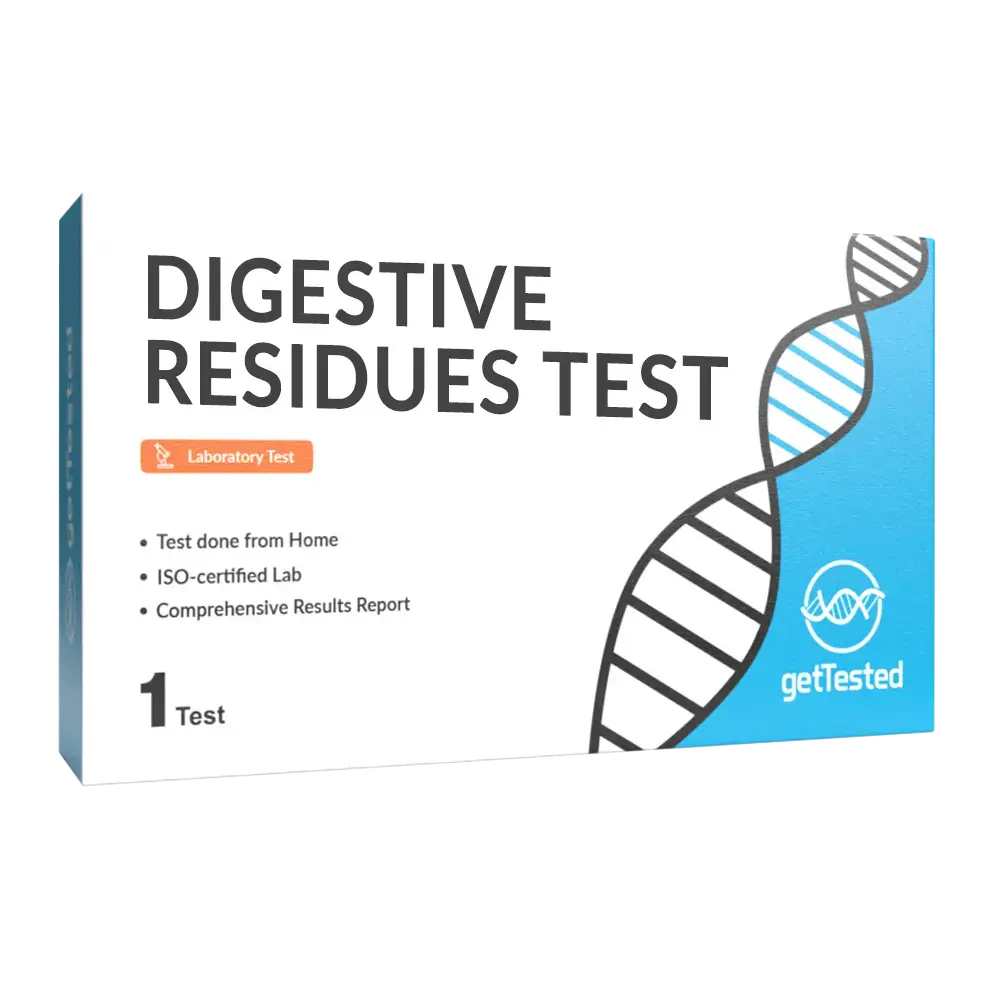
GetTested’s Digestive Residues Test is an at-home lab test designed to evaluate how efficiently your digestive system breaks down and absorbs nutrients from food. By measuring fat, protein, sugar, and water content in stool, the test provides insight into digestion, nutrient absorption, and overall gut function. Elevated levels of digestive residues may be associated with malabsorption, impaired digestion, enzyme insufficiency, or gastrointestinal imbalance. The test may be relevant for individuals experiencing symptoms such as bloating, loose stools, nutrient deficiencies, or undigested food in stool.
€69.99
About Digestive Residues Test
Digestion and Nutrient Absorption
This test analyzes digestive residues in stool to evaluate how effectively the body digests and absorbs nutrients. By measuring markers related to fat, protein, carbohydrate digestion, and stool water content, the test provides insight into digestive efficiency and gut function.
What This Test Measures
Biomarkers
4 biomarkers
Sample
Stool
Results in
10-15 business days
Format
Lab Test
How It Works
Order Your Kit: Purchase your test online.
Collect Your Sample: Use the stool collection kit at home.
Send It Back: Mail your sample to the laboratory using the prepaid return envelope.
Receive Results: Access your digital laboratory results online after analysis.
Sample Collection
The sample is collected using a simple stool test at home. Follow the included instructions carefully and return the sample to the laboratory using the prepaid return packaging provided in the kit.
Have Questions?
Chat with our AI assistant for instant answers about this product, usage, or recommendations.
Over 500,000 Customers
4.8 out of 5 based on 4 reviews on this product
€69.99
Digestive Residues Test
GetTested’s Digestive Residues Test is an at-home lab test designed to evaluate how efficiently your digestive system breaks down and absorbs nutrients from food. By measuring fat, protein, sugar, and water content in stool, the test provides insight into digestion, nutrient absorption, and overall gut function. Elevated levels of digestive residues may be associated with malabsorption, impaired digestion, enzyme insufficiency, or gastrointestinal imbalance. The test may be relevant for individuals experiencing symptoms such as bloating, loose stools, nutrient deficiencies, or undigested food in stool.
€69.99
Digestion and Nutrient Absorption
This test analyzes digestive residues in stool to evaluate how effectively the body digests and absorbs nutrients. By measuring markers related to fat, protein, carbohydrate digestion, and stool water content, the test provides insight into digestive efficiency and gut function.
What This Test Measures
Biomarkers
4 biomarkers
Sample
Stool
Results in
10-15 business days
Format
Lab Test
How It Works
Order Your Kit: Purchase your test online.
Collect Your Sample: Use the stool collection kit at home.
Send It Back: Mail your sample to the laboratory using the prepaid return envelope.
Receive Results: Access your digital laboratory results online after analysis.
Sample Collection
The sample is collected using a simple stool test at home. Follow the included instructions carefully and return the sample to the laboratory using the prepaid return packaging provided in the kit.
How does it work? / When do I get my results?
2. Perform the test.
3. Send a sample at the beginning of the week (to avoid delays).
4. Results digitally in 10–15 business days.
What does it mean if my residue levels are high?
Do I need to follow a special diet before the test?
Digestive Residues Test price and what’s included
Price history
Current price
€69.99
Starting price
€69.99
Total change
€0.00
No. of changes
0
Stable Pricing
No hidden fees. The price you see is the price you pay.
Price Lock Guarantee
Your price won't change after purchase.
Have Questions About This Product?
Chat with our AI assistant for instant answers about this product, usage guidelines, or personalized recommendations.
Over 500,000 Customers
4.8 out of 5 based on 4 reviews on this product