Environmental Pollutants Profile Test
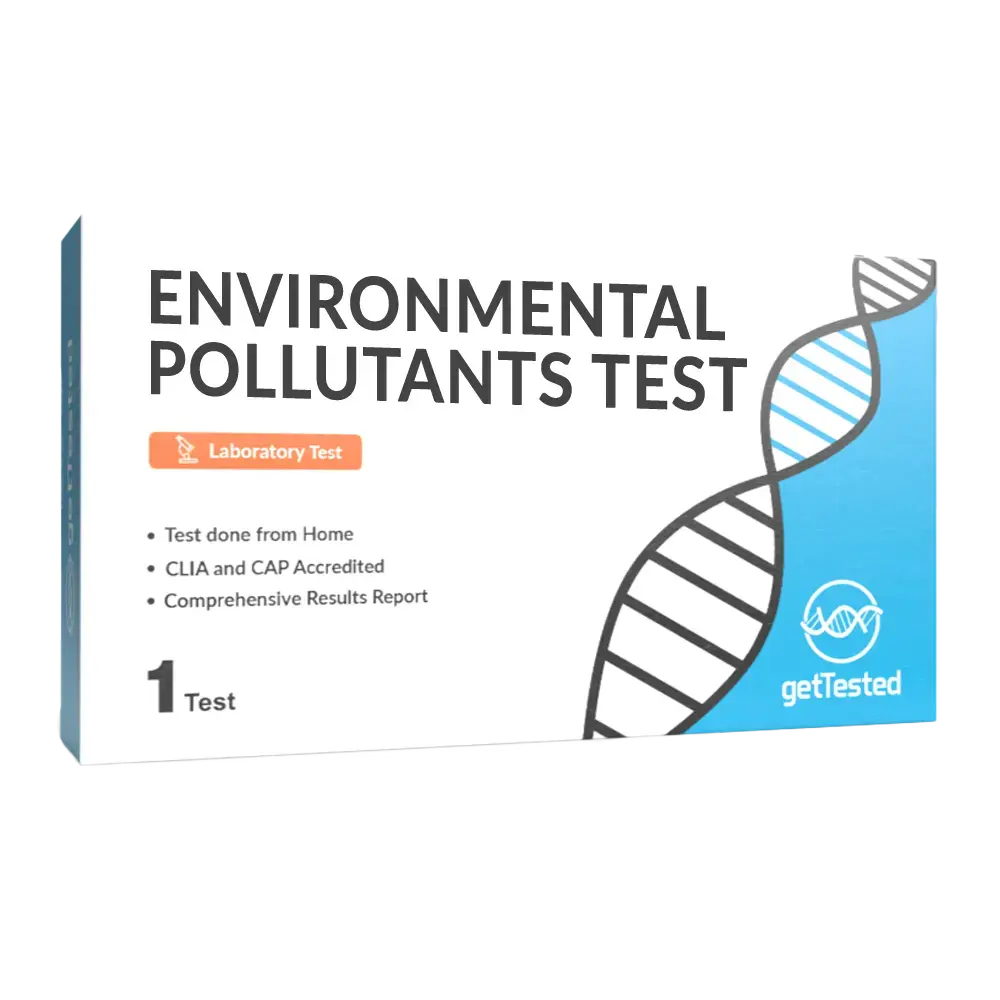
GetTested’s Environmental Pollutants Profile Test is an at-home lab test designed to identify exposure to common environmental chemicals and pollutants.
By analyzing selected urine metabolites, the test provides insight into exposure to substances commonly found in plastics, solvents, fuel emissions, indoor environments, and industrial chemicals.
The analysis includes markers linked to compounds such as benzene, xylene, toluene, styrene, phthalates, parabens, and methyl tert-butyl ether (MTBE). The test includes a detailed digital report with clearly presented laboratory results and explanations of the measured markers.
€179.99
About Environmental Pollutants Profile Test
Environmental Pollutants and Exposure
This test analyzes selected metabolites associated with common environmental pollutants and industrial chemicals.
By measuring markers linked to substances such as solvents, plastics, fuel-related compounds, and environmental toxins, the test provides insight into potential chemical exposure from food, air, indoor environments, and daily products.
What This Test Measures
Biomarkers
14 biomarkers
Sample
Urine
Results in
10-15 business days
Format
Lab Test
How It Works
Order Your Kit: Purchase your test online.
Collect Your Sample: Use the urine collection kit at home.
Send It Back: Mail your sample to the laboratory using the prepaid return envelope.
Receive Results: Access your detailed digital laboratory results within approximately 10–15 business days after the lab receives your sample.
Sample Collection
The sample is collected using a simple urine test at home. The test uses a dried urine sample that is collected according to the included instructions and then returned to the laboratory for analysis. The sample remains stable during transport when handled according to the instructions provided in the kit.
Have Questions?
Chat with our AI assistant for instant answers about this product, usage, or recommendations.
Over 500,000 Customers
4.6 out of 5 based on 5 reviews on this product
€179.99
Environmental Pollutants Profile Test
GetTested’s Environmental Pollutants Profile Test is an at-home lab test designed to identify exposure to common environmental chemicals and pollutants.
By analyzing selected urine metabolites, the test provides insight into exposure to substances commonly found in plastics, solvents, fuel emissions, indoor environments, and industrial chemicals.
The analysis includes markers linked to compounds such as benzene, xylene, toluene, styrene, phthalates, parabens, and methyl tert-butyl ether (MTBE). The test includes a detailed digital report with clearly presented laboratory results and explanations of the measured markers.
€179.99
Environmental Pollutants and Exposure
This test analyzes selected metabolites associated with common environmental pollutants and industrial chemicals.
By measuring markers linked to substances such as solvents, plastics, fuel-related compounds, and environmental toxins, the test provides insight into potential chemical exposure from food, air, indoor environments, and daily products.
What This Test Measures
Biomarkers
14 biomarkers
Sample
Urine
Results in
10-15 business days
Format
Lab Test
How It Works
Order Your Kit: Purchase your test online.
Collect Your Sample: Use the urine collection kit at home.
Send It Back: Mail your sample to the laboratory using the prepaid return envelope.
Receive Results: Access your detailed digital laboratory results within approximately 10–15 business days after the lab receives your sample.
Sample Collection
The sample is collected using a simple urine test at home. The test uses a dried urine sample that is collected according to the included instructions and then returned to the laboratory for analysis. The sample remains stable during transport when handled according to the instructions provided in the kit.
Which specific chemicals does the Environmental Pollutants Profile test for?
This test measures 14 specific metabolites that serve as markers for exposure to 8 common environmental chemicals: Xylene, Toluene, Benzene, Trimethylbenzene, Styrene, Phthalates, Parabens, and Methyl Tert-butyl Ether (MTBE).
What is the collection method for this test?
The test uses a dried urine sample collection method. This is a simple, non-invasive process you can complete at home. You will saturate a collection card with urine, let it dry, and سپس return it to our lab in the provided envelope.
How long does it take to get my results?
Once your sample reaches our laboratory, the analysis typically takes up to 10 business days. You will receive your results digitally via our secure platform.
What should I do if my results show high levels of pollutants?
High levels of these metabolites suggest recent or chronic exposure to environmental pollutants. This information can help you identify sources of toxins in your environment—such as specific household cleaners, cosmetics, or industrial neighborhoods—and allows you to adjust your lifestyle or detoxification protocols accordingly.
Environmental Pollutants Profile Test price and what’s included
Price history
Current price
€179.99
Starting price
€179.99
Total change
€0.00
No. of changes
0
Stable Pricing
No hidden fees. The price you see is the price you pay.
Price Lock Guarantee
Your price won't change after purchase.
Have Questions About This Product?
Chat with our AI assistant for instant answers about this product, usage guidelines, or personalized recommendations.
Over 500,000 Customers
4.6 out of 5 based on 5 reviews on this product