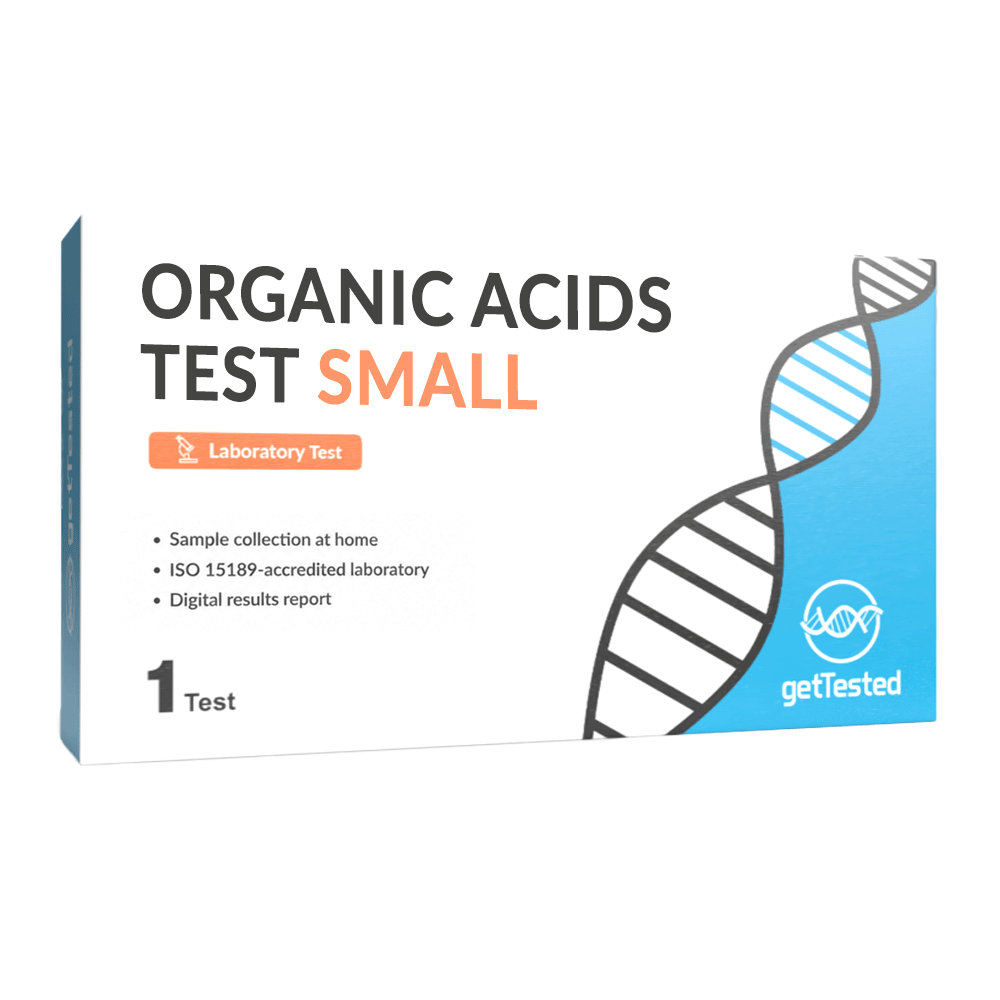
Organic Acids Test (OAT) Small
Detect metabolic imbalances, nutrient gaps and toxins with a home organic acids test. Personalised insights.
Product details: EUR 249.99 — InStock — SKU E408 — GetTested
About this test
Key Benefits
Broad Metabolic Overview: Looks at several pathways instead of one single marker.
Helpful for Vague Symptoms: May be relevant when fatigue, brain fog, digestive discomfort or mood changes are difficult to explain.
Simple At Home Testing: Collect your urine sample at home using the included test kit.
Digital results in 10 to 15 business days.
What This Test Measures
Fat Metabolism
Shows how the body uses fatty acids as fuel. This can provide insight into whether fat metabolism may be part of the picture when energy feels low or inconsistent.Carbohydrate and Ketone Metabolism
Helps show how the body handles carbohydrates, lactate production and ketone based energy. This can be useful for understanding shifts in fuel use, blood sugar related patterns or energy fluctuations.Energy Production and Citric Acid Cycle
Provides insight into cellular energy production. This group helps show how efficiently nutrients are moving through the body’s main energy pathway, which may be relevant in fatigue, low stamina or brain fog.Vitamin and Nutrient Pathways
Gives insight into nutrient dependent processes, especially pathways related to B6 and B12. These nutrients are important for energy, nervous system function and overall metabolism.Neurotransmitter Metabolism
Provides insight into the breakdown of compounds involved in mood, focus, motivation, stress response and nervous system balance, including serotonin, dopamine, adrenaline and noradrenaline related pathways.Gut Microbial and Dysbiosis Markers
Helps assess whether gut microbial or yeast related activity may be contributing to digestive symptoms, bloating or broader metabolic patterns.
How It Works
1. Order Your Kit
Purchase your test online.
2. Collect Your Sample
Collect a urine sample at home using the included test kit.
3. Send It Back
Mail your sample to the laboratory using the included return materials.
4. Receive Your Results
Access your digital laboratory results online when the analysis is complete.
Sample Collection
The sample is collected using a simple urine test at home. A morning urine sample is usually recommended and should be collected according to the included instructions before being sent to the laboratory for analysis.
This method is non invasive, practical and suitable for at home metabolic testing.
Accredited Lab and Analysis
Your sample is analyzed in an accredited laboratory using LC MS (Liquid Chromatography Mass Spectrometry), a method used to measure organic acid markers in urine. Creatinine is also measured using an enzymatic assay to support result interpretation.
Biomarkers included
- Hydroxymethylglutarate: Fat Metabolism — Hydroxymethylglutarate (HMG), especially as β-hydroxy β-methylglutaryl-CoA (HMG-CoA), is a compound that plays two vital roles in the body. It is a key intermediate in cholesterol synthesis, necessary for creating cell membranes, steroid hormones, and bile acids. Additionally, in the liver, HMG-CoA contributes to producing ketone bodies, which serve as an alternative energy source during fasting,
- Ethylmalonic Acid: Fat Metabolism — Ethyl malonate (EM) is a compound that acts as a biomarker for certain metabolic diseases. Elevated levels of ethyl malonate in the body may indicate hereditary metabolic conditions, such as ethylmalonic encephalopathy, or disorders of fatty acid metabolism.
- Suberic acid: Fat Metabolism — Suberic acid, also called octanedioic acid, is a dicarboxylic acid that serves as a metabolic marker in the body. In biological and physiological contexts, it is mainly associated with fatty acid metabolism. Elevated levels of suberic acid can signal metabolic disorders, particularly those affecting fatty acid oxidation, such as medium-chain acyl-coenzyme A dehydrogenase (MCAD) deficiency.
- Adipic Acid: Fat Metabolism — Adipate, also known as adipic acid, is a compound involved in lipid metabolism and serves as a biomarker for metabolic dysfunctions, especially those related to fatty acid oxidation. Its presence, often detected in urine or blood tests, can aid in diagnosing and monitoring metabolic conditions.
- Beta-hydroxybutyrate: Carbohydrate and Ketone Metabolism — Beta-hydroxybutyrate (BHB) is a ketone body that reflects the body’s shift to using fat as a primary fuel source. Produced by the liver from fatty acids during fasting, carbohydrate restriction, or intense exercise, BHB provides an alternative energy supply — particularly for the brain — when glucose is limited. It is a key marker of ketosis, a metabolic state associated with fat metabolism.
- Lactate: Carbohydrate and Ketone Metabolism — Lactate is a metabolic byproduct of anaerobic glucose metabolism, produced primarily in muscles during intense exercise or when oxygen supply is limited. It serves as both an energy source and a signaling molecule in various tissues. Elevated lactate levels can indicate tissue hypoxia, metabolic disorders, or severe illness such as sepsis or heart failure. In athletic contexts, lactate measurement
- Pyruvate: Carbohydrate and Ketone Metabolism — Pyruvate is a key compound in cellular metabolism formed as the end product of glycolysis when glucose is broken down. It plays a central role in energy production by entering the citric acid cycle under oxygen-rich conditions. When oxygen is low, such as during intense exercise, pyruvate is converted into lactate to support continued ATP (energy) production. Additionally, pyruvate is involved in
- Alpha-ketoglutarate: Energy Production and Citric Acid Cycle — Alpha-ketoglutarate (AKG) is a key compound in the Krebs cycle, an essential metabolic pathway for energy production in cells. It plays a crucial role in converting nutrients into energy, amino acid metabolism, and nitrogen transport. Additionally, Alpha-ketoglutarate is involved in various cellular processes, including signaling and regulation....
- Malate: Energy Production and Citric Acid Cycle — Malate, or malic acid, is a key compound involved in cellular metabolism, especially within the Krebs cycle in the mitochondria. It plays an essential role in energy production by being converted to oxaloacetate, a process that generates NADH, which is then used to produce ATP, the primary energy currency of the cell.
- Isocitrate: Energy Production and Citric Acid Cycle — Isocitrate is a key intermediate in the Krebs cycle, an essential metabolic pathway for cellular energy production. It is formed from citrate and then converted into α-ketoglutarate, a step that helps generate NADH used for ATP synthesis. Isocitrate also connects multiple metabolic processes, including the production of amino acids, nucleotides, and fatty acids.
- Cis-aconitate: Energy Production and Citric Acid Cycle — Cis-aconitate is an intermediate in the Krebs cycle, a central metabolic pathway involved in cellular energy production. It is formed during the conversion of citrate to isocitrate, a reaction catalyzed by the enzyme aconitase. The Krebs cycle plays a vital role in oxidizing nutrients to produce ATP, the main energy source for cells, and also supplies key building blocks for the synthesis of amino
- Citrate: Energy Production and Citric Acid Cycle — Citrate is a compound that plays a key role in the citric acid cycle, essential for energy production in aerobic organisms. It helps break down carbohydrates, fats, and proteins to produce ATP (energy). Citrate also supports the regulation of the body’s acid-base balance and contributes to kidney stone prevention by binding with calcium.
- Succinate: Energy Production and Citric Acid Cycle — Succinate is a key metabolic intermediate that plays an essential role in the Krebs cycle, the process by which cells produce energy. It helps convert nutrients into ATP, the primary energy source for cellular functions. Beyond energy production, succinate also participates in amino acid and fatty acid synthesis and acts as a signaling molecule that influences inflammation and the body’s response
- Xanthurenic Acid: Vitamin and Nutrient Pathways — Xanthurenic Acid is a metabolite formed during the breakdown of the amino acid tryptophan through the kynurenine pathway. Its levels can reflect vitamin B6 (pyridoxine) status, as this vitamin acts as a vital cofactor in the process. Elevated xanthurenate may indicate a deficiency in vitamin B6.
- Methylmalonic acid (MMA): Vitamin and Nutrient Pathways — Methylmalonic acid (MMA) is a substance produced in the body during the metabolism of certain fats and proteins. It is a byproduct of methionine breakdown and is influenced by vitamin B12 levels. Elevated MMA levels can serve as an indicator of vitamin B12 deficiency.
- Vanillylmandelic acid (VMA): Neurotransmitter Metabolism — Vanillylmandelic acid (VMA) is a metabolite formed from the breakdown of catecholamines such as adrenaline, noradrenaline, and dopamine. It is used as a clinical marker to assess catecholamine activity, with levels typically measured in urine. Various factors, including certain foods and medications, can influence VMA levels.
- 5-Hydroxyindoleacetic Acid (5-HIAA): Neurotransmitter Metabolism — 5-Hydroxyindoleacetic Acid (5-HIAA) is the main breakdown product of serotonin, a neurotransmitter involved in mood, sleep, appetite, gut motility and other body functions. Measuring 5-HIAA in urine can give insight into serotonin turnover, meaning how serotonin is being produced, used and metabolised. Higher or lower levels may reflect changes in serotonin metabolism, but should not be interprete
- Kynurenic acid: Neurotransmitter Metabolism — Kynurenic acid is a metabolite formed in the kynurenine pathway during the breakdown of the amino acid tryptophan. It functions in the nervous system as a neuroprotective agent and is of interest in neurological and psychiatric research. Imbalances in kynurenic acid levels have been associated with conditions such as schizophrenia and depression.
- Homovanillic acid (HVA): Neurotransmitter Metabolism — Homovanillic acid (HVA) is a metabolite that reflects the breakdown of dopamine, a key neurotransmitter in the body. HVA levels serve as an important marker for evaluating dopamine activity. Changes in HVA can indicate shifts in dopamine function and are used to monitor the effectiveness of treatments targeting dopamine metabolism.
- Citramalate: Gut Microbial and Dysbiosis Markers — Citramalate, also known as citramalic acid, is a compound that can be measured as a urinary marker to assess metabolic health. It is produced as a metabolic byproduct and may indicate bacterial imbalance or overgrowth in the gut. Elevated levels can also reflect potential disruptions in normal metabolic processes.
- D-arabinitol: Gut Microbial and Dysbiosis Markers — D-arabinitol is a sugar alcohol used as a biomarker in the body to help detect Candida infections. Elevated levels of D-arabinitol often indicate an overgrowth of Candida, especially in immunocompromised individuals. Measuring D-arabinitol provides a faster and less invasive way to diagnose systemic candidiasis compared to traditional culture methods.
How to prepare
**48 hours before:** Try to maintain your usual diet and avoid major dietary changes. *Avoid alcohol, excessive probiotics, fermented foods, and high-dose vitamin supplements.* **On the morning of the test:** Stay hydrated, but avoid excessive fluid intake and physical exercise.
Frequently asked questions
Can the Organic Acids Test help me understand energy and focus issues?
Yes. The test includes markers related to cellular energy production, B vitamin related pathways, neurotransmitter metabolism and gut microbial activity. These areas can be relevant when symptoms such as low energy, poor focus, brain fog or low motivation are difficult to explain.
Does this test diagnose a specific condition?
No. This test does not diagnose a specific disease or condition. It helps identify metabolic patterns that may guide further investigation, lifestyle changes or targeted support.
How does this differ from a blood test?
While blood tests measure the amount of a nutrient circulating in your vessels, the Organic Acids Test measures the functional need for those nutrients at a cellular level by looking at the byproducts created when those nutrients are missing. Organic acids are metabolic intermediates produced by your body's chemical pathways. Testing them in urine allows us to see 'metabolic blocks' caused by nutrient deficiencies, enzyme dysfunction, toxins, or microbial overgrowth.
Customer reviews
4.8/5 (5)
- 4/5 — The results provided great insight into my energy levels. It took a while to arrive but was worth the wait.
- 5/5 — Clear instructions and simple collection.
- 5/5 — Exactly what I needed
- 5/5 — Super easy to use and very fast shipping.
- 5/5 — Very helpful for identifying some specific vitamin deficiencies I didn't know I had. The instructions were clear and easy to follow.