Allergy IgE Test
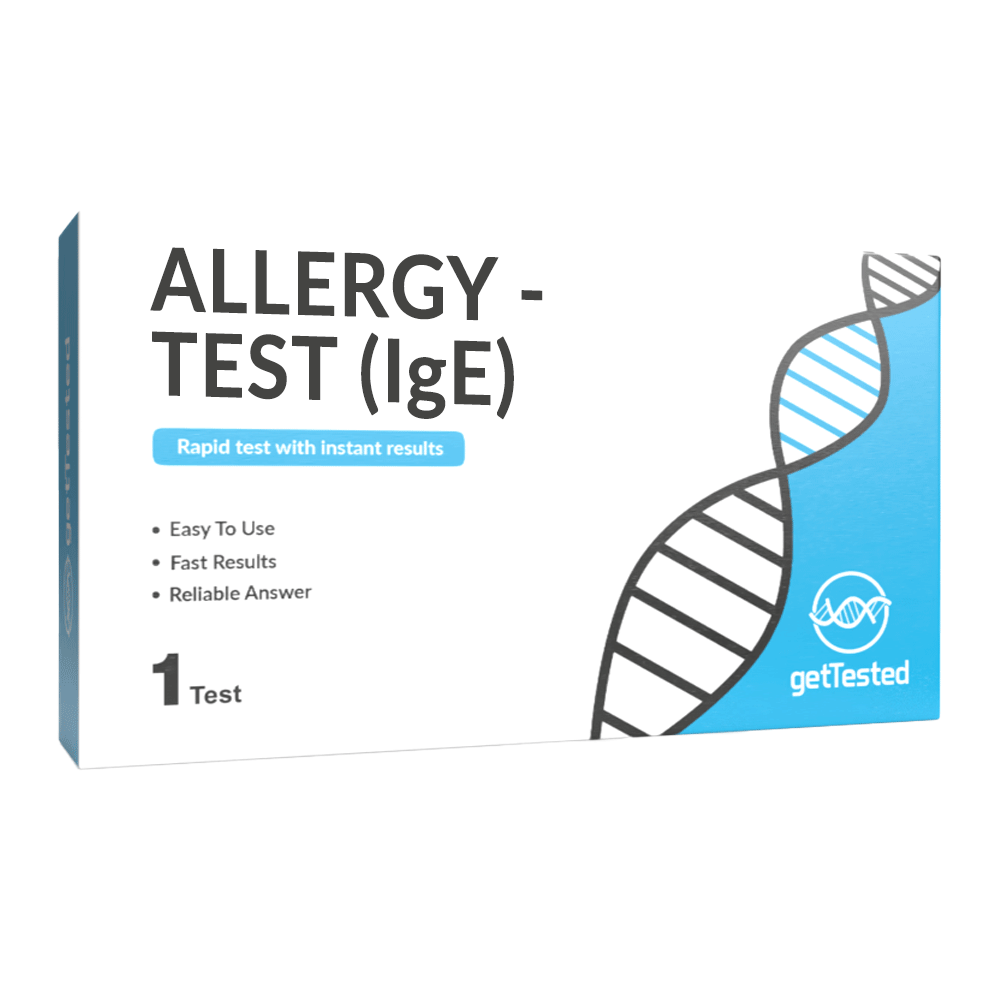
Measure IgE immune responses to common allergens with a home allergy test. Get clear answers to guide treatment.
Product details: EUR 24.99 — InStock — SKU C-IgE — GetTested
About this test
Key Benefits
Simple At-Home Testing: Collect your sample quickly using a finger prick. No clinic visit required.
Immediate Results: Get results within 5 minutes for a fast decision-making process.
Comprehensive Understanding: If elevated IgE levels are detected, you can explore advanced testing for specific allergens.
Convenient and Safe: The test is CE-marked for home use and designed for personal safety and ease.
What This Test Measures
This test measures total IgE levels in your blood, which can indicate whether your body is experiencing an allergic reaction. IgE is an antibody involved in the immune response to allergens like pollen, pets, food, and dust mites. When exposed to an allergen, your body produces more IgE, which can trigger allergic symptoms such as:
Skin redness
Itching
Repeated sneezing
Watery or stinging eyes
In rare cases: anaphylactic reactions
IgE levels are normally low, but an increase in these levels is a strong indicator of allergies.
Why Test IgE Levels?
IgE is the primary antibody involved in allergic reactions. When your body encounters an allergen, it triggers the production of IgE antibodies, which can result in common allergy symptoms. Elevated IgE levels can indicate allergies to various substances, and this test can help identify the cause of your symptoms, especially if you have family members with a history of allergies.
Symptoms Indicative of Allergy:
Itching or skin rash
Watery or irritated eyes
Repeated sneezing
Vague allergy-like complaints that don't seem to go away
If these symptoms match what you are experiencing, this test can provide clarity and help you take the next steps in managing your allergies.
Interpretation of Results
Once the test is completed, read the result after exactly 5 minutes. The result is interpreted based on the appearance of lines on the test cassette:
Positive Result: If two lines appear (T and C), your IgE levels are elevated, suggesting an ongoing allergic reaction.
Negative Result: If only the control line (C) appears, your IgE levels are within the normal range, meaning there is no indication of an allergic reaction.
Invalid Result: If the control line (C) is not visible, the test must be repeated.
The test has been validated with over 92% concordance compared to reference methods, ensuring high accuracy when the instructions are followed correctly.
Extended Testing Options
For individuals seeking more detailed insight into specific allergens, GetTested offers advanced laboratory tests that can assess:
Specific allergens such as pollen, pets, food, and dust mites
The severity of allergic reactions
Additional markers for intolerances and immune response
These tests can provide a more comprehensive picture of your allergies, helping you manage your condition more effectively.
Additionally, if you have symptoms that might overlap with histamine intolerance, GetTested also offers specialized tests for these conditions, providing you with a broader understanding of your health.
Who Should Take the Test
This test is ideal for individuals experiencing common allergy symptoms such as:
Itching
Skin rashes
Sneezing
Watery eyes
It’s also suitable for anyone who wants to understand if their symptoms are allergy-related, especially if allergies run in the family. If you suspect your symptoms could be triggered by common allergens or environmental factors, this test offers a quick and reliable answer.
Biomarkers included
- Total IgE: Total IgE testing measures the overall level of Immunoglobulin E (IgE) antibodies in the blood, which are produced in response to allergens. Elevated levels may indicate increased allergic sensitivity but do not identify specific allergens.
How to prepare
Ensure your hands are warm for easy blood flow before the finger prick. If you are taking antihistamines or steroid medications these may influence the immune response measured in the test.
Frequently asked questions
What is the difference between an IgE and an IgG test?
IgE (Immunoglobulin E) antibodies are produced by the immune system in response to an allergen, often causing immediate symptoms like itching or swelling. IgG antibodies are typically associated with food sensitivities and delayed reactions. This test specifically measures IgE levels to identify classic allergic triggers.
Do I need to stop taking allergy medication before the test?
Certain medications, particularly antihistamines or systemic corticosteroids, can potentially interfere with your results. It is generally recommended to consult with your physician regarding your medication schedule before taking the test to ensure the most accurate reading of your immune response.
Do I need to be eating the foods I am testing for?
To test for a specific food or environmental allergy, you must have been exposed to that substance recently. If you have strictly avoided a specific food for many months or years, your IgE levels for that substance may be low even if you are allergic.
Customer reviews
5.0/5 (3)
- 5/5 — Professional lab service that finally helped me identify my pollen triggers.
- 5/5 — Quick delivery and the finger-prick was easier than I expected.
- 5/5 — Process was simple and the results gave me the answers I needed about my cat allergy.