PSA Test
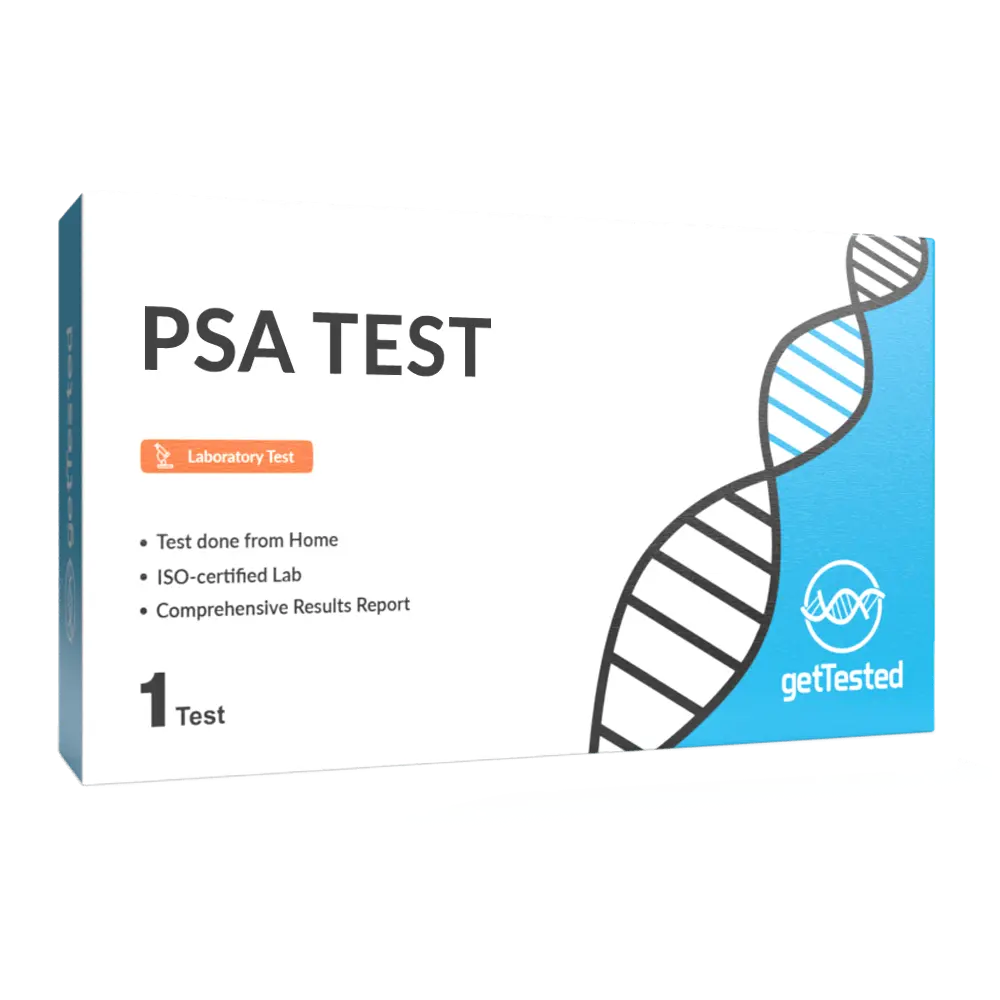
Measure prostate-specific antigen with a home sample and certified lab analysis to screen prostate health.
Product details: EUR 49.99 — InStock — SKU G670D — GetTested
About this test
Key Benefits
Monitor Prostate Health: Measures PSA, an important prostate health marker.
Relevant for Urinary Changes: May be useful if you notice frequent urination, weak urine flow, night time urination or discomfort.
Simple At Home Testing: Collect a finger prick blood sample at home using the included test kit.
Digital Results in 10 to 15 Business Days: Access your laboratory results online.
How It Works
1. Order Your Kit
Purchase your test online.
2. Collect Your Sample
Collect a finger prick blood sample at home using the included test kit.
3. Send It Back
Mail your sample to the laboratory using the included return materials.
4. Receive Your Results
Access your digital laboratory results online in 10 to 15 business days.
Blood Sample Collection
The sample is collected using a finger prick blood sample at home. A small capillary blood sample is collected according to the included instructions and sent to the laboratory for analysis.
This method is practical and designed for convenient at home PSA testing.
Accredited Lab and Analysis
Your sample is analyzed in an accredited laboratory using Electrochemiluminescence Immunoassay (ECLIA), a laboratory method used to measure PSA levels in blood.
Biomarkers included
- Prostate-Specific Antigen (PSA): Prostate-Specific Antigen (PSA) is a protein produced primarily by cells in the prostate gland. Elevated PSA levels in the blood can indicate prostate conditions such as benign prostatic hyperplasia (BPH), prostatitis, or prostate cancer, making it a key biomarker for prostate health screening and monitoring.
How to prepare
**7 days before testing** Avoid prostate procedures, such as prostate examination or biopsy, unless otherwise advised by a healthcare professional. **48 hours before testing** Avoid **cycling, ejaculation and intense exercise**, as these may temporarily affect PSA levels. **Test day** Stay hydrated, but avoid excessive fluid intake before collecting your sample. Follow the included instructions carefully before collecting your sample.
Frequently asked questions
Who should consider checking PSA?
PSA testing may be relevant for men over 50, men with a family history of prostate conditions or men who notice urinary changes such as frequent urination, weak urine flow or needing to urinate at night.
Does a high PSA mean prostate cancer?
No. A raised PSA level does not confirm prostate cancer. PSA can increase for several reasons, including age related prostate enlargement, inflammation or other prostate related factors. Results should be interpreted together with symptoms, age, history and medical follow up when needed.
How often should I monitor my PSA levels?
If you are over the age of 50, annual testing is often recommended. However, if you have a family history of prostate issues or other risk factors, your healthcare provider may suggest starting earlier or testing more frequently to monitor your levels.
Customer reviews
4.8/5 (5)
- 5/5 — Much easier than booking a GP appointment just for a routine check.
- 5/5 — Very straightforward process.
- 5/5 — Fast delivery and professional report.
- 5/5 — Simple to use and gave me peace of mind after a quick turnaround.
- 4/5 — Found the finger-prick a bit tricky but the instructions were very clear. Results arrived within the stated timeframe.