Cough & Liver Health (Adenovirus) Test for Dogs
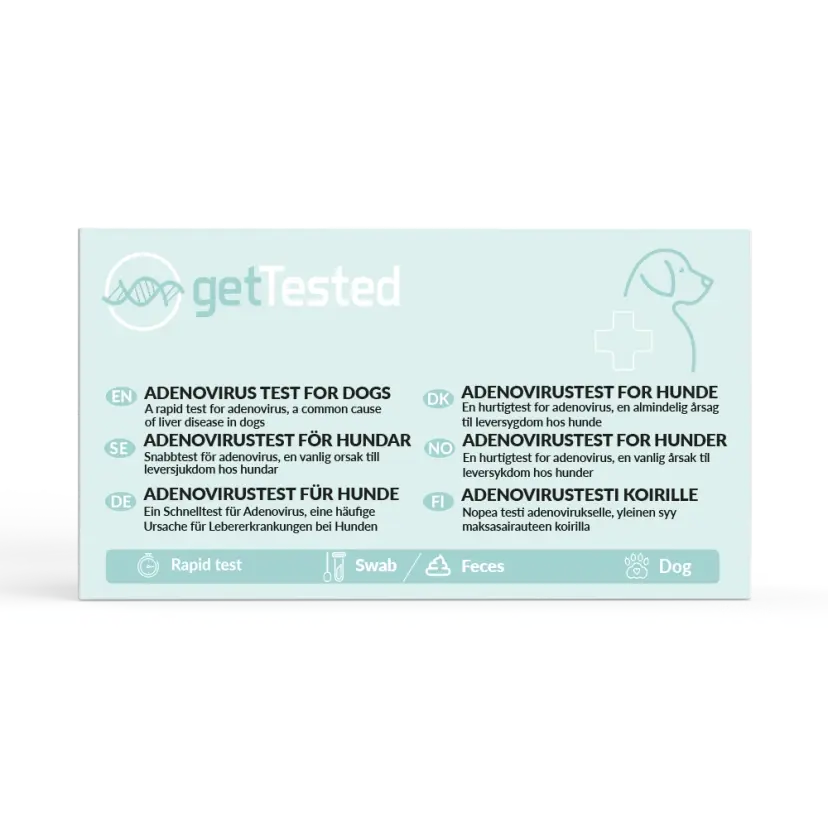
Rapid at home test for dogs detecting CAV 1 antigen. Helps investigate fever, vomiting, diarrhoea and suspected infectious canine hepatitis.
Product details: EUR 24.99 — InStock — SKU SY-AAC — GetTested
About this test
Common Signs of CAV-1 Infection
Dogs with canine adenovirus may experience:
High fever
Vomiting
Diarrhoea
Loss of appetite
Abdominal discomfort
Lethargy or depression
Swelling around the head, neck or chest
Jaundice or pale gums
Who May Benefit from This Test?
This test may be suitable for dogs that:
Show fever, vomiting, diarrhoea or appetite loss
Have been exposed to infected dogs
Live in shelters, kennels, breeding environments or multi dog households
Are unvaccinated or have unknown vaccination status
Need a rapid first screen when infectious canine hepatitis is suspected
Simple Home Testing
The test can be performed using an eye or nose secretion sample, or a stool sample, according to the included instructions.
The sample is mixed with the provided buffer and applied to the test cassette. Results are available in approximately 10 minutes and can be read directly from the test cassette.
What Is Included in the Kit?
1 Adenovirus test cassette
1 Sample collection swab
1 Buffer solution
Step by step instructions
Biomarkers included
- Canine Adenovirus Type 1 (CAV-1) Antigen: Canine Adenovirus Type 1 (CAV-1) antigen refers to viral components from CAV-1 that can be detected in ocular secretion, nasal secretion, anal swab or stool samples. CAV-1 is the virus that causes infectious canine hepatitis and can affect the liver, blood vessels, immune system and gastrointestinal tract. A positive antigen result can indicate active infection or viral shedding and may be linked
Frequently asked questions
Why is canine adenovirus important to detect early?
CAV-1 can cause infectious canine hepatitis and may affect the liver, kidneys and blood vessels. Rapid screening can be useful when symptoms appear suddenly or exposure is suspected.
How can canine adenovirus spread between dogs?
The virus can spread through urine, saliva, faeces or contaminated environments, making it more relevant in kennels, shelters, breeding settings and multi dog households.
When is this test useful for dogs?
This test may be useful when a dog has fever, vomiting, diarrhoea, appetite loss, lethargy or possible exposure to infected dogs.
Customer reviews
4.7/5 (3)
- 4/5 — The kit arrived quickly and worked as described, though collecting the sample was a bit tricky.
- 5/5 — Directions were easy to follow and it only took about 10 minutes to get the answer.
- 5/5 — Gives you peace of mind when your pup has a cough. Super fast results.